
Sign up to save your podcasts
Or



Elder Ulisses Soares shares insights about “The Living Christ”
Christmas
The Prophet Joseph Smith declared, “The fundamental principles of our religion are the testimony of the Apostles and Prophets, concerning Jesus Christ, that He died, was buried, and rose again the third day, and ascended into heaven; and all other things which pertain to our religion are only appendages to it” (Teachings of Presidents of the Church: Joseph Smith [2011], 49). Over 160 years later, this statement inspired the First Presidency and Quorum of the Twelve Apostles to publish “The Living Christ: The Testimony of the Apostles” in honor of the 2,000th anniversary of the Savior’s birth (see Russell M. Nelson, “Drawing the Power of Jesus Christ into Our Lives,” Ensign or Liahona, May 2017, 40).
As Latter-day Saints, we rejoice in the blessing of continuing revelation through modern prophets and apostles. We are thankful for their inspired words of counsel, warning, and encouragement. But most of all, we are blessed by their powerful testimonies of Jesus Christ—at Christmastime and throughout the year. These are more than just stirring words of skilled writers or public speakers or insights from scriptural experts. They are the words of God’s chosen, called, and authorized “special witnesses of the name of Christ in all the world” (Doctrine and Covenants 107:23).
This proclamation was read by President Gordon B. Hinckley as part of his message at the General Relief Society Meeting held September 23, 1995, in Salt Lake City, Utah.
The Family: A Proclamation to the World
Even before we were born, we were part of a family—the family of our heavenly parents. That pattern continues on earth. Families here, at their best, are meant to echo the perfect pattern in heaven.
Of course, there are no guarantees that earthly families will be ideal or even functional. But as President Henry B. Eyring taught, families “give God’s children the best chance to be welcomed to the world with the only love on earth that comes close to what we felt in heaven—parental love” (“Gathering the Family of God,” Ensign or Liahona, May 2017, 20). Knowing that families are imperfect and subject to attacks from the adversary, God sent His Beloved Son to redeem us and heal our families. And He sent latter-day prophets with a proclamation to defend and strengthen families. If we follow the prophets and put faith in the Savior, even though mortal families fall short of the divine ideal, there’s hope for families—on earth and in heaven.
The Book of Mormon teaches that “all are alike unto God,” including “black and white, bond and free, male and female” (2 Nephi 26:33). Throughout the history of the Church, people of every race and ethnicity in many countries have been baptized and have lived as faithful members of the Church. During Joseph Smith’s lifetime, a few black male members of the Church were ordained to the priesthood. Early in its history, Church leaders stopped conferring the priesthood on black males of African descent. Church records offer no clear insights into the origins of this practice. Church leaders believed that a revelation from God was needed to alter this practice and prayerfully sought guidance. The revelation came to Church President Spencer W. Kimball and was affirmed to other Church leaders in the Salt Lake Temple on June 1, 1978. The revelation removed all restrictions with regard to race that once applied to the priesthood.
The Bible and the Book of Mormon teach that monogamy is God’s standard for marriage unless He declares otherwise (see 2 Samuel 12:7–8 and Jacob 2:27, 30). Following a revelation to Joseph Smith, the practice of plural marriage was instituted among Church members in the early 1840s (see section 132). From the 1860s to the 1880s, the United States government passed laws to make this religious practice illegal. These laws were eventually upheld by the U.S. Supreme Court. After receiving revelation, President Wilford Woodruff issued the following Manifesto, which was accepted by the Church as authoritative and binding on October 6, 1890. This led to the end of the practice of plural marriage in the Church.
Written in 1842 by the Prophet Joseph Smith, these 13 statements explain the basic doctrines and practices of The Church of Jesus Christ of Latter-day Saints.
The Articles of Faith and Official Declarations 1 and 2
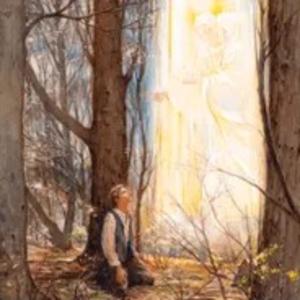
Since Joseph Smith’s First Vision, God has continued to guide His Church by revelation. In some cases, that revelation has included changes to the policies and practices of the Church. Official Declarations 1 and 2 announced this kind of revelation—one led to the end of plural marriage, and the other made the blessings of the priesthood available to people of all races. Changes like these are part of what it means to have a “true and living church” (Doctrine and Covenants 1:30), with a true and living prophet, led by a true and living God.
But eternal truth doesn’t change, though our understanding of it does. And sometimes revelation casts additional light on truth. The Articles of Faith serve this clarifying purpose. The Church is solidly founded on eternal truth yet can grow and change “according as the Lord will, suiting his mercies according to the conditions of the children of men” (Doctrine and Covenants 46:15). In other words, “We believe all that God has revealed, all that He does now reveal, and we believe that He will yet reveal many great and important things pertaining to the Kingdom of God” (Articles of Faith 1:9).
A vision given to President Joseph F. Smith in Salt Lake City, Utah, on October 3, 1918. In his opening address at the 89th Semiannual General Conference of the Church, on October 4, 1918, President Smith declared that he had received several divine communications during the previous months. One of these, concerning the Savior’s visit to the spirits of the dead while His body was in the tomb, President Smith had received the previous day. It was written immediately following the close of the conference. On October 31, 1918, it was submitted to the counselors in the First Presidency, the Council of the Twelve, and the Patriarch, and it was unanimously accepted by them.
From the publisher's feed