
Sign up to save your podcasts
Or

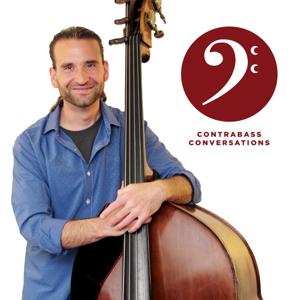


It is my pleasure to present this interview with Gabe Katz. Gabe and I have had so many commonalities in our career trajectory, and we have both ended up finding a really satisfying musical niche in the world of secondary school orchestral conducting. Now, by the time you're listening to this, I will have moved on from this career, but of the past seven years this is what I did, and this is what Gabe has also started doing these last couple of years.
Prior to his current job teaching orchestra at the high school level in suburban Houston, Gabe held two overseas jobs: one in Durbin, South Africa, and one in Guangzhou Orchestra in China. He also worked in Singapore and in Macao. He ended up meeting up with Hal Robinson while in China and ultimately moving back to the US to study in Hal's private studio and take auditions.
We cover the thought process that took him from the performance world into the education world, going back to school at Duquesne in Pittsburgh and his experience taking music education courses at an older age, and the unexpected joys and satisfactions of teaching in the public schools.
Interview Highlights
Today we're chatting with Gjorgji Cincievski, who is the principal bass of the Malta Philharmonic and has been putting out some very cool arrangements for Hoffmeister, including an arrangement of Bach's Goldberg Variations for violin, viola, and double bass. You'll be hearing excerpts from this piece on Gjorgji's new recording throughout the episode, and we have a link in the show notes where you can get a copy of the recording and of the sheet music, as well as several other arrangements by Gjorgji.
Gjorgji will also be hosting the Malta Double Bass Summer Camp from August 22 - 28. Check out more details about this camp here.
Interview Highlights
Today we feature double bass luthier Arnold Schnitzer. Arnold has had an interesting career path, from gigging around the East Coast as a youth to entering the corporate world and finally finding his way to the word of instrument repair. We talk about a wide range of topics, including information versus knowledge, wisdom, and street smarts, and the perils and pitfalls of the information age.
We also dig into Mike Rowe's Dirty Jobs (there's a great interview with him on the Tim Ferriss podcast) - this all starts about 20 minutes into the actual interview - and training people for the jobs that actually exist, and the "in-between" jobs. This is quite a conversation—be sure to check this out. There's a lot of food for thought here.
We also get deep into instrument construction, setup, maker competitions, wolf tones, and the Oberlin Bass Workshop, which Arnold serves on the faculty for and which sounds like a very cool event. I know that you're really going to enjoy this conversation with the always interesting Arnold Schnitzer!
Interview Highlights
Early Years
Information versus Knowledge
The Future of Employment
Double Bass Setup and Construction
Today's episode features double bassist Jerry Fuller. I've known Jerry for well over a decade at this point and have found him to be such an interesting person. Jerry is best known in the music world for his work in period performance—in fact, he won an award for historically informed performance from the International Society of Bassists in 2015, and he is also a former ISB board member.
We cover Jerry's early years in music, attending Northwestern in bass studio of rock stars including Hal Robinson, Curtis Burriss, and Rufus Reid, and his time spent performing in the bass section of the Lyric Opera of Chicago and in Switzerland. While he was in Lyric, Jerry attended business school at the University of Chicago and has worked for most of his professional life in the world of business while simultaneously keeping up an active musical life, and we talk about his what prompted this decision to attend business school and what his experiences in that world have been like.
We get into details about how period performance differs from modern technique, how players can explore the world of period playing, and the role of the bass player in the continuo. We also have a great discussion on creativity in music and answer listener questions from Gaelen McCormick and Dan Carson.
Jerry has gotten into traditional jazz recently, and we'll open up the episode with an excerpt featuring Jerry performing C'est si Bon, and we'll close with a duet by Bernhard Romberg with Richard Hirschl on cello.
Links to check out:
Interview Highlights
Early Years and Career
Early Music
Careers and Creative Outlets
Today's podcast features an interview with Todd Coolman, who has just released his latest album Collectibles. Todd is actually playing a CD release event tonight at Smoke Jazz Club in New York City to celebrate the release of the album, which also features Bill Cunliffe on piano and Dennis Mackrel on drums. This is the second time Todd has appeared on the podcast—you can hear his interview with Win Hinkle in our archives.
Todd and I cover all sorts of interesting topics in this interview, including his experiences moving from a full-time faculty position down to part-time and the opportunities that opens up for him. We talk about his classical foundation on the bass and dig into classical and jazz crossover and how lessons learned in one genre are valuable in the other. We also talk about skills the modern music student needs to be successful and what colleges can do to help facilitate this, and we get into details about recording this new album.
If you enjoyed this episode, check out our interviews with Carlos Henriquez, Chuck Israels, Larry Gray, Ron Carter, Lynn Seaton, and Rufus Reid!
Today's episode features Houston Symphony principal bassist Robin Kesselman. Robin studied with David Allen Moore and Paul Ellison at the Coburn School of Music and the University of Southern California, and with Hal Robinson and Edgar Meyer at the Curtis Institute of Music. He has also performed as Guest Principal Bass with the Saint Paul Chamber Orchestra, travelled internationally with both the Philadelphia Orchestra and the Los Angeles Philharmonic, and performed with the National, Atlanta, and Baltimore Symphonies.
During Robin's time at USC, he sustained a playing injury that took him out of commission for a prolonged period. We dig into how Robin ultimately recovered from this and how it changed his approach to practicing and performing on the bass, and how he practiced while he was out of commission. This was a left arm injury, and Robin continued to practice open string and harmonics with the bow, going into his lessons and working on the Bottesini Concerto on open strings. We also discuss how Robin approaches the audition process: his preparation strategies, his musical goals for an audition, and using visualization techniques.
We also feature excerpts from Krzysztof Penderecki's Duo Concertante with Eunice Kim on violin. Enjoy!
Interview Highlights
Discoveries During Playing Injury:
Thoughts on Auditioning:
The Audition Process in Detail:
Today's episode is a tribute to bassist, film composer, and conductor Terry Plumeri, who was found murdered in his home in Florida on April 1st of this year. This episode features comments from former Terry Plumeri student Eric Swanson plus a clip from an early podcast in which I featured the music of Terry.
Leon Bosch is a remarkable figure in the world of the double bass. From his early years growing up in South Africa to his long tenure with the Academy of St Martin in the Fields and his proliferation of solo projects, Leon has approached each challenge with a focus and determination that are incredibly inspiring. This is a "must listen" episode for any musician eager to realize their greatest potential.
After retiring from the Academy of St Martin in the Fields to devote himself fully to solo, chamber, and conducting projects, Leon has been working to bring undiscovered treasures of the repertoire to light and to encourage new works for the double bass from composers. New composition are being written for Leon from South African composer Péter Louis van Dijk, British composer Paul Patterson, and American jazz icon Wynton Marsalis.
This episode is sponsored by Discover Double Bass, and they have a course on bowing technique with Lauren Pierce that I highly recommend checking out. This course is divided into 37 HD lessons, and Lauren gives a short video overview of the three categories that these videos cover: the basics, bow control, and real world techniques. There's also a free preview lesson on phrasing with the bow—check it out!
We feature excerpts from Leon's latest album throughout the episode. Check out Leon's excellent albums (available both as digital downloads and CDs):
Today's episode features an entertaining couple of conversations that I had a few years ago with bassist, author, speaker, and playwright Justin Locke. These have been some of our all-time most popular and commented upon episodes, and bringing them back into the spotlight seemed like a good idea.
Justin has written several books, including:
Justin Locke came to Boston at age 18 to go to music school, and within a year he found himself playing every freelance gig in town, including the Boston Pops.
His 18-year bass-playing stint with the Pops included the Bicentennial Concert in 1976 with Arthur Fielder, which is in the Guinness Book of World Records as the largest audience ever at a classical music concert. And of course he also worked with many of the great conductors of that era, including Leonard Bernstein, John Williams, and Henry Mancini.
One day, after playing (and criticizing) a particularly dull children's concert, Justin was challenged to write one himself. The result was Peter VS.the Wolf, a courtroom comedy based on the classic Prokofiev fairy tale.
Justin's work in other facets of "show business" continued to expand. Already a playwright and publisher, he then became a video producer, the "score reader" for live Boston Pops TV broadcasts, and manager of the Bose Philharmonic. His books, including his laugh-out-loud Pops Memoir "Real Men Don't Rehearse," have sold thousands of copies.
Justin is now a management coach and speaker. He shares what the music business taught him about managing people, through his presentations, individual coaching sessions, his blog, and his books.
Today's episode features Madeleine Crouch, who has served as general manager of the International Society of Bassists for the past 25 years. Madeleine and I talk about her musical background, the value of a liberal arts education, the growth of the ISB over the years, and new developments for the organization like the ISB/George Vance Online Research Library, Online Journal of Bass Research, ISB Connect, teacher directory, and luthier directory. We also give a sneak preview of the 50th anniversary convention which will take place at Ithaca College in upstate New York. Enjoy!
Summer camps we cover post-interview:
Blog post I talk about:
How I'm Doubling My Productivity and Increasing My Happiness
From the publisher's feed
2,217 Listeners