
Sign up to save your podcasts
Or



Based on Podcast App listening data
Did any single man change the course of the 20th century? Jared Diamond, the Pulitzer Prize–winning author of Guns, Germs, and Steel: The Fates of Human Societies, says the biographies can’t answer that, but the data can. He walks us through Winston Churchill’s dayslong fight to keep Britain in the war, Lee Kuan Yew’s Singapore, John F. Kennedy’s brinkmanship in Cuba, and Joseph Stalin’s response to Adolf Hitler’s invasion. Then he explains why basketball coaches are the best laboratory we have for measuring what a leader really changes.
Learn more about your ad choices. Visit megaphone.fm/adchoices
Megan Phelps-Roper grew up as the public face of the Westboro Baptist Church, the hate group founded by her grandfather, known for picketing veterans’ funerals with signs condemning gay people and Jews. She left the church in 2012 after a series of Twitter conversations exposed cracks in its theology she could no longer ignore.
Since then, she’s built a new career exploring faith, belief, and public discourse from multiple angles, including as host of The Free Press’s The Witch Trials of J.K. Rowling. Now, somewhat surprisingly, she’s launched a new podcast called Book Keeper, where she returns to Bible stories she grew up with and tries to figure out which parts of them still hold up, and which don’t.
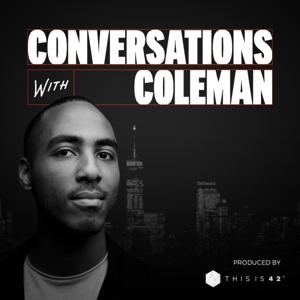
She joins Coleman Hughes to talk through the exact verse that unraveled her worldview, why she still reads Scripture to her kids despite not believing in God, and why she thinks a society that abandons fixed values is just as dangerous as one that enforces the wrong ones.
Book Keeper is a Longview original series. Listen at longview.report/bookkeeper
For the Bart Ehrman lecture that Coleman mentioned in the show, click here: https://www.youtube.com/watch?v=6CU1EZv-pFo
Learn more about your ad choices. Visit megaphone.fm/adchoices
Elliot Kaufman’s new book, In the War Room, is an inside account of how Israel actually fought the war that followed October 7, 2023. A Wall Street Journal editorial writer, Kaufman spent the last two years reporting on the conflict and drew on documents recovered from Hamas, along with behind-the-scenes access to Israel’s top political, military, and intelligence leaders, to reconstruct decisions most of the public never saw. Kaufman explains why Hamas sincerely believed it could destroy Israel, why Hezbollah never launched the full-scale invasion Israel feared most, and why the bitter, often personal rivalry between Benjamin Netanyahu, Yoav Gallant, and Benny Gantz shaped nearly every major decision of the war. He also walks through what he considers Israel’s biggest unforced error—the two-month aid stoppage that fueled a global famine narrative—and how the war ultimately reshaped Hezbollah, Iran’s nuclear program, and the future of the Abraham Accords.
Learn more about your ad choices. Visit megaphone.fm/adchoices
Delano Squires spent 15 years working in D.C. government, including a stint in the city’s office of gun violence prevention, where he noticed the same story on repeat: Young black men were both victims and perpetrators of some of the worst crimes in the city. In his new book, The Vanishing Black Family, he argues that family structure, not policing, incarceration, or education policy, is the most consequential and least discussed driver of racial inequality in America today. Squires makes the case that slavery deformed the black family but didn’t destroy it, and that the real collapse came later, driven by the expansion of the welfare state and the rise of second-wave feminism. He joins Coleman Hughes to talk through the data, the history, and why he thinks black institutions, from churches to civil rights organizations, have avoided the issue entirely.
Learn more about your ad choices. Visit megaphone.fm/adchoices
Roland Fryer is a professor of economics at Harvard University, the youngest black academic ever to receive tenure there, and a recipient of the John Bates Clark Medal for his research on racial inequality, education, and policing. His findings have often put him at odds with progressive orthodoxy, and he’s paid a real price for it over the years, including death threats and a shot-out window over a program that simply paid kids to do well in school.
Fryer returns to the show to talk with Coleman Hughes about the Jason Arday scandal, which he sees as a symptom of the same institutional cowardice he’s trying to fix. That’s the thinking behind his and Bill Ackman’s new venture, the Carob Trust Prize for Academic Courage, a $1 million prize designed to reward scholars willing to publish research academia is too afraid to touch. They also get into why elite universities avoid academic risk, what Fryer’s own research actually shows about race and intelligence, and how a stint doing stand-up comedy shaped the way he thinks about persuasion.
Learn more about your ad choices. Visit megaphone.fm/adchoices
Dara Horn is a novelist and essayist whose book People Love Dead Jews: Reports from a Haunted Present examined how contemporary culture sentimentalizes Jewish suffering while ignoring the fullness of Jewish life. Her new book, provocatively titled The Final Solution to the Jewish Question: A Love Story for the Living, goes further, arguing that antisemitism isn’t an ordinary bigotry at all. It’s a lie, always the same lie in different disguises, that Jews are destroying whatever a given society values most. Recorded live onstage at the 92nd Street Y, New York City’s largest Jewish cultural center, she and Coleman Hughes cover why nobody, apparently including a sitting vice president, understands basic antisemitic terms like “blood libel,” and why she thinks curiosity, not debate, is the real antidote to losing a friend to conspiracy theories.
The Free Press earns a commission from any purchases made through all book links in this article.
For the first time in nearly a year, our Bari Weiss is returning to the stage for a rare sit-down discussion with renowned historian Simon Sebag Montefiore. The event is happening on October 1st in New York City. Limited tickets are on sale now at
https://www.eventbrite.com/e/bari-weiss-and-simon-sebag-montefiore-live-tickets-1999718620224?aff=oddtdtcreator
Learn more about your ad choices. Visit megaphone.fm/adchoices
Daryl Davis is a blues musician who has spent over 40 years doing something few people would attempt: sitting down with members of the Ku Klux Klan and other white supremacist groups, one on one, to ask them why they hate him. He’s been threatened, physically attacked, and called a race traitor by people on both sides. He’s also convinced over 200 Klansmen to leave their hate groups entirely—not by arguing them out of their beliefs, but by befriending them long enough for their own convictions to fall apart. He joins Coleman Hughes to talk about how he stays calm in the face of open racism, what white supremacists actually fear, why he refuses to give up on anyone, and what he thinks parents should and shouldn’t teach their kids about race.
Learn more about your ad choices. Visit megaphone.fm/adchoices
Frank Siller’s youngest brother, Stephen, was orphaned at 10, grew up to become a New York City firefighter, and was driving home from a night shift on the morning of September 11, 2001, when he heard the World Trade Center had been hit. He turned his truck around, grabbed his gear, and ran through the closed Brooklyn-Battery Tunnel and up the stairs of the South Tower. He never came out.
Two weeks later, Siller and his siblings started a charity in Stephen’s name. Twenty-five years on, that foundation, Tunnel to Towers, has paid off mortgages for fallen first responders and Gold Star families, built mortgage-free smart homes for catastrophically wounded veterans and first responders, and worked to end veteran homelessness across the country. Siller writes about Stephen—on that morning and the 25 years since—in his new memoir, Let Us Do Good. He joins Coleman Hughes to talk about what it actually took to build one of the largest charities of its kind in America out of a single family’s grief.
The Free Press earns a commission from any purchases made through all book links in this article.
Learn more about your ad choices. Visit megaphone.fm/adchoices
Tim Naftali is a presidential historian who spent four years running the Richard Nixon Presidential Library and Museum. He’s listened to thousands of hours of secret Oval Office recordings from Nixon, Lyndon B. Johnson, and John F. Kennedy. Naftali joins Coleman to break down which president was actually the sharpest, walking through the different kinds of intelligence—tactical, strategic, emotional—that separated men like LBJ and Nixon from each other. They get into why presidents started taping themselves in the first place, and what those recordings actually reveal. Naftali also takes on the recent online rehabilitation of Nixon, the idea that he was a victim of the same deep state that took down Kennedy, and explains why that story falls apart once you look at what he was actually asking the CIA and FBI to do.
Learn more about your ad choices. Visit megaphone.fm/adchoices
Nathan Cofnas is the academic researcher who broke the story alleging Jason Arday had fabricated his biography and plagiarized his PhD thesis, a scandal that led to Arday’s resignation from Cambridge University and, weeks later, his death.
But Cofnas has his own history of controversy. He’s a self-described race realist who says that genetic differences between population groups explain average IQ gaps. His argument has gotten him attacks from both the right and left, the termination of his research post at Cambridge’s Emmanuel College, and a since-lifted suspension from Ghent University. He joins Coleman Hughes to walk through the Arday scandal in detail, then defends his research directly. They get into whether ideas about race and IQ should be discussed openly among elites, whether cultural explanations for racial disparities hold up, and whether mainstreaming these claims about IQ would tear society apart rather than heal it. Hughes argues that most people are incapable of separating a claim about group averages from how they judge individuals, and that this is exactly why the conversation is so dangerous to bring into the mainstream.
Learn more about your ad choices. Visit megaphone.fm/adchoices
From the publisher's feed
Ranked by our users in the last 21 days

26,253 Listeners

2,271 Listeners
2,886 Listeners

2,144 Listeners

791 Listeners

733 Listeners

3,841 Listeners

802 Listeners

3,196 Listeners

8,471 Listeners
240 Listeners
12,003 Listeners

1,064 Listeners

910 Listeners
215 Listeners

687 Listeners