
Sign up to save your podcasts
Or

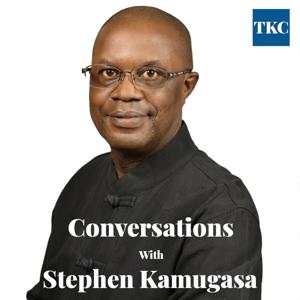


Hello,
I’m your host, Stephen Kamugasa.
Conversations with Stephen Kamugasa is a bimonthly discussion podcast for people who think and thank: leaders, policy makers, academics, practitioners, and citizens.
Our aim is to inspire you to turn challenges into coherent and meaningful solutions, focusing on humanity, leadership, and citizenship.
I have no doubt that listening to this podcast may change your life and inspire you to start making a difference in the world. My question for you is this: “Will you choose to matter?”
Use your preferred podcast app to find us, follow, and listen to Conversations with Stephen Kamugasa.
Website: thekamugasachallenge.com
Detailed Synopsis:
The Role of Democracy in a Multipolar World.
In the context of a multipolar world, the significance of democracy, particularly in Africa, is increasingly complex and multifaceted. Dr. Nic Cheeseman, a political scientist and expert on African politics, emphasises that while there are challenges to democracy on the continent, there are also signs of hope and resilience among the populace.
Historical Context and Current Challenges:Dr. Cheeseman delves into the historical context of African states, where colonial powers imposed arbitrary borders and governance structures. This legacy has contributed to ongoing issues of ethnic division and neopatrimonialism, where traditional forms of authority clash with modern state structures. He notes that colonial governments often believed in rigid ethnic identities, which they institutionalised, leading to a political landscape characterised by mutual suspicion rather than solidarity.
In contemporary Africa, the persistence of neopatrimonial rule complicates the establishment of robust democratic institutions. Leaders often manipulate ethnic identities to maintain power, resulting in a political culture where accountability is lacking. This is evident in countries like Uganda, where President Museveni has leveraged historical instability to justify authoritarian practices while simultaneously securing international support by presenting Uganda as a success story in development.
The Youth and Democratic Aspirations:
Despite these challenges, Dr. Cheeseman expresses optimism about the future of democracy in Africa, particularly due to the rising influence of youth. Young people, who have grown up in environments where elections are the norm, are increasingly demanding accountability and better governance. The recent protests in Kenya, driven by youth-led movements, illustrate a growing desire for democratic engagement across ethnic lines. This generational shift indicates potential for more inclusive political participation and a rejection of the neopatrimonial politics that have historically dominated.
The Impact of Global Dynamics:
In a multipolar world, the dynamics of international relations also play a crucial role in shaping the future of democracy in Africa. Dr. Cheeseman highlights how the rise of alternative powers, such as China and Russia, presents both challenges and opportunities. These nations often support authoritarian regimes, providing them with the resources and legitimacy to suppress democratic movements. However, as African citizens become more aware of the implications of these relationships, there may be a growing backlash against external influences that sustain undemocratic governance.
Conclusion: A Long-Term Struggle for Democracy:
Ultimately, Dr. Cheeseman argues that while the path to democracy in Africa is fraught with obstacles, the underlying desire for democratic governance among the populace is strong. The interplay of historical legacies, youth activism, and global power dynamics will shape the future of democracy on the continent. As citizens continue to demand accountability and better governance, there is potential for a more democratic landscape to emerge, albeit through a long-term struggle against entrenched systems of power.
In summary, the critical nature of democracy in a multipolar world is underscored by the need for strong institutions, active citizen engagement, and a nuanced understanding of the historical and contemporary challenges facing African states.
Time stamp:
[00:03:08] Family background and childhood influences.
[00:06:21] Media portrayal of Africa.
[00:08:58] Neopatrimonialism and democracy challenges.
[00:12:12] Neopatrimonialism in African politics.
[00:17:53] Youth-led protests in Kenya.
[00:19:39] Youth and political engagement.
[00:24:00] Managing ethnicity in colonial contexts.
[00:28:28] Managing ethnicity in post-colonial Africa.
[00:32:18] Independent institutions in political transition.
[00:34:25] Building stronger democratic institutions.
[00:39:43] Donor manipulation in Uganda's politics.
[00:43:40] International outcry on human rights.
[00:45:57] Democracy in Africa's future.
[00:50:39] Democracy in African societies.
[00:52:36] Challenges to global democracy.
Support Us
Dr. Helen Epstein discusses the pervasive issue of corruption in Uganda's health sector in her enlightening podcast episode. She highlights how corruption significantly impacts maternal and infant mortality rates in the country. Despite substantial donor investments in the health sector, Uganda's maternal and infant mortality rates have not decreased as expected due to widespread corruption within the system. Mismanagement of funds, embezzlement, and lack of accountability have resulted in essential resources and services not reaching those in need, particularly mothers and children.
Epstein's firsthand experience in Uganda revealed the dire consequences of corruption on the ground. She witnessed the suffering caused by AIDS and the inadequate healthcare services available to the population. The diversion of healthcare funds into the pockets of corrupt officials has led to crumbling healthcare infrastructure, a lack of essential medical supplies, and poorly maintained facilities. Consequently, emergency operations on pregnant women are sometimes conducted in substandard conditions, resulting in preventable deaths.
The impact of corruption on maternal and infant mortality rates underscores the urgent need for transparency, accountability, and good governance in Uganda's health sector. Epstein's advocacy for addressing corruption and promoting human rights in the country highlights the interconnectedness of governance, public health, and social justice. By raising awareness about the detrimental effects of corruption on healthcare outcomes, Epstein calls for action to address systemic issues contributing to the loss of lives in Uganda.
The podcast episode also delves into the discovery of oil in Uganda, raising significant concerns about environmental destruction, displacement of communities, and the acceleration of global warming.
Environmental Destruction: The East African crude oil pipeline project in Uganda is set to funnel oil from the western part of the country, including areas near the Congo border. This project is expected to destroy precious ecosystems, kill off wildlife, and have detrimental effects on the environment. The construction and operation of the pipeline will lead to deforestation, disruption of habitats, and pollution of water sources, impacting the biodiversity of the region.
Displacement of Communities: The development of oil infrastructure in Uganda, particularly the construction of pipelines and oil extraction facilities, often results in the displacement of local communities. The podcast highlighted the case of Cerinah Nebanda, a young member of parliament who was a vocal campaigner against corruption in the oil sector. Her tragic death underscores the dangers faced by activists and community members who oppose or raise concerns about oil-related projects. Displacement of communities due to oil exploration can lead to social unrest, loss of livelihoods, and disruption of traditional ways of life.
Acceleration of Global Warming: The extraction and burning of fossil fuels, such as oil, contribute to the release of greenhouse gases, particularly carbon dioxide, into the atmosphere. The East African crude oil pipeline project in Uganda is expected to release significant amounts of carbon dioxide, which will contribute to the acceleration of global warming. This can lead to adverse effects such as more frequent and severe weather events, rising sea levels, and disruptions to ecosystems.
In conclusion, the discovery of oil in Uganda presents a complex dilemma where the economic benefits of oil extraction must be weighed against the environmental and social costs. It is crucial for stakeholders, both within Uganda and internationally, to consider the long-term impacts of oil exploration on the environment, communities, and global climate. Efforts to mitigate these impacts, protect biodiversity, and promote sustainable development practices are essential in addressing the challenges posed by the oil industry in Uganda.
The podcast episode underscores the significance of individual action in influencing policy decisions and addressing critical issues in Africa. Dr. Helen Epstein emphasises the importance of joining campaigns like Stop EACOP, which focusses on stopping the East African crude oil pipeline. By participating in demonstrations, signing petitions, and becoming informed about the issue, individuals can make a difference. Dr. Epstein encourages listeners to engage with those around them, raise awareness, and advocate for change. This individual action is crucial in addressing environmental concerns, protecting biodiversity, and promoting sustainable development in Africa. By taking proactive steps and getting involved in campaigns and movements, individuals can contribute to shaping policies, influencing decision-makers, and creating positive change in the region.
Timestamp:
[00:01:01] Uganda's AIDS Crisis Origins.
[00:08:09] Ugandan medical advancements
[00:11:58] Fragility of democracy.
[00:15:41] American ideals and democracy.
[00:22:46] Developing East African crude oil pipeline.
[00:27:25] Access to natural resources in Africa.
[00:29:09] How Critical is Democracy.
Detailed Synopsis
Dr. Jochen Lingelbach's research on Polish refugees in British colonial Africa offers valuable insights into the complexities of identity politics and colonial hierarchies. His study delves into how the influx of nearly 20,000 Polish refugees in East and Central Africa during World War II disrupted the existing racial hierarchies of colonial societies. These refugees, hailing from diverse backgrounds, did not neatly fit into the established categories of colonisers or colonised.
Dr. Lingelbach's research sheds light on the ambiguous position of the Polish refugees, who, being white, did not enjoy the same social status as the British colonizers. This ambiguity led to intriguing dynamics, as evidenced by differing behaviours towards Polish domestic servants compared to African servants or British individuals. These dynamics reveal how colonial notions of difference and exploitation were deeply embedded in the social fabric of the time.
Moreover, Dr. Lingelbach's work challenges conventional notions of identity by emphasising the fluidity and complexity of identification, categorization, and group dynamics. He advocates for a nuanced approach that considers how individuals navigated multiple social positions and relationships within colonial contexts, cautioning against oversimplifying the concept of "identity."
By illuminating the experiences of Polish refugees in British colonial Africa, Dr. Lingelbach's research underscores the significance of understanding the intersections of race, migration, and colonialism in shaping identity politics. It serves as a poignant reminder of the intricate power dynamics and social hierarchies that influenced the lives of refugees during this period, offering valuable insights for contemporary discussions on migration, nationalism, and human rights.
In the podcast episode featuring Dr. Jochen Lingelbach, the critical importance of upholding human rights and refugee protection in today's global landscape, marked by rising conservative nationalism and authoritarianism, is emphasized. Dr. Lingelbach expresses concerns about the erosion of refugee protection and the trend towards harsh immigration policies, particularly in Europe. He recounts witnessing the construction of a barbed wire-topped fence at the Polish-Belarusian border, symbolising the dehumanising measures taken to deter refugees fleeing war and hardship.
The discussion underscores the detrimental effects of such actions, not only on the individuals seeking refuge but also on the societies implementing these restrictive measures. Dr. Lingelbach highlights how building walls and adopting authoritarian policies can perpetuate a cycle of increased authoritarianism within societies, ultimately impacting democratic values and human rights standards.
Given these challenges, the episode stresses the need to resist the normalisation of discriminatory practices and the disregard for fundamental human rights, especially the right to seek asylum. Dr. Lingelbach's research and insights shed light on the interconnectedness between refugee protection, human rights, and the broader societal implications of restrictive immigration policies. The episode serves as a call to advocate for the preservation of human rights, refugee protection, and the promotion of inclusive and compassionate migration approaches in the face of growing nationalist and authoritarian trends.
The Global Compact on Refugees stands as a crucial framework aimed at addressing the challenges of safeguarding the rights and well-being of migrants in the current political climate. In the podcast episode, Dr. Jochen Lingelbach discusses the importance of upholding human rights principles and the Universal Declaration of Human Rights in the context of refugee protection. He emphasises the significance of upholding the universal basic rights of every individual, including the right to seek asylum and the right to non-refoulement.
Dr. Lingelbach stresses the need to critique instances where universal rights are not upheld and advocates for the rights of refugees. Despite shortcomings in the implementation of these rights, he underscores the value of striving towards the ideal of universal basic rights for all individuals. The discussion also touches on the erosion of refugee protection and the rise of right-wing nationalist ideologies, which pose significant challenges to the rights and welfare of migrants.
In the current political climate, there is a growing trend towards harsh and restrictive immigration policies, exemplified by the construction of barriers and fences to deter refugees and migrants. Dr. Lingelbach expresses concern over the dehumanising treatment of individuals fleeing war and hardship, as well as the increasing authoritarianism within societies implementing such measures. The cycle of erecting walls and closing borders not only impacts the well-being of refugees but also leads to societal changes that may lean towards authoritarianism.
Overall, the discussion underscores the importance of upholding human rights principles, advocating for the rights of refugees, and challenging the restrictive policies hindering migrant protection. The Global Compact on Refugees serves as a framework to address these challenges and work towards ensuring the rights and welfare of migrants amidst growing political complexities and nationalist ideologies.
Time-stamps:
00:00:00 - Introduction to the Podcast and Guest
00:00:14 - Guest Introduction: Dr. Jochen Lingelbach
00:01:22 - Immigration and Identity Politics
00:02:54 - Personal Connection to Immigration Studies
00:04:16 - Overview of "On the Ages of Whiteness"
00:05:37 - Discovery of Polish Refugees in Africa
00:07:02 - Historical Context of Polish Refugees
00:10:01 - Colonial Administration's Reaction to Refugees
00:12:42 - Identity and Forced Migration
00:16:41 - Anecdote on Social Hierarchies
00:20:03 - UNHCR's Founding History and Racial Issues
00:24:13 - British Colonial Experience and Refugee System
00:29:36 - Global Compact on Refugees and Human Rights
00:33:04 - Biggest Fear: Erosion of Refugee Protection
00:35:33 - Where to Find the Book
00:36:19 - Closing Remarks and Next Episode Preview
Understanding Genocide: A Global Responsibility
In a thought-provoking podcast episode, Dr. Omar McDoom stresses the global responsibility of recognising genocide. He delves into the complexities of genocide, with a specific focus on the Rwandan genocide, emphasising the importance of understanding its causes and contexts to prevent future atrocities and foster reconciliation.
Importance of Understanding Genocide
Prevention: Dr. McDoom highlights the significance of comprehending the factors that lead to genocide to prevent similar events in the future. By understanding these root causes, the international community can proactively address underlying issues and take measures to prevent future genocides.
Reconciliation: The podcast episode underscores the importance of understanding the motivations behind genocidal acts for post-conflict reconciliation. By gaining a comprehensive understanding of these motivations, societies can work towards healing, restoring communities, and promoting coexistence.
Global Impact: Dr. McDoom's research on the Rwandan genocide emphasises that genocide has far-reaching implications beyond local or regional boundaries. The aftermath of genocide can impact international relations, human rights, peace, and security. Therefore, a thorough understanding of genocide is crucial for the global community to address and prevent such atrocities.
Role of the International Community
United Nations Security Council: Despite its limitations, the UN Security Council remains a critical platform for addressing genocide and armed conflicts. Dr. McDoom stresses the need for the Security Council to play a proactive role in preventing genocide and promoting global peace.
International Criminal Court (ICC): The ICC is highlighted as a key institution for holding individuals accountable for war crimes and atrocities. Dr. McDoom emphasises the importance of supporting a rules-based system and strengthening the ICC to ensure accountability for violations of international law.
Lessons from Rwanda
Securocratic State Building: The concept of a securocratic state builder in Rwanda, prioritizing security above all else, raises concerns about long-term sustainability and its implications for human rights and freedoms. While Rwanda has made progress post-genocide, the emphasis on security poses significant challenges.
Polarization and Truth-Telling: Ongoing controversies in Rwanda, such as the Safety Bill and reactions to the UK's proposed asylum scheme to export refugees to Rwandan, underscore the importance of truth-telling and transparency in post-genocide contexts. Understanding the complexities faced by countries like Rwanda is crucial for promoting accountability, justice, and reconciliation globally.
In conclusion, the podcast episode emphasises that genocide is a shared responsibility that requires a deep understanding of its causes, contexts, and consequences. By actively working towards prevention, reconciliation, and truth-telling, the international community can strive towards a more peaceful and just world.
The definition of genocide is a contentious issue due to its moral gravity and varied uses in legal, scholarly, and popular contexts. Dr. Omar McDoom discusses how genocide is considered the "crime of crimes," representing the most heinous crime that can be committed by a state or people against another group. The stigma associated with genocide makes it challenging for individuals or countries to accept the label, leading to debates over its definition.
Dr. McDoom explains that the debate over the definition of genocide arises from different perspectives and purposes for using the term. Lawyers focus on accountability, scholars seek to understand the causes of genocide, and communities use the term to draw attention to their plight. The legal definition of genocide, outlined in the 1948 UN Convention on Genocide, requires a specific intent to destroy a group, leading to scholarly debates over interpretation.
Furthermore, Dr. McDoom highlights how scholars have broadened the definition of genocide over time to include deliberate and organised actions beyond physical destruction. This expanded view reflects the complexity and gravity of genocide as a crime.
The UN Security Council remains a crucial institution in addressing armed conflicts and preventing genocide, despite its limitations. Dr. Omar McDoom underscores the importance of the Security Council as a forum for debating and potentially acting on issues of international peace and security. While acknowledging challenges, Dr. McDoom emphasises the need for a rules-based system and continued support for institutions like the ICC to maintain accountability and prevent conflicts.
Time-stamp
[00:02:24] Father's influence on worldview.
[00:05:15] Wrongful accusation and arrest.
[00:11:16] Empathy towards genocide perpetrators.
[00:16:45] What is genocide defined as?
[00:22:28] Understanding the concept of genocide.
[00:23:13] Genocidal violence and communication.
[00:30:18] Humanitarian crisis in Gaza.
[00:33:00] Unusual features in Rwanda.
[00:39:55] Competitive politics in Rwanda.
[00:44:39] The importance of UN Security Council.
[00:48:40] International Criminal Court's effectiveness.
[00:53:49] Rwanda as a safe haven.
[00:55:47] The polarization on Rwanda.
[01:00:16] The securocratic state building model.
[01:06:01] Impact on civil liberties.
Podcast summary:
In this inaugural episode of our six-part series on genocide, we delve into the silence that often surrounds this grave issue. Our esteemed guest, Dr. Maria Chamberlain, an honorary fellow at the University of Edinburgh and a Holocaust survivor's daughter, shares her poignant personal history and insights.
Born in Krakow, Poland, and having emigrated to the UK in 1958, Dr. Chamberlain discusses her childhood experiences, including the influence of her caretaker Nela, which later inspired her to study fungi professionally. She reflects on the impact of her parents' traumatic past and how it shaped her identity, especially after moving to a new country.
Dr. Chamberlain's book, "Never Tell Anyone You're Jewish: My Family, the Holocaust, and the Aftermath," is a testament to her family's harrowing experiences during the Holocaust. She emphasises the importance of Holocaust education, expressing concern over its absence in some school curricula and the general lack of awareness about events like the Belzec extermination camp.
The conversation also touches on the power of human kindness, as illustrated by the life-saving actions of a waitress and Dr. Chamberlain's mother's German boss during World War II. These stories highlight the complexity of human nature and the capacity for good even in the darkest times.
Addressing current events, Dr. Chamberlain responds to a recent terrorist attack in Israel and the subsequent opinion piece by Professor Jason Stanley, calling for a ceasefire and an end to the violence. She stresses the importance of bearing witness to the truth and the need for a peaceful resolution to conflicts.
As we conclude, Dr. Chamberlain shares a sobering reminder from Primo Levi that the Holocaust's occurrence means it could happen again. She advocates for diversity, the golden rule, and a sense of awe in the living world as ways to combat discrimination and prepare for challenging times ahead.
Listeners can find Dr. Chamberlain's book on Amazon or at local bookshops. The next episode in our series will feature Dr. Omar McDoom and is set to air on April 8th, 2024. We encourage our audience to subscribe to "Conversations with Stephen Kamugasa" for more insightful discussions.
Time-stamps:
00:00:01 - Introduction to the Podcast Series on Genocide
00:00:45 - Dr. Maria Chamberlain's Background
00:01:34 - Maria's Book on Family Holocaust Experiences
00:02:37 - The Influence of Nela on Maria's Childhood
00:07:17 - The Significance of Never Revealing Jewish Identity
00:11:20 - The Importance of Holocaust Education
00:13:42 - The Obscurity of Belzec Compared to Auschwitz
00:15:16 - The Power of Human Kindness in the Holocaust
00:17:55 - Maria's Mother's Escape from Nazi Capture
00:24:03 - Maria's Mother's Generosity and Kindness
00:26:22 - Post-War Antisemitism in Poland
00:27:49 - Immigration and National Identity
00:30:51 - The Importance of Testifying to the Truth
00:32:33 - The Complexity of Bearing Witness in Conflict
00:36:12 - The Take-Home Message from Maria's Family Story
00:39:35 - How to Purchase Maria's Book
00:40:14 - Closing Remarks and Upcoming Episode Preview
Podcast summary:
Summary: In this podcast, Stephen Kamugasa interviews Mr. Robert Pacilio, a retired school teacher and writer. Robert, who grew up in a tough part of Brooklyn, shares his experiences of being the only child in an Italian-American family. He also discusses his journey as a teacher and his latest memoir, "It Was Never About the Books," which explores the influence of teachers on their students. Finally, the podcast explores the butterfly effect of great teachers and the impact they can have on students' lives.
Show notes/Time stamp:
00:04:48 The power of resilience and determination.
00:10:32 Teaching is about empowering students.
The timestamp in the podcast where it starts to discuss the challenges of the teaching profession in a highly polarised political climate is 00:21:00. Teaching in a polarised climate
00:27:10 Words and ideas can change.
00:29:38 Treat people with dignity always.
00:37:01 Respect and care for others.
00:45:16 Artificial intelligence cannot replace human teachers.
00:49:59 Importance of personalized education.
Podcast Summary:
In this episode 011 of Conversations with Stephen Kamugasa, Stephen welcomes Milton Alimadi, a Ugandan-American author, journalist, professor, and publisher of Black Star News. Milton discusses his background, including being the son of a former Prime Minister of Uganda and his education at Syracuse University and Columbia University. He shares his experiences working as a journalist for publications, among them the New York Times, where he exposed the trend of white reporters fabricating stories about Africa. Milton also talks about co-founding Black Star News, an investigative newspaper, and highlights his notable investigative pieces. He is the author of several books critiquing racial stereotypes in Western media's portrayal of Africa. The conversation delves into Milton's most significant work, "Manufacturing Hate: How Africa Was Demonised in Western Media." Throughout the episode, Milton's passion for challenging stereotypes and promoting accurate narratives shines through.
Please read the blog that supports this podcast, which includes book recommendations, at The Kamugasa Challenge.
Timestamps:
[00:02:21] Racial stereotypes in Western media.
[00:06:09] Stereotype propaganda about Africa.
[00:12:18] Kindness and standing up for injustice.
[00:18:45] History of demonisation and conquest.
[00:25:31] The dangers of tribal stereotypes.
[00:30:55] The abuse of the T word.
[00:35:26] Institutionalized racism in South Africa.
[00:41:09] Institutional racism and collective indifference.
[00:47:09] Mussolini's invasion of Ethiopia.
[00:53:59] Borderless Africa and Unity.
[01:01:31] The importance of the common human family.
[01:06:23] Historical demonisation of African people.
[01:14:09] The New York Times' historical archive.
[01:19:22] Stereotypes and demonisation in journalism.
[01:26:06] Fear of New York Times.
[01:30:05] Demonisation of Africa in media.
[01:36:09] Manufacturing hate in human relations.
[01:44:13] Major publications and African perception.
[01:47:13] Goodbye.
A crisis between town and country is as real as the day is long. It is a widening cleavage which manifests itself in everything we do: in our politics, in our education, in the way we work, in what we dream about, and yes, most crucially, in our attitude towards climate change. Look anywhere you please, and you will see a split between the town mindset and a country mindset, extending well beyond the western political discourse; spanning places as far-flung as Turkey, Brazil, Peru, the Philippines and South Africa. Take for instance Southeast Asia, one sees a similar divide, growing in its vehemence, as the consequences of the Russo-Ukrainian war take their toll; they are as the raging sea dashing against a rock on the global stage. It is against this backdrop of fury we must ask the question: What is it that sets town dwellers against those who dwell in the countryside?
Today’s guest is Ms Anna Jones, a free-lance agriculture journalist, a broadcaster, a farmer’s daughter, and a Nuffield Farming Scholar.
Anna was born in 1981 into a long line of farmers on the beautiful Walsh-Shropshire border, and her childhood memories are coloured with “bottle feeding, pushing sheep down the race, riding in the stock lorry with Dad and getting told off for riding the bales.”
While farming undoubtedly courses through Anna’s veins, her childhood ambition, as far as she can remember, was to become a journalist when she grew up, without even knowing what exactly journalism actually entailed. Thus it was that upon turning 18 years old, Anna left home for the first time to enrol at the University of Central Lancashire, where she read journalism. Anna was the first in her direct family line, stretching right back to her pauper agricultural labourer ancestor who was born in 1777, to go to university and move to a city.
After graduating in 2002 with a BA Hons in Journalism, Anna worked for several regional media houses, including the Wolverhampton-based Express and Star, the biggest-selling regional evening newspaper in Britain. Her big break came in 2006, when she joined BBC One’s Countryfile as a researcher, where she remained for 12 years. During her tenure at the BBC, Anna worked in various capacities on Countryfile, Radio 4’s Farming Today, On Your Farm, Costing the Earth and the Archers, reporting mainly on agricultural issues. Anna’s career at the BBC took an unexpected turn after winning the Nuffield Farming Scholarship 2016/17 and began investigating into how the media portrays farming and country life to the public. Thanks to the scholarship, Anna travelled around the world and discovered a deep disconnect between the “metropolitan mainstream media and a distrustful and defensive farming industry,” which profoundly affected her.
Armed with her scholarship findings, Anna resolved to “motivate farmers to step up and share their stories.” Thus it was that in 2018, she left the BBC to set up, Just Farmers. Just Farmers is a not-for-profit organisation “that gives farmers and growers the confidence to tell their stories with pride through free Media Education workshops, while helping members of the media find independent farmer case studies to talk to.”
Anna is the author of Divide: The Relationship Crisis Between Town and Country.
In this episode, we discuss the topic “Climate Change: A Crisis Between Town And Country.”
Look up Episode 010 of Conversations with Stephen Kamugasa, and please subscribe to the Conversations with Stephen Kamugasa podcast through your favourite podcast app to listen to the latest insights from our guest thought leaders. For more details, please visit The Kamugasa Challenge.
This is the 2nd of three podcasts on Climate Change.
Today’s guest is Ms Maria Diekmann, a scientist and conservationist.
Maria was born in 1965 to Major William Carl Buerk, a US fighter pilot who saw active service in the Vietnam war. Major Buerk was among those listed as missing in action - presumed dead. Maria’s mother, Mrs Antoinette Mira Buerk, was subsequently folded into the legendary Earl Warren family, after remarrying Earl Warren Junior. Earl Warren senior, was an American lawyer, politician, and jurist who served as the 14th Chief Justice of USA from 1953 to 1969. Warren also led the Warren Commission, a presidential commission that investigated the 1963 assassination of President John F Kennedy; he is considered to be one of the most influential supreme court justices and political leaders in the history of the United States. Warren was the only governor of California to be elected for 3 consecutive terms.
Maria attended the amazing Carden School in California; whose unique curricula had, in Maria’s own words, “a great influence on me.” She afterwards went to Principia School in Missouri, before taking up her place at Principal College in Illinois, where she graduated with a degree in sociology. After leaving Principal, Maria, inspired by her legendary step-grandfather, Earl Warren, first tried her hand at politics, working for Democratic Party Senator, Thomas Eagleton, but subsequently removed to South Africa to explore new pastures in 1989. She was fortunate to know a few friends at the University of Wits, where she acclimatized to South Africa’s rapidly changing political climate, which saw Nelson Mandela released from prison in 1990. This was the environment in which Maria’s life changed fundamentally by falling in love, getting married and settling down to start a family in Namibia in the 1990s. It was in Namibia that she also fell in love with endangered and misunderstood animals.
It was this love for endangered and misunderstood animals that led to the formation of the Rare and Endangered Species Trust, REST, in 2000. REST soon acquired a world wide reputation for Cape Griffon vultures conservation, but subsequently turned its focus to conserving the pangolin, after Maria devoted more than three months of her life to a pangolin pup, meticulously recording every aspect of the pup’s life as it developed. This was the first time such a thing had ever been done in history; the experience completely changed Maria’s life. Her dedication to the pangolin is captured in a BBC documentary, “Pangolins: The World’s Most Wanted Animal,” narrated by Sir David Attenborough.
Maria is now busy working towards establishing a primary pangolin conservation centre and a carbon sinking initiative in Emerald Forest Reserve in Nigeria. It is spearheaded by her Nifty Pangolin campaign, a fundraising initiative, with a view of establishing nine pangolin conservation centres around the globe, dedicated “to the protection of the most trafficked animal in the world.”
As her hands are not full enough, Maria has just published a book entitled, Pangolins in My Life.
In this Episode, we discuss the topic: “How To Love Endangered And Misunderstood Animals.”
Look up Episode 009 of Conversations with Stephen Kamugasa, and please subscribe to Conversations with Stephen Kamugasa podcast through your favourite podcast app to listen to the latest insights from our guest thought leaders.
From the publisher's feed
370 Listeners

1,804 Listeners

8,349 Listeners

1,796 Listeners

15,473 Listeners

3,139 Listeners