
Sign up to save your podcasts
Or




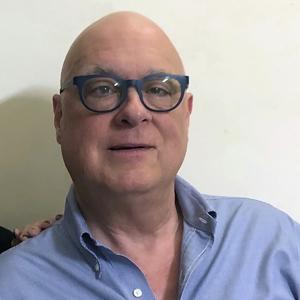
Parker and Alex have a conversation with the editor and translator of Karl Kautsky on Democracy and Republicanism (Haymarket, 2020) on the legacy of Karl Kautsky before he turned renegade. They discuss the convergence of various conflicting political views, from 'Leninists' to Social Democrats and Cold War Warriors, into what Ben Lewis calls in his book a "peculiar consensus" that fundamentally misrepresents the historical figure of Kautsky.
Please support Ben Lewis's work Marxism Translated on Patreon as he strives to bring classical texts of German Marxism to an English audience for a first time.
With family abolition a controversial topic in the current-day leftist discourse, Alyson Escalante argues for a more nuanced and sensitive approach to the topic by looking at the works of Karl Marx and Alexandra Kollontai while exploring the relation of colonialism to the family. Sam Wiles reads the article aloud.
Matt and Christian join Zhun Xu, author of From Commune to Capitalism: How China's Peasants Lost Collective Farming and Gained Urban Poverty for a discussion on China's communes from their construction to their dismantling. They contextualize land reform globally, elaborate on how the Chinese land reform process looked different from the Soviet one, discuss how the communes looked and functioned, and what services they provided as well as their achievements and their points of failure. They then take a general look at the cultural revolution, and how it was slowly reversed after Mao's death, why and how the rural communes were targeted first for reform, and they finish by looking at the fate of the urbanized peasantry and why they have not yet joined the urban struggles in China.
Richard Hunsinger argues that migrant concentration camps represent a descent into fascist barbarism and are related to the inherent tendencies of capitalism. Remi Debs reads the article aloud.
--------------------
Find more information about Richard's case in: https://twitter.com/DefendRichard/ , and please donate to the Atlanta Solidarity Fund
For the latest episode of our series on Actually Existing Socialism, Christian, Rudy, Donald and Connor join forces for a discussion on the Yugoslav self-management in its different iterations. We use Darko Suvin's Splendor, Misery and Possibilities: An X-Ray of Socialist Yugoslavia as a background to outline an exploration of the successive reforms where self-management was first brought in as a response to the failures of the command economy to take advantage of plebian creativity, and how slowly the market and decentralizations became a magic bullet for solving all problems, a fetish which caused the arising of significant inefficiencies, consumerist culture and inequalities both between republics and between workers and managers in the factories. We analyze why successive waves of marketization were supported, and how this led to the formations of new classes that would eventually disintegrate Yugoslavia.
Other Sources:
Yugoslav Marxists
B. Horvat, "Towards a Theory of a Planned Economy"
B. Kidric, "Some Theoretical Questions of the New Economic System"
E. Kardelj, "Directions of the Development of the Political System of Socialist Self-Administration"
Other Marxists
E. Mandel, "Self-Management: Dangers and Possibilities"
E. Hoxha, "Yugoslav "Self-Administration" - Capitalist Theory and Practice"
Academic
D. Granick, "Enterprise Guidance in Eastern Europe: A Comparison of Four Socialist Economies"
P. H. Patterson, "Bought & Sold: Living and Losing the Good Life in Socialist Yugoslavia"
Rudy is joined by Jasdeep and Sangeet to talk about the recent farmers protests going on in Northern India, especially around the regions of Punjab and Haryana. They discuss the origins of the movement and of the farmers union, how the movement relates to workers and urban dwellers and how the questions of caste, religion and gender are dealt with. The conversation then examines the total participation of society in the movement and how this was achieved, and what we can learn from it. We finalize by discussing the future of the movement, and what we can do to help it from anywhere.
Check out Sangeet's work on women's participation in the ongoing movement and on another historical movement hundred years ago, and how religion plays a role in the culture of defiance.
Parker and Alex join Emil Jacobs of the Socialist Party of the Netherlands to discuss the factional struggle and expulsion of the Communist Platform group. They discuss the party's bureaucratic centralism and opposition to open democratic struggle by the party's parliamentary fraction. Should communists bother to try to push for principled politics within the broader workers movement? Why or why not? Emil also asks for context on the struggle for socialism in the US and the Democratic Socialists of America as well as Marxist Center groups.
Weekly Worker articles added for context and updates to the struggle within the Dutch SP: Bureaucratic Control Freakery
Youth Section Will Win
Communist Platform website
ROOD fundraiser
Rudy is joined by Jonathan, Henry and Felipe from the Boston Independent Drivers Guild for a discussion on how gig drivers are resisting and organizing against precarity in their jobs. We discuss what a typical working day looks like and how drivers relate to their jobs and what the workforce looks like and what challenges that entails when organizing, such as multilingualism. Felipe discusses how Uber and Lyft workers can meet each other, how BIDG was started, its current organizing strategy and the long-term goals of the guild, and what their relationship to others unions is. The episode then pivots to the context of Prop 22, how that battle was lost and how the guild is planning for future fights. We end by discussing Uber's interface with venture capital and its common lie that the company is not profitable
As Felipe said, if you are a gig worker, or a ride-sharing driver, you are not alone. There is probably a driver union somewhere near you, with people getting organized to fight.
Donald Parkinson takes issue with the calls for a "socially conservative leftism" that have increased in popularity since Jeremy Corbyn's defeat in the UK election. Matthew Strupp reads the article aloud.
In the second episode of our Soviet Science series, Donald, Djamil and Rudy sit down to contextualize an infamous episode of this story: The case of T. D. Lysenko and Lysenkoism. We discuss the origins of vernalization and Lysenkoism in peasant folk knowledge and Michurin's plant garden, how the state of Soviet scientifical structures and Soviet agriculture favoured his rise, how he took advantage of the Soviet purges to solidify his standing, how he managed to absolutely ban the research of genetics in 1948, and how this ban was negotiated by other scientists, his many downfalls and rehabilitations starting in the early 1950s all the way up to the removal of Khruschev, and the shadow Lysenkoism cast on Soviet agronomy and biology for decades both internally and in the West. We also contextualize Lysenko's agricultural and biological theories using modern knowledge about epigenetics.
Sources/Further Reading:
From the publisher's feed

1,860 Listeners
514 Listeners

1,461 Listeners
1,579 Listeners

8,833 Listeners
3,321 Listeners
582 Listeners
3,343 Listeners

3,137 Listeners

201 Listeners

607 Listeners

286 Listeners

1,066 Listeners
355 Listeners

1,050 Listeners