
Sign up to save your podcasts
Or

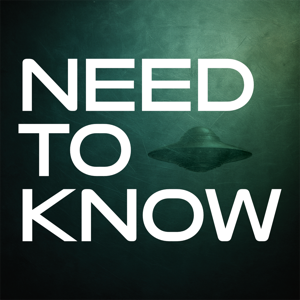

In this Need to Know episode, Bryce Zabel and Richard Dolan take a deep, methodical look at the reality of UFO crash retrievals, treating the subject not as speculation but as a serious historical and structural question. Dolan draws on decades of research, particularly the work of Leonard Stringfield and other major investigators, to explain why crashes are not incompatible with advanced non-human technology. They explore early cases such as Roswell, Magenta (1933 Italy), Trinity (1945), Aztec (1948), and later incidents, arguing that a pattern of recoveries has existed far longer than most people realize. The discussion reframes the common objection that advanced craft "shouldn't crash," emphasizing traffic volume, imperfect systems, and the possibility of smaller deployed vehicles rather than interstellar motherships
The conversation then shifts to how such a secret could persist for decades, with Dolan outlining a legal and institutional framework rooted in post–World War II atomic secrecy laws. He explains how crash materials could be automatically classified, funneled into compartmentalized systems, and increasingly migrated to private contractors like Battelle, Lockheed Martin, and Northrop, limiting congressional oversight and public access. They also examine the controversial Majestic-12 recovery manual, debating whether it represents authentic documentation or sophisticated disinformation. The episode closes with reflections on the global nature of retrievals, the power struggles now emerging in Congress, and the emotional impact of the news surrounding Nick Pope's health, underscoring both the human and historical weight of the subject and why crash retrievals remain one of the most consequential unresolved issues in the UFO field
 View all episodes
 By Bryce Zabel

4.6
430430 ratings
In this Need to Know episode, Bryce Zabel and Richard Dolan take a deep, methodical look at the reality of UFO crash retrievals, treating the subject not as speculation but as a serious historical and structural question. Dolan draws on decades of research, particularly the work of Leonard Stringfield and other major investigators, to explain why crashes are not incompatible with advanced non-human technology. They explore early cases such as Roswell, Magenta (1933 Italy), Trinity (1945), Aztec (1948), and later incidents, arguing that a pattern of recoveries has existed far longer than most people realize. The discussion reframes the common objection that advanced craft "shouldn't crash," emphasizing traffic volume, imperfect systems, and the possibility of smaller deployed vehicles rather than interstellar motherships
The conversation then shifts to how such a secret could persist for decades, with Dolan outlining a legal and institutional framework rooted in post–World War II atomic secrecy laws. He explains how crash materials could be automatically classified, funneled into compartmentalized systems, and increasingly migrated to private contractors like Battelle, Lockheed Martin, and Northrop, limiting congressional oversight and public access. They also examine the controversial Majestic-12 recovery manual, debating whether it represents authentic documentation or sophisticated disinformation. The episode closes with reflections on the global nature of retrievals, the power struggles now emerging in Congress, and the emotional impact of the news surrounding Nick Pope's health, underscoring both the human and historical weight of the subject and why crash retrievals remain one of the most consequential unresolved issues in the UFO field
1,207 Listeners
533 Listeners
1,414 Listeners

457 Listeners
772 Listeners
866 Listeners
164 Listeners
614 Listeners
1,008 Listeners

313 Listeners
1,425 Listeners
335 Listeners
263 Listeners

454 Listeners
244 Listeners