CRASSH

CRASSH

By Cambridge University
Download on the App Store

CRASSH episodes

  • Dr Gabriel Paquette: Balzan-Skinner Lecture and Symposium: Romantic Liberalism in Southern Europe, c. 1820-1850
    Dr Gabriel Paquette (The Johns Hopkins University, US):
    CRASSH Balzan-Skinner Fellow 2012-13 Romantic Liberalism in Southern Europe, c. 1820-1850
    In 1820, revolutions broke out in Spain, Naples, and Portugal. The revolutionaries overthrew absolutist regimes and forced monarchs to accept written constitutions and some representative institutions. In the case of the Iberian countries, these years also were marked by the final dismemberment of their Atlantic empires. By 1823, the fledgling liberal governments in Southern Europe had collapsed. The leaders were imprisoned, exiled, or executed. Over the course of the succeeding decades, cycles of revolution and reaction dominated the politics of Southern Europe. The political tumult occurred against the backdrop of, and helped to inform, an extraordinarily fertile cultural moment, Romanticism, which in turn cross-pollinated the political thought of the epoch. By focusing on several leading political writers, poets, historians and novelists from different Southern European countries, the lecture will explore and analyze the intersections, connections, and divergences between Liberalism and Romanticism in Southern Europe in the first half of the nineteenth century.
    57 min
  • Denis-Constant Martin: The Political Configuration of Identities
    The French Embassy has generously sponsored a cycle of lectures and workshops which bring to Cambridge leading scholars from France to interact and foster research collaborations with experts in Cambridge from across the Schools of Arts and Humanities and Humanities and Social Sciences. In this second year of collaboration, the cycle of talks and workshops will explore the complex theme of identity in 21st-century France and beyond.
    1 hr 11 min
  • Professor Clifford Siskin - 5 March 2013 - When System Met History: The Tectonics of the Modern Disciplines
    This is the first of two Leverhulme Re:Enlightenment Lectures by Clifford Siskin (Henry W and Alfred A Berg Professor of English and American Literature, New York University; Director, The Re:Enlightenment Project) who is currently a Leverhulme Visiting Professor at CRASSH.
    The second lecture, Guesswork: System, Science, and the Advancement of Knowledge, will be held on Monday 29 April 2013.
    These lectures examine how knowledge gets stuck and the strategies for restarting it. Ranging from past to present--and back--they link Galileo's and Bacon’s efforts to advance knowledge to efforts to scale up to new possibilities today. The first lecture highlights the “good fortune” (Bacon) of new tools, by debuting one. Like Galileo's spyglass, "Tectonics" zooms in--in this case, to clarify how our modern disciplines emerged from Enlightenment. The second lecture zooms out to reconsider the history of science in terms of Newton choosing "system" as his tool for guesswork.
    Together, these lectures explore the conditions of possibility for a centre such as CRASSH--a collaborative effort to reconnect the arts, social sciences and humanities. The first condition is the division of knowledge into those categories, with their second-order divisions into the narrow but deep disciplines of modernity. The second condition is that we think that there’s something to gain by this reconnect—that knowledge needs new forms of guesswork now. That thought—that we have a historically-specific opportunity for reorganizing and advancing knowledge—is also central to the The Re:Enlightenment Project's effort to explain and transform our Enlightenment inheritance. These lectures are not an effort to study Re:Enlightenment but to enact it.
    52 min
  • Edmund de Waal - A Local History
    A talk by Edmund de Waal on his installation 'A Local History' for the Alison Richard Building.
    A Local History
    A local history is an installation of three vitrines filled with porcelain, sunk below the paving outside the Alison Richard Building on the Sidgwick Site of Cambridge University. These vitrines are meant to be discovered, to be happened upon as you come and go across the site. They are there to make you pause momentarily. They are not sculpture as a Grand Statement.
    If you find them and look down through the gridded glass you will see piles of porcelain dishes, cylinders arranged in rows, and aluminium boxes filled with shards. The dishes are taken from moulds that I made from a Chinese Ming Dynasty dish, a plate from the French Sèvres porcelain factory, and a Staffordshire serving dish. These three dishes are iconic in form: they exemplify porcelain from three of the greatest places where it has been manufactured over the last thousand years. You will see that these pieces are glazed in whites, creams and celadons, and that there are also glimpses of gilding. Gold was used to highlight the value of porcelain, a material so prized that it was often called white gold. It was also used in Chinese and Japanese art when a vessel had been broken: to mend the porcelain with a seam of golden lacquer emphasized that it had been used and appreciated. I hope the flashes of gold, the fragments of broken vessels and the memories of ancient dishes act as a kind of palimpsest: a writing, erasing, and rewriting using objects.
    If you look up inside the atrium of the building you will see another vitrine, this time full of shelves holding celadon vessels. This vitrine, atlas, is my record of lost pots. It holds 120 lids from lidded jars that I have made over the last twenty years and broken because they were not quite right, because the glaze ran, because of a crack along a rim. If the structure of the vitrine looks familiar, it is because it is a gentle echo of a manuscript page with texts, footnotes and commentaries in intimate conjunction.
    All these vitrines are a kind of archive. They record my thinking about the history of porcelain, my travels, my love of fragments, my obsession with shadows, my reading. They are for this particular place – a threshold into a building, and a threshold into a site full of libraries and archives, and the people who care about libraries and archives.
    About Edmund de Waal
    Edmund de Waal is one of the world’s leading artists working in ceramics today. He is best known for his large-scale installations of porcelain vessels, with interventions at Waddesdon Manor, the Victoria & Albert Museum, Tate Britain and MIMA. Much of his recent work has been concerned with ideas of collecting and collections: how objects are kept together, lost, stolen, or dispersed.
    Increasingly, Edmund’s work has come from a dialogue between minimalism, sound and space, seen in his two permanent installations: Signs & Wonders at the V&A and a sounding line at Chatsworth House. In September 2012, Edmund will take his work beyond the museum space in his first piece of public sculpture, a local history, to be installed at the new Alison Richard’s Building at the University of Cambridge. Other future projects include working with the Chinese porcelain collections at the Fitzwilliam Museum, for an exhibition opening in February 2013, and a collaborative project with the Rijksmuseum, Amsterdam.
    Edmund is also widely known as a writer. In 2010, Chatto & Windus published his family memoir, The Hare with Amber Eyes, which has become an international bestseller. It has won many literary prizes, including the Costa Biography Award, the Galaxy New Writer of the Year Book Award and the Royal Society of Literature Ondaatje Prize. By 2013, it will be published in over twenty-three languages. In 2011 Edmund was commissioned by Phaidon to write The Pot Book, a colour-illustrated anthology of 300 ceramic vessels. His other publications include a monograph on Bernard Leach (1997) and a survey of 20th Century Ceramics (2003).
    Edmund was appointed a Trustee of the V&A and awarded an OBE for his services to art in 2011. In June 2012, he was made a Senior Fellow at the Royal College of Art.
    Edmund was born in Nottingham in 1964. During his school years in Canterbury, he was apprenticed to the potter Geoffrey Whiting. After reading English at Cambridge, Edmund spent a further year studying at the Mejiro Ceramics Studio in Tokyo. He lives and works in London.

    44 min
  • Posy Simmonds: Making People
    CRASSH presents an evening with Posy Simmonds, cartoonist and graphic novelist, on inventing plots, characters, make-up, wardrobe, props, location, lighting, special effects, performing goats...
    48 min
  • Dr Tim Stanton: John Locke and the Fable of Liberalism
    The third Balzan-Skinner lecture and colloquium explores one crooked and circuitous route by which John Locke was claimed by liberalism and came over time to be refashioned in its image. For it was Locke's fate to become the hero of what we might call 'the fable of liberalism', the story which liberalism recounts to itself about its origins and purposes in enacting and reproducing its preferred ways of thinking about the human condition and the nature and limits of political life. This fable begins with Hobbes, and charts a more or less inevitable process which culminates in 'modernity' - the triumph of reason over superstition, of the individual over the inherited order, of the rule of law over the rule of man, of freedom over authority - and the concomitant faltering and waning of authority in all its guises in modern societies. The fable of liberalism, like most fables, is designed to charm the mind. It does not so much ignore or supersede the facts as organize them selectively with a view to perpetuating a particular view of things, a view which associates modernity with reason, individualism, the rule of law, freedom and every good thing in life, refashioning the history of political thought and the internal political and social mechanisms of liberal society alike in its own image.
    Locke is a pivotal figure - perhaps the pivotal figure - in the history of liberalism on this view. In liberal minds it was Locke who put into currency the persuasive conceptions which contributed centrally to the emergence and spread of liberal ways of thinking about politics which continue to ramify in the present. It was Locke who established that the legitimacy of a political authority was a necessary condition of obedience to it and that its legitimacy was a product of the consensual route by which it came into existence; and it was Locke who established that the route by which it came into existence determined the ends for which it existed and, with these, the scope of its authority. In short, the liberal desiderata of limited government, legitimacy, and consent were explained in an exemplary way by Locke, and he remains the great exemplar for understanding and conducting politics legitimately even today.
    1 hr 5 min

More shows like CRASSH

Philosophy by Cambridge University

Philosophy

19 Listeners

Public Lectures from the Faculty of Law, University of Cambridge by Faculty of Law, University of Cambridge

Public Lectures from the Faculty of Law, University of Cambridge

5 Listeners

Cambridge Law Eminent Scholars Archive Podcast by Faculty of Law, University of Cambridge

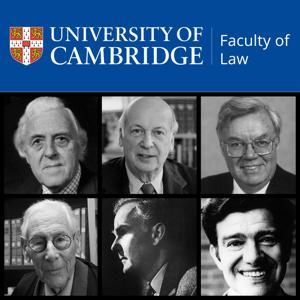
Cambridge Law Eminent Scholars Archive Podcast

0 Listeners

Law In Focus Podcast by Faculty of Law, University of Cambridge

Law In Focus Podcast

0 Listeners

Cambridge Pro Bono Project by Faculty of Law, University of Cambridge

Cambridge Pro Bono Project

0 Listeners

LCIL International Law Centre Podcast by LCIL, University of Cambridge

LCIL International Law Centre Podcast

11 Listeners

Treasuries of Knowledge by Cambridge University

Treasuries of Knowledge

0 Listeners

Migration – Darwin College Lecture Series 2018 by Cambridge University

Migration – Darwin College Lecture Series 2018

1 Listeners

The CPL Sir David Williams Lecture Podcast by Faculty of Law, University of Cambridge

The CPL Sir David Williams Lecture Podcast

2 Listeners

The Stanton Lectures 2012-13 by Cambridge University

The Stanton Lectures 2012-13

1 Listeners

The Ezra Klein Show by New York Times Opinion

The Ezra Klein Show

15,896 Listeners