
Sign up to save your podcasts
Or

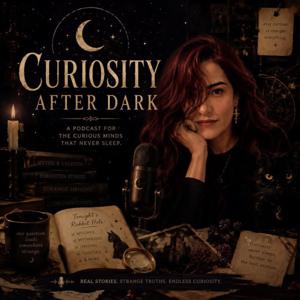


Why Humans Love Dark Things?Why are we fascinated by things that scare us?From horror movies and true crime to ghosts, death, disasters, serial killers, tragic stories, and the unknown, humans have always been strangely drawn to darkness. But why?In this episode, we dive into the psychology behind our fascination with fear and the morbid: why we seek out scary experiences when we know we’re safe, why uncertainty makes our brains obsess, why we can’t look away from tragedy, and why we sometimes find beauty, comfort, or even pleasure in things that are dark.Maybe we’re not obsessed with darkness itself.Maybe we’re trying to understand it.And maybe, in the process, we’re trying to understand ourselves.
Welcome to Curiosity After Dark
The word incel has become synonymous with misogyny, entitlement, and some of the darkest corners of internet culture.But that’s not how the story began.
The word was originally created by a woman who wanted to build a community for people struggling with loneliness and involuntary celibacy.So how did something that began as a way for lonely people to find each other evolve into an online subculture associated with misogyny, radicalization, and real-world violence?In this episode, we trace the strange evolution of incel culture, from its surprisingly innocent beginnings to the rise of the manosphere, the blackpill, Elliot Rodger, the Toronto van attack, and the online communities that turned perpetrators into symbols.It’s a story about what can happen when loneliness becomes resentment, resentment becomes an ideology, and that ideology gives someone an enemy.Perhaps most importantly, it’s a story about how the internet can take someone’s pain and either help them through it… or teach them to worship it.**TRIGGER WARNING**This episode contains discussions of misogyny, sexual entitlement, violence against women, murder, mass violence, suicide, and online radicalization.Some of the events discussed may be disturbing.Please take care while listening.
**SUPPORT & RESOURCES IN EGYPTIf you or someone you know is experiencing violence, the National Council for Women’s Women’s Complaints Office provides legal, psychological, and social support and can help connect survivors with appropriate services.
Women’s Complaints Office: 15115You can also find more information through the National Council for Women.You don’t have to deal with violence alone.
Witchcraft has haunted the human imagination for centuries — from the healers and midwives of medieval villages to the infamous trials of Salem and early modern Europe, where tens of thousands of people, mostly women, were accused, tortured, and executed. In this episode, we trace how witchcraft went from folk tradition and superstition to a tool of political and religious control, and how the figure of the "witch" has been reclaimed in the centuries since
join us as we dig into the real history behind the myths, the moral panics that fueled it, and why the witch remains such a powerful symbol of fear and resistance.
Ways to Help: Nepal Flood Relief & Algeria Wildfires
Nepal — Flash Floods/Avalanche (August 2026)
Algeria — Wildfires (Ongoing since July 2026)
Please do your own research before donating, and give directly through each organization's official site.
What happens when you’ve spent years working toward a life, only to stop and realize you’re not sure what you want anymore? In this episode, I’m talking about leaving a 10-year work chapter behind, taking a break, feeling lost, comparing yourself to everyone around you, and wondering if there’s such a thing as being “too late.” We’ll talk about people who found success later in life, changing direction, taking your time, and figuring things out without having a perfect plan. Maybe we’re not behind. Maybe we’re just between chapters.
what are we doing here? what am i doing here?
i guess we'll figure out together then
come along for this journey and see where it really goes
From the publisher's feed