Cyber Democracy

Cyber Democracy

By Suno IndiaTechnologyEducation
Download on the App Store

Cyber Democracy episodes

  • Mechanical Birds
    Since 2010 with the launch of Parrot AR, drones have become consumer technology and are being used everywhere from movie shootings, wedding videography and scientific activity like mapping. The ability of drones to reach places where humans can’t directly reach means it could be used for monitoring operations, delivery of goods and even be potentially misused for violence. India has banned import of drones since 2014 and has legally allowed drone usage only after Dec 1st 2018 when Director General of Civil Aviation brought the rules regulating Remotely Piloted Aircrafts. In this episode Shashank Srinivasan of Technology for Wildlife takes us through how these regulations are working. 

    See sunoindia.in/privacy-policy for privacy information.

    27 min
  • People's Movement to Save the Internet
    The internet was built by people, they made it there home and used it to teach people skills and spread knowledge. Several individuals grew up with internet, they knew the value of it. In 2015, when they saw facebook attempting to take control over it using their FreeBasics and Internet.org program, people rose up. They turned it into what was called the Net-Neutrality Movement or SavetheInternet Movement. This movement led to the formation of Internet Freedom Foundation. This movement also created the awareness about digital rights in India. In this episode host Srinivas Kodali speak to Kiran Jonnalagadda of HasGeek about the after effects of Net-Neutrality movement. 

    See sunoindia.in/privacy-policy for privacy information.

    24 min
  • Midnight Machines
    Technology has always been political, people developing the technology or promoting it have influenced it everywhere. India is no different to this paradigm, our first prime minister Nehru influenced it ways we can't really imagine. The legacy of political decisions influencing technological innovations have always effected our personal lives in good ways or bad. But with all the issues, we as a country transformed our self with the help of technology. Technology plays an important role in our life.

    A new book Midnight's machines by Arun Mohan Sukumar traces about the history of politics in technology in Independent India. In this episode the author talks about the book and some of the important stories of technology and its politics in Independent India.

    See sunoindia.in/privacy-policy for privacy information.

    44 min
  • Turning Missed Calls into Votes
    Cambridge Analytica is popularly known to influence voters across the world, including US elections of 2016 and UK leave EU referendum, using personal data. It is said Cambridge Analytica had around 5000 attributes of every voter, collected from social media and other private data brokers. Cambridge Analytica used this information to micro-target political advertisements to voters, essentially telling them what they wanted to hear based on their data. The BJP has initiated a missed call campaign to show support to the citizenship amendment bill. Usually these are data collection excercises to know supporters and micro-target them with more dis-information & misinformation. In this episode Shivam Shankar Singh, a Political Analyst and author of “How to Win an Indian Election: What Political Parties Don’t want you to Know" talks in detail about the misuse of data and social media by political parties.

    See sunoindia.in/privacy-policy for privacy information.

    27 min
  • Mother database, National Population Register
    The National Population Register was designed to be maintained by Registrar General of India and was subsequently linked to Census 2011 and carried out along with it by the Register General of India. The register was further updated in 2015, when more data was collected. The National Population Register data was used for other activities like Socio-Economic Caste Census, Aadhaar Voter id linking in the past until the Aadhaar Act of 2016 was framed. The current version of National Population Register along with census 2021 will be carried using a mobile application. National Population Register is the mother database of National Register of Citizens (NRC). To talk about these registers, Suno India editor Padma Priya talks to Cyber Democracy host Srinivas Kodali.

    See sunoindia.in/privacy-policy for privacy information.

    45 min
  • The All Seeing Eye
    Across India there are reports coming in about use of facial recognition systems to track people assembling to protest against the citizenship amendment act. Indian Express has reported the Delhi Police has acquired automated facial recognition system to find missing children because of an order by Delhi High court. Other police departments like Hyderabad, Chennai and Surat police have acquired facial recognition systems from different vendors. At the same time the National Crime Records Bureau has issued a tender to procure a national facial recognition system to be supplied to all police departments. This is systems will be part of the crime and criminal tracking numbering system. 
    Any Facial recognition software reads the geometry of a face captured from a photo or video to create a unique code or ‘faceprint’. This is essentially a set of unique virtual points on your face. These points of geometry are computed using algorithms of image processing and algorithms of machine learning are used to train with these faceprints to find similar data points from existing identity databases. These advancements in facial recognition technology were made over time, with a push from image processing requirements of driverless cars to social media pushing it to automatically tag your friends in photos. Between 2014 and 2018 facial recognition systems got 20 times better according to US National Institute of Standards & Technology.
    In this episode, Srinivas Kodali speaks with Vidushi Marda, a lawyer and programme officer from article 19, where she works on artificial intelligence systems and has been focusing on state use of facial recognition systems in her research. she is also a non-resident research analyst at Carnegie India where her work focuses on facial recognition systems by police authorities in India. 
    Links: https://cvdazzle.com/

    For more stories like this, you can listen to www.sunoindia.in. Also follow us on Facebook, Twitter or Instagram.

    See sunoindia.in/privacy-policy for privacy information.

    26 min
  • Personal Data Protection Bill - What does it mean for your right to privacy?
    The much awaited personal data protection bill for India has been introduced in the parliament last week. After appointing a committee lead by Justice Shri Krishna for framing the law, the government has made its own internal consultations and has come out with a new bill. The entire process of drafting this bill has been in secret with several RTI and data rights activists calling out this secrecy surrounding the bill. The proposed draft bill while granting several provisions for individuals to claim their right to privacy has blanket exemptions for the government to collect any data. To discuss this bill and explain to us what it means, we have with us Amber Sinha of Centre for Internet and Society. Amber is also the author of Networked Public: How Social Media Changed Democracy.

    See sunoindia.in/privacy-policy for privacy information.

    1 hr 4 min
  • Data of the People, by the People and for the People
    Replying to a question in Rajya Sabha, the Minister for Road Transport and Highways has revealed that the government is selling personal data related to vehicle registration and driving licenses at a price of Rs 3 crore. The Minister further revealed the department has already earned a revenue of Rs 65 crores from the sale of this data.
    The Economic Survey of 2018-19, a yearly government document of the state of the economy proposed new ways to achieve a trillion-dollar data economy for India. The Chief Economic Adviser has dedicated an entire chapter for data, title “Data of the People, by the people and for the people”. In this chapter, he proposed plans of the government to sell data collected as part of welfare activities like PDS distribution and National Rural Employment Guarantee Scheme to be sold to private sector to further fund welfare activities. 
    The Economic Survey calls for treating data as a public good and proposes the sale of data to the private sector as other countries sell public data like bus timetables in the UK. To further promote and enable this data economy, the survey proposes interlinking of databases to build a giant database using Aadhaar. It proposes to shift the practice of collecting data using paper to digital. 
    The survey not only recommends building the new infrastructure of government data, it recommended active sale of it assuming the data protection law was already tabled in parliament. In this episode, host of Cyber Democracy, Srinivas Kodali, discusses "the economy of data" with Professor Reetika Khera of IIM Ahmedabad. 

    See sunoindia.in/privacy-policy for privacy information.

    31 min
  • Safety Trouble
    Last week the country was shocked to hear about the rape and murder of a young veterinary doctor in Hyderabad. The Home Minister of the Telangana blamed the victim for not calling the emergency police helpline 100 and instead choosing to ask for help from her immediate family. This incident has caused much uproar and has brought the question of women's safety into mainstream debate. 
    After the rape of Nirbhaya in 2012, a fund for women safety was created by the Government of India to improve women safety. The fund has been used for new initiatives like emergency panic buttons in transport vehicles like autos, CCTV cameras, police apps and other emergency services like a call centre for emergency number 112. These new initiatives while providing a sense of safety do not always work. To discuss about these women safety measures we have Rohini Lakshane from Bachchao project with us for today’s episode of cyber democracy.

    For more stories like this, you can listen to www.sunoindia.in. Also follow us on Facebook, Twitter or Instagram.

    See sunoindia.in/privacy-policy for privacy information.

    27 min
  • Bugs in Cyberspace
    In cyberspace, a bug is an error in a software program which may cause a malfunction like shutting down systems or behave in an unintended manner. Across the world, security researchers report thousands of these critical security bugs to firms offering a bounty. Cybersecurity is not just another issue for these people, it is their bread and butter. A sizeable number of Indians are in this line of career, according to bug bounty platform HackerOne, Indians earned 10% of global bug bounties second only to the United States. While Indians are highly skilled in this sector, it is not so easy to report cybersecurity issues to various government departments in India. Often Indian cybersecurity agencies deny and completely ignore the warnings made by security researchers. To discuss the ecosystem of cybersecurity and bug reporting in India, we have with us Karan Saini. A young security researcher and bug bounty hunter.

    For more stories like this, you can listen to www.sunoindia.in. Also follow us on Facebook, Twitter or Instagram.

    See sunoindia.in/privacy-policy for privacy information.

    26 min

About Cyber Democracy

From the publisher's feed

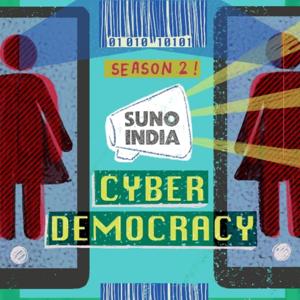
The second season of Cyber Democracy podcast focuses on understanding how technology is a site for gendered politics in India. Through conversations with female and trans-queer grassroots practitioners, the podcast will discuss how our gender and intersectional identities shape our experiences of and engagements with technologies and the Internet.

More shows like Cyber Democracy

Dear Pari by Suno India

Dear Pari

6 Listeners

Eshwari Stories for kids in Telugu by Suno India

Eshwari Stories for kids in Telugu

13 Listeners

Rare Lives by Suno India

Rare Lives

0 Listeners

The Suno India Show by Suno India

The Suno India Show

9 Listeners

Gasping For Breath by Suno India

Gasping For Breath

0 Listeners

Climate Emergency by Suno India

Climate Emergency

3 Listeners

Beyond Charminar by Suno India

Beyond Charminar

10 Listeners

Raah – A Career Podcast by Suno India

Raah – A Career Podcast

0 Listeners

Pinjra Tod Kar by Suno India

Pinjra Tod Kar

1 Listeners

సమాచారం సమీక్ష - A Telugu News Podcast by Suno India

సమాచారం సమీక్ష - A Telugu News Podcast

3 Listeners

ईश्वरी जी की कहानियां  (Eshwari Stories for kids in Hindi) by Suno India

ईश्वरी जी की कहानियां (Eshwari Stories for kids in Hindi)

0 Listeners

Her Story of Dance Podcast by Suno India

Her Story of Dance Podcast

5 Listeners

Baat - Mulakaat by Suno India

Baat - Mulakaat

0 Listeners

Indian Economy Explained by Suno India

Indian Economy Explained

0 Listeners

Beyond Nation & State with Smita Sharma by Suno India

Beyond Nation & State with Smita Sharma

1 Listeners

Pride and Prejudice by Suno India

Pride and Prejudice

1 Listeners

Science & Us by Suno India

Science & Us

0 Listeners