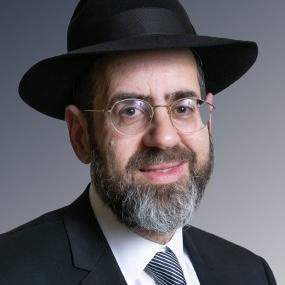
Daily Bitachon

Daily Bitachon

By Rabbi David SuttonReligion & SpiritualityJudaism
Download on the App Store

All Daily Bitachon episodes

  • Elul: The Power of Small Deeds
    Welcome to Daily Bitachon. Today, we are exploring the concept of taking upon ourselves something small. One reason we often fail to do this—even though it seems so easy—is because we assume minor deeds are inconsequential. We overlook the reality that tiny seeds grow into massive trees. The Rambam notes in his commentary on Pirkei Avot on the Mishnah, "Hakol lefi rov hama'aseh" (Everything is according to the multitude of actions), that giving a single dollar one thousand times refines the soul far more than giving one lump sum of one thousand dollars. Consider how drops of water gradually wear through solid stone, as in the famous story of Rabbi Akiva. When he saw that water carving into the rock, he realized: If soft water can pierce hard stone, then the words of Torah can surely pierce my heart. But imagine calculating the total volume of water needed to carve that hole over twenty or thirty years—say, the amount in an Olympic-sized swimming pool. If someone said, "Let me make this happen instantly by dumping the entire pool onto the rock all at once," it wouldn't make a dent. Why? Because the transformation happens precisely because every single contact between the water and the stone leaves an imprint, repeated over and over again. Pouring it all at once simply does not have the same impact. Rav Wolbe emphasizes this profound power of small things. Look first at the physical world: the entire universe is constructed from microscopic components. Atoms are the building blocks of all matter, composed of subatomic neutrons, protons, and electrons. Everything is built on a level too small to see with the naked eye. In architecture, imagine an architect saying, "I don't care about individual bricks; I only care about the building." That would be foolish. Without the bricks, there is no building. Look at the human body: blood coagulation isn't an instantaneous chemical wave. Instead, microscopic platelets travel, activate, bind together, and gradually form a clot. Everything operates on a microscopic scale. Even a genetic defect, lo aleinu , comes down to a microscopic chromosomal difference. We all develop from microscopic origins, and Rav Wolbe explains that spiritual growth functions the exact same way. Rav Wolbe continues that internalizing this concept should create a revolution in our thinking. People often say, "Change yourself, and you change the world." When people set out to fix the world, they envision grand, global systems—organizations dedicated to international peace or sweeping justice. When someone sets out to improve themselves, they likewise imagine performing massive, mighty acts of loving-kindness or extraordinary holiness. They wonder: What perfection can possibly sprout from tiny, effortless deeds that place no burden on a person? Yet the truth is the exact opposite: man is built precisely through small deeds. Consider an example from modern medicine. The actual quantity of an active healing agent in a pill is remarkably tiny—often just a single milligram. My father was a dermatologist, and cortisone was a standard treatment; the actual concentration of active ingredients in such medications is minuscule compared to the inactive base. If a medication contained a much larger dose, it would harm the patient instead of healing them—it could even prove fatal. Certain substances that act as lethal poisons in large quantities serve as potent cures when administered in micro-doses. Imagine an impatient patient who is prescribed twenty pills over five days, but decides, "I'll just swallow the whole bottle at once to heal faster." It doesn't work that way. Refining our character traits follows the exact same principle. The prophet Zechariah asks: "For who has despised the day of small things?... The eyes of Hashem, which roam through the whole world." If the eyes of Hashem do not overlook or despise the smallest spiritual act, we certainly must not despise a small deed. In Chovot HaLevavot ( Sha'ar Yichud HaMa'aseh , Chapter 5), Rabbeinu Bachya discusses the battle with the Yetzer Hara (the evil inclination): "It should be great in your eyes, the littlest of the littlest victory you achieve over him, and the smallest measure of strength you muster against him—because from this, you will ascend to the next level." The Chovot HaLevavot is warning us never to underestimate small steps. One of the greatest obstacles in our service of Hashem is dismissing minor deeds as insignificant. He adds another vital insight: the Yetzer Hara himself "does not treat lightly the smallest of your small matters to conquer you through it." The inclination treats every tiny action with absolute seriousness because he knows it leads to the next step. We must adopt the exact same perspective. Imagine a person walking down the street wearing a pair of sneakers given to him as a gift. He assumes they are ordinary shoes. Suddenly, a group of thieves chases him down trying to steal them. He realizes, "If they are going through this much trouble to take these sneakers, they must be exceptionally valuable." The Yetzer Hara knows the true worth of our small deeds, which is why he fights so hard over them. We can learn from our inclination: never underestimate your deeds, because he certainly doesn't.
    6 min
  • Shabbat a time to say - "Thank you!"
    Welcome to Daily Bitachon. We've been discussing Rosh Hashanah and kabbalot , preparing for the High Holidays. Usually, on Fridays, I share a class on Shabbat, but I got so engrossed in the Rosh Hashanah topic that I forgot. Then I realized something: if the Rabbis instituted that we don't blow the Shofar out of respect for Shabbat, how could I cancel my Shabbat class to prepare for Rosh Hashanah? Even though you might be listening to this on Sunday, Hayom Yom Rishon b'Shabbat —we're adding an extra day this week to make sure we fit our Shabbat class in. Mizmor shir l'yom haShabbat: Tov l'hodot l'Hashem u'lzamer l'shimcha elyon. Shabbat is a day designated to delve into the goodness of Hashem. Rabbi Miller's grandchildren shared a story about him. One Shabbat, he asked them, "What is the purpose of Shabbat? What are we supposed to be doing?" One grandchild answered, "Learn Torah." Another said, "Sing zmirot ." A third said, "Have kavanah in tefillah ." Rabbi Miller replied, "No. Tov l'hodot l'Hashem —the primary purpose of Shabbat is to thank Hashem." This is why we eat delicious food and experience Oneg Shabbat . By enjoying good food, we internalize that the very purpose of Hakadosh Baruch Hu creating the world was to bestow goodness, delight, and happiness upon us. As the Mesillat Yesharim opens, the ultimate purpose of creation is l'hit'aneg al Hashem —to delight in Hashem. While the ultimate realization of this is the oneg of Olam HaBa , Hashem wants us to experience joy at every step of the journey. On Shabbat, which is me'ein Olam HaBa (a taste of the World to Come), we have a specific mitzvah to experience this delight. According to the Rashbam, the source for Kiddush b'makom se'udah (reciting Kiddush where the meal is eaten) is the verse V'karata l'shabbat oneg . V'karata ("and you shall call/proclaim") refers to Kiddush. Where do we proclaim it? In a place of oneg —where there is delicious food. That is the se'udah . Therefore, the proclamation of Shabbat must be directly linked to physical enjoyment. The biblical mitzvah of Zachor is fulfilled through Kiddush; while wine is a rabbinic requirement, the core objective is linking the sanctification of Shabbat to delight. What is the deeper message here? Once we realize that Hashem created pleasant things for our enjoyment, we take the next logical step: if His ultimate goal is our pleasure, then the way He runs our lives must also be entirely for our good. He does not want us to be miserable; the existence of all this good proves it. If there are times when we don't understand what He is doing, it simply means our perception is limited. There is a beautiful explanation of the verse Ki simachtani Hashem b'fo'olecha : "You have made me rejoice, Hashem, through Your deeds." This refers to creation—the ice cream, the chocolate, the majestic mountains, the animals, everything He made. The verse continues, B'ma'aseh yadecha aranen : "I will sing for joy at the works of Your hands." This refers to His providence—the way He interacts with people. Because I see the goodness in what You created, I can trust and rejoice in how You guide my life. Mah gadlu ma'asecha Hashem —How great are Your works, Hashem! The challenge is Me'od amku machsh'votecha —Your thoughts are exceedingly deep. As we sing in Lecha Dodi , Sof ma'aseh b'machashava techilah —the end of the action is rooted in the initial thought. This phrase refers directly to Shabbat, which was planned before creation began. In the exact same way, everything Hashem orchestrates in history and in our personal lives begins with a deep, master plan. The problem is that Ish ba'ar lo yeida, u'chsil lo yavin et zot —a boorish person cannot know, and a fool cannot understand "this." Why does it say et zot ("this")? A classic parable explains: A young child is invited into an airplane cockpit. The pilot kindly shows him the instrument panels, pointing out hundreds of intricate dials, levers, and screens. The child points to a single red button and asks, "What's that? Why is that there?" In other words: you understand nothing of how the rest of the plane flies, yet "this" single button is your grand question? We see this same concept in the Passover Haggadah, where the Tam (simple son) asks, Mah zot? ("What is this?"). In the Torah, this question appears regarding the redemption of a firstborn donkey ( peter chamor ), where a person is taken aback by an unusual commandment. Everything else was acceptable to him until he hit this one detail. In Mizmor Shir L'Yom HaShabbat , what is the "this" that confuses people? Bifro'ach resha'im k'mo esev —when the wicked sprout quickly like grass. What is their ultimate end? L'hishamdam adei ad —to be destroyed forever. Grass grows rapidly, but it is quickly mowed down. Conversely, Tzaddik katamar yifrach —the righteous flourish like a palm tree. A date palm takes years to mature before yielding sweet fruit. In the interim, when we look at the world, we struggle to understand what is happening. We do not always grasp how Ki hinei oyvecha Hashem, ki hinei oyvecha yoveidu —all Your enemies will ultimately perish. But we will endure. Israel survives every hardship, until the culmination when we will declare, L'hagid ki yashar Hashem —to proclaim that Hashem is just and upright, and that everything made complete sense all along. This is the central purpose of Oneg Shabbat : to recognize how much goodness Hashem created for us, and to know that His guidance of the world is equally benevolent. Rav Mattisyahu Salomon quotes a powerful insight from Rav Elyah Lopian: A traveler comes across a magnificent estate. Outside sits a breathtaking garden, filled with vibrant flowers, fruit trees, and pristine landscaping. He thinks, "If the outside garden is this glorious, imagine the magnificence inside the palace!" He enters the palace, only to find the entire interior gutted, with rubble and scaffolding everywhere. Confused, he realizes: the master is remodeling. The gutted interior isn't destruction; it is the preparation for a much grander structure, and the well-tended garden outside is the absolute proof that an attentive owner is in charge. The nimshal (lesson) is clear: We look around at nature and see an exquisite world—the "garden." Then we look at world events—wars, rogue nations, terror, and hester panim (the concealment of God's face)—and the world seems chaotic and gutted. What is happening? The Owner is rebuilding history toward the ultimate redemption. This explains why in Aleinu we state, Hu Elokeinu ein od, emet Malkeinu ("He is our God, there is no other; true is our King"), and immediately follow with Al ken nekaveh l'cha Hashem Elokeinu ("Therefore we put our hope in You, Hashem, to soon see Your glory"). What is the link between proclaiming His absolute sovereignty and our hope for the future? When we recognize that Hashem is the Master running the entire world, we can anticipate the future with complete confidence. We eagerly look forward to the day when wickedness is eradicated and the beauty of the complete plan is revealed. This connects directly to Rosh Hashanah, where Aleinu serves as the core introduction to Malchuyot (the blessing of His Kingship). This is also why our Sages taught that the essential themes of Rosh Hashanah are contained within Shabbat: the recognition that even when the world appears in disarray, Hashem remains the King in full control. We might not see the King directly, but we see His garden. Metaphorically, we appreciate that garden on Shabbat through our oneg . When we partake in the Shabbat delights, we remind ourselves: "If this is the goodness He created for us, imagine how masterfully and lovingly He is guiding our lives." Have a wonderful, peaceful Shabbat Shalom!

    9 min
  • The Month of Elul 39
    Welcome to Daily Bitachon. We continue our discussion on the importance of small things. Don't try to grab the massive things all at once. Why is it so crucial to work on the small things first? Rabbi Yisroel Salanter explains that we are held far more strictly accountable for neglecting easily accessible mitzvot than for failing at exceptionally difficult ones. Neglecting the easy task incurs greater fault because there was no real barrier in your way. For example, attending Shacharit at 8:00 AM on a relaxed Sunday morning is relatively straightforward, whereas waking up for a 7:00 AM minyan during an exhausting, busy work week is genuinely difficult. Missing that effortless Sunday minyan carries far more culpability than struggling on a high-pressure weekday. This principle comes from a Gemara in Masechet Menachot regarding the two types of strings on tzitzit: the white wool strings and the techelet (blue-dyed) strings. Historically, techelet was rare, expensive, and carried immense Kabbalistic significance, whereas white strings were simple and inexpensive. Yet, the Gemara teaches that the consequence for neglecting the white strings is far greater than for missing the blue strings. How can the punishment be greater for failing at the "lesser" mitzvah? The Gemara explains this with a mashal (parable): A king instructed one servant to bring him a golden vessel and another servant to bring him an inexpensive earthenware jar. Neither servant fulfilled their task. Yet, the king judged the second servant far more harshly. Why? Because his task was effortless. Even though the golden vessel was rarer and more valuable, the clay cup was readily available. The king's grievance is clear: "It was so simple—why couldn't you manage that?" Neglecting an easy task demonstrates a profound lack of care. Consider a modern parallel: If your mother asks you to assemble a complex piece of IKEA shelving and also asks you to take out the garbage, failing to build the furniture is understandable due to its complexity and difficulty. But failing to take out the garbage is inexcusable because it required minimal effort. Similarly, if someone is tempted by a juicy piece of Lashon Hara (gossip) versus a trivial, nonsensical comment that could easily be avoided, the greater accountability lies with the trivial comment. Why couldn't you control yourself when it required almost no effort? We start with small things because failing at them carries greater culpability. Rabbi Yisroel Salanter teaches a major chiddush : within every sin, there are varying degrees of difficulty. We must identify the easiest part of that sin and stop that part first, because that is where our greatest responsibility lies. Consider an extreme mashal : A heavy smoker consumes twenty cigarettes a day. When Shabbat arrives, he struggles with his addiction and smokes all twenty throughout the day, from Friday night straight through Seudah Shlishit . He decides he wants to lessen his sin. What are his easiest cigarettes to give up? The first one on Friday night: He just smoked an hour before sunset, so waiting another hour or two is entirely manageable. The last one on Shabbat afternoon: Shabbat will end in a few minutes, meaning he can easily hold off until Havdalah . The greatest accountability isn't for the cigarette smoked on Shabbat morning when nicotine cravings peak; it's for the first and the last. You couldn't hold back ten minutes at the beginning? You couldn't wait ten minutes at the end? The first layer of the onion you must peel away is the easiest one. Stop that first. This is an essential focus during the month of Elul: identifying what is easy versus what is difficult, and fixing the accessible areas first. Rabbi Yisroel Salanter's radical insight is that by simply eliminating those two accessible cigarettes, that individual is considered a genuine Baal Teshuvah in that specific domain. Someone might object: "A Baal Teshuvah? He's still smoking eighteen cigarettes on Shabbat!" Yes, but within that easiest boundary of the sin, he fully stopped. The Pele Yoetz notes that when the shofar is blown, if a person firmly commits even to a small correction he is a baal teshuvah, for example he says "I will never again smoke the first and last cigarette on Shabbat," that specific layer of sin is completely removed from his life. People often get discouraged: "Big deal, you stopped two out of twenty?" Yes, it is a big deal. Rabbi Salanter calls this rule "lessening the sin." Lowering the flame matters. Every single action counts. Hakadosh Baruch Hu is not mevater —nothing is simply overlooked or lost in a pile. Think of sins like calories: A person might say, "I already blew my diet with three scoops of ice cream, so I might as well add the sprinkles." But the sprinkles still add calories. When you eventually work to burn off the weight, you will have to burn off the sprinkles too. Never underestimate removing the sprinkles. Conquering the small, accessible things saves immense effort down the line and builds lasting spiritual growth.
    0 min
  • The Month of Elul 38
    The Power of Small Resolutions Welcome to Daily Bitachon. We are continuing our topic of how to make a proper kabbalah (resolution) during the month of Elul. We previously discussed taking on small kabbalot . But what is the reason for starting small? Shouldn't we strive for big things? The Psychology of Resistance Rav Wolbe explains that taking on large, dramatic commitments creates massive resistance from the Yetzer Hara (evil inclination). It is like a compressed spring that snaps right back—aggressive changes provoke aggressive counter-reactions. Small commitments, by contrast, go under the radar and bypass this pushback. Rav Wolbe notes that there is a primal force within human nature that inherently resists being told what to do. The Gemara in Sanhedrin records a debate between Rabbi Yehuda HaNasi (Rebbe) and Antoninus regarding when the Yetzer Hara enters a person. Rebbe initially thought it entered at conception, but Antoninus proved it enters at birth. Why? Because otherwise, the fetus would rebel and cause a miscarriage. This force of rebellion ( meridah ) is not logical; it is a blind, instinctive reaction that screams, "Don't control me!" You see this in everyday life—like road rage or political unrest—where people act against their own self-interest purely to assert control. In the case of the fetus, causing a miscarriage means dying, yet the instinctual drive is simply: "I'm not thinking—just don't control me; get me out of here." When you make a massive kabbalah , your internal nature feels controlled, and it triggers that exact rebellion. Flying Under the Radar So, how do you overcome this internal resistance? By starting small. Rav Wolbe shared a story from when he flew on a military plane to speak with soldiers during wartime. When the plane suddenly dropped in altitude, he asked a soldier what was happening. The soldier explained: "We are entering Egyptian territory. We need to fly low so their radar won't pick us up." Rav Wolbe applied this as a powerful metaphor: when you make a subtle, incremental shift in your behavior, you fly under the radar of the Yetzer Hara . It doesn't trigger a massive internal rebellion, allowing you to build lasting consistency. When people take on sudden, overwhelming commitments, they burn out, drop everything, and end up worse off than when they started. Taking on too much fails; doing a few small things consistently is immensely powerful. The Root of the First Sin Rav Wolbe finds proof for this deep-seated rebelliousness at the end of Parashat Bereishit , where the Torah states: "Vayinachem Hashem ki asah et ha'adam ba'aretz" (Hashem reconsidered/took comfort that He made man on earth). Rashi explains that Hashem "consoled Himself" that He placed man below; had man been created in the heavenly realms, just as he rebelled down on earth, he would have incited the upper angels to rebel as well. That is the sheer power of this force of meridah . Rav Wolbe takes this further: the original sin of Adam and Chavah was rooted in a failure to make a proper kabbalah . When Chavah spoke to the Nachash (serpent), she added an extra restriction, claiming they were forbidden not only to eat from the tree, but even to touch it. By adding beyond what was commanded, she took on too much. It backfired, and that excessive restriction led directly to the downfall. Defeating the Serpent at the Heel Conversely, look at the famous Rashi at the beginning of Parashat Eikev : "Vehayah eikev tishme'un" —reward comes for observing the mitzvot that people tend to tread upon with their heels ( eikev ), meaning the "small" mitzvot. Rav Wolbe brings this as a foundational source for small kabbalot . Furthermore, the Chida ( Sefer Chomat Anakh ) quotes Rav Chaim Vital on the verse in Bereishit (3:15) where Hashem tells the serpent, "Ve'atah teshufenu eikev" (you will strike at his heel). The Yetzer Hara targets a person specifically in the "heel"—the small, overlooked areas. Therefore, the way to defeat him is on that very same battlefield: the eikev , the small things. If you focus on the small details, you crush the serpent's strategy. Adam HaRishon fell because he took on too much, and the corrective lesson after the serpent's attack was clear: if you want to defeat the snake, master the eikev —focus on the small things. The Elul Mission: Ayeka and Self-Knowledge This brings the entire dynamic full circle. The month of Elul is our preparation for Rosh Hashanah—the day Adam HaRishon was created and the day he sinned. Our core task on Rosh Hashanah is to rectify that original misstep. How fitting is it that during Elul, our primary strategy is to seek out the small, manageable commitments and recognize that victory lies in the details. To succeed at this, you must have an accurate assessment of yourself—a true cheshbon hanefesh (spiritual accounting). Rabbeinu Yonah teaches that the most dangerous state is avad cheshbon —losing track of where you truly stand. Rav Wolbe noted that this was the fatal flaw during the destruction of the Beit HaMikdash ( Churban ). There is a profound linguistic connection here: Megillat Eichah opens with the cry of the Churban , "Eichah" (How/Where), which shares the exact same Hebrew root and letters as Hashem's question to Adam after he sinned: "Ayeka" (Where are you?). When Hashem asked Adam "Ayeka?" , He was asking: Do you know where you are holding? Have you lost track of yourself? Do you no longer know what is on your level and what is beyond you, what is too big and what is small? That is our primary work during the month of Elul: to become fully cognizant of who we are, to recognize our genuine strengths and challenges, and to pinpoint the small, steady commitments that will not provoke internal rebellion. That is how we rebuild our cheshbon and secure lasting growth for the year ahead.
    0 min
  • The Month of Elul 37
    Welcome to our daily Bitachon. We are now in the month of Elul. As mentioned, we are going to focus on the topic of Kabbalot —accepting commitments upon ourselves. One of the central goals during Elul is determining exactly what commitments we will make on Rosh Hashanah and Yom Kippur going forward into the new year. Today, we will begin by demonstrating the vital importance of commitment, and over the coming week, we will explain how it works. The Pele Yoetz , Rabbi Eliezer Papo, quotes the great Kabbalist Rav Shalom Sharabi in his work on Rosh Hashanah: the primary impact of the shofar in the heavens depends on teshuvah . Without teshuvah, the shofar is merely k'nagen hamenagen —like a musician casually playing an instrument. To activate the power of the shofar, we need teshuvah. Consider an effervescent tablet: sitting dormant in its packaging, it possesses latent energy. Only when dropped into water does it fizz, dissolve, and release its active ingredients. Similarly, the shofar requires teshuvah to activate its spiritual resonance in the heavens. The Pele Yoetz notes that one should accept upon oneself to refrain from a specific sin—even in a modest, targeted way—and through this, zocheh liheyot tzaddik ba'al teshuvah (one merits becoming a righteous returnee). This aligns with an essential insight from Rav Yisrael Salanter: genuine teshuvah does not require an earth-shattering, impossible resolution. Accepting a specific, focused change elevates a person to the status of a ba'al teshuvah . The Power of Small Commitments Why are small, targeted kabbalot often far more effective than grand, sweeping resolutions? The Rambam ( Hilchot Teshuvah 2:2) writes that the core component of teshuvah is resolving to separate oneself from sin and committing firmly for the future. He cites the verse Ya'azov rasha darko ("Let the wicked forsake his way"), requiring genuine regret. He then adds a demanding requirement: v'ya'id alav yode'a ta'alumot —the One who knows all secrets (Hashem) must be able to testify that the person will not return to this sin again. The Rambam draws support from the Haftarah of Shabbat Shuvah (Hoshea 14:4): V'lo nomar od eloheinu l'ma'aseh yadeinu ("Nor will we call the work of our hands our gods anymore"). A novel explanation from the Nimmukei Gri"b (Rabbi Yehuda, son of Rabbi Yehoshua Heshel Bachrach (1775-1846]), highlights a Midrash: Knesset Yisrael asks Hashem, "Master of the Universe, if we do teshuvah, who will testify for us?" Hashem answers, Ani ed ("I am the witness"), as it is written, Shuvah Yisrael ad Hashem Elokecha (Hoshea 14:2). The Nimmukei Grib homiletically reads the word ad (until) as ed (witness): Hashem Himself stands as your witness. This standard can feel daunting: if Hashem must testify to the permanence of the commitment, does an imperfect resolution render the entire teshuvah invalid? The Beit Elokim (by the Mabit, Sha'ar HaTeshuvah , ch. 12) clarifies that every component of teshuvah carries immense independent value. Unlike other mitzvot —where wearing tzitzit with only three corners or putting on only half of one's tefillin fulfills nothing—teshuvah functions differently. Even if a person has not yet attained a complete teshuvah sheleimah , every partial step counts. This mirrors the concept of chatzi shiur (a partial measure). As Chacham Ben-Zion Abba Shaul discuss regarding someone on a desert island with only half a kezayit of matzah: just as a partial measurement of a prohibition is biblically forbidden ( chatzi shiur asur min haTorah ), a partial measurement of a positive spiritual act retains real substance and worth. We should always strive for the ideal, but we must never let perfection become the enemy of the good. The Practical Path Forward This brings us back to the teaching of Rav Yisrael Salanter: taking on a small, well-defined commitment makes sustained success genuinely attainable. Because a true resolution requires lasting consistency, smaller commitments are far more durable than overwhelming overhauls that quickly collapse. In the coming classes, we will explore how to identify the right small commitment, how to establish it properly, and how to maintain it throughout the year.
    0 min
  • The Month of Elul 36- Cheshbon HaNefesh and Knowing Where You Stand
    We now begin a new series for the month of Elul. The Chida, in his sefer מורה באצבע (letter 243), teaches that Elul is a time of Teshuvah, and the essential work of Teshuvah is to examine one's deeds. It is therefore a good practice, every night before going to sleep, to review what happened that day. The Chida writes that one should do this from Rosh Chodesh Elul through Yom Kippur—and ideally, every day of one's life. He cites the Zohar, which describes Tzadikim who were called מארי דחושבנא ("masters of accounting")—those who constantly calculated and took account of their lives. At the very least, he says, one should engage in this practice during the forty days of the Yamim Noraim. It is noteworthy that the Chida refers to all forty days as Yamim Noraim. As we have noted many times, our calendar never begins at an arbitrary point; each month is a continuation of the one before it. Elul is not a restart button—Elul flows directly out of Av. How so? Rav Wolbe, in sefer עלי שור (vol. 2, p. 412), raises the famous question: how can we treat Tisha B'Av as a מועד (a holiday), when it commemorates our distancing ourselves from Hashem? He brings the answer from his teacher, Rav Yerucham Levovitz: there are two kinds of holidays—holidays of closeness and holidays of distance. Rosh Hashanah is a holiday of closeness; Tisha B'Av is a holiday of distance. The obvious question is: what does this mean? How can distance be cause for a holiday? Rav Wolbe explains that there are three possible spiritual states: Closeness to Hashem (קירוב): A living, felt relationship with God. Distance from Hashem (ריחוק): Painful, but still a relationship—a point of connection. Apathy: A state in which a person is neither close nor far. As Rabbeinu Yonah writes: מקרב לבם אבד חשבון על נפשם ("From their heart, all accounting of their soul has been lost"), and he adds: וכמה הם במדרגה תחתונה ("How low a level they occupy")—this is the lowest state of all. This is what Rav Yerucham meant. Distance is still a relationship. But a person who is neither close nor far is simply floating in the air. Such people may believe they are complete and perfect, yet they are profoundly distant—convincing themselves they are performing mitzvot even while committing sins. This is why HaKadosh Baruch Hu declares through Yirmiyahu: הנני נשפט אותך ("Behold, I will enter into judgment with you")—על אמרך לא חטאתי ("because you say, 'I have not sinned'"). The judgment is not for the sin alone, but for the denial of it. Rav Wolbe explains that this self-deception defined the generation leading up to the Churban. When the Churban finally came, their eyes were opened, and they suddenly realized how far they had drifted. Paradoxically, this was the beginning of repair: for the first time, they knew where they stood. Yes, they were far—but awareness of distance meant they once again had a connection, a real relationship with God. This resolves the famous question of the Keruvim. As the generation's sins increased and their level declined, the Keruvim turned progressively away from each other until they stood back-to-back. Yet when the enemy entered the Beit HaMikdash, the Keruvim were found embracing. Why? Because once the enemy entered and the people recognized their distance, a new relationship began. By contrast, a person who has lost all spiritual accounting has no connection whatsoever—the worst possible state, a life built on falsehood. The first step toward Teshuvah, therefore, is knowing where you are: קרוב ה' לכל קוראיו ("Hashem is close to all who call upon Him")—לכל אשר יקראוהו באמת ("to all who call upon Him in truth"). To begin the high holiday season, we must first know where we truly stand. Out of that cheshbon comes the decision of what to change and how to change. Nothing can change unless we know where we are—we cannot treat the disease without a diagnosis. That is our first step. There is a second strong connection between Av and Elul. The zodiac symbol of Av is the אריה (Aryeh)—Leo, the lion. The lion alludes to Nevuchadnezzar, the conqueror who destroyed the first Beit HaMikdash; the Gemara relates that he rode upon a lion, and it was his symbol. Yet the pasuk in Amos (3:8) states: אריה שאג מי לא יירא ("The lion has roared; who will not fear?"). The Shelah HaKadosh, in masechet Rosh Hashanah, records that the Rabbis of old found a siman in the word אריה itself: א (Aleph): Elul ר (Reish): Rosh Hashanah י (Yud): Yom Kippur ה (Hey): Hoshana Rabba That is the roaring lion. From the lion of the conqueror, we take up the lion of God—the אריה שאג, God as the roaring lion, roaring over the destruction of the Beit HaMikdash. We transform the Aryeh of the enemy into the Aryeh of the loving Father. The Piskei Pinchas offers a mashal: a father dressed up as a lion on Purim and entered the house. When his child saw the lion, he began to run away—until he noticed his father's feet beneath the costume, and then ran straight into his father's arms, knowing it was really his father underneath all along. This is where we now stand—at the Aleph of the Aryeh. There is a further connection here, which we will begin developing tomorrow, concerning commitment to the future. During Elul, we prepare our kabbalah—the new commitment we will take upon ourselves. Rav Yisroel Salanter told his students that this is precisely the work of Elul: Elul: We prepare and formulate our commitment. Rosh Hashanah: God writes—and we, too, write down our commitment. Yom Kippur: God seals—and we, too, seal our commitments to God. Hoshana Rabba: God hands over the final decree to be carried out—and we, too, take a final look at our own "piece of paper." Did the commitment we made at Ne'ila, when we stood at a spiritual high, truly take hold? Does it still stand? If not, we reassess. This is our introduction to the concept of kabbalot—accepting commitments upon oneself. But as we have seen, it is all rooted in cheshbon hanefesh, and be'ezrat Hashem we will continue to develop this theme.
    0 min
  • The Month of Elul 35
    1. Bereishit & Days of Divine Will From the Sefer Agra d'Kala (5a), we learn that if we rearrange the letters of the word Bereishit ( בראשית ), it reveals profound messages. One anagram spells: א לול י מי ר צון ת שובו ב תשובה ש למה ( Elul yemei ratzon, tshuvu bi'tshuva shleimah — "Elul is a time of Divine favor; return with complete repentance" ). (Note: The first letters spell אי"ר תב"ש , an anagram of Bereishit). 2. The Lion that Roars A verse in Amos (3:8) states: א ריה ש אג מ י ל א י ירא , ה ׳ א לוהים ד בר מ י ל א י נבא ( "A lion has roared; who will not fear? The Lord God has spoken; who will not prophesy?" ). Who is this lion that roars? The lion refers to the month of Av , whose astrological sign ( mazal ) is Leo (the lion). However, taking the word Aryeh ( אריה —lion) and rearranging its letters yields: א — Elul , ר — Rosh Hashanah , י — Yom Kippur , ה — Hoshana Rabbah . What appears to be a scary lion is actually a progression of auspicious days to turn our spiritual standing around. The Parable of the Father in Disguise (from Rav Shimshon Pinchas): A father dresses up on Purim wearing a scary lion's head over his body. Seeing the terrifying lion, his young child runs away in fear. Then, recognizing his father's clothes, the child grabs his father's legs and cries, "Father, save me from the lion!" The month of Av can look like a scary lion, but it is really our Father in disguise. From Elul through Hoshana Rabbah, we peel back the disguise to see our Loving Father underneath. 3. The Pure Maiden ( Betulah ) and the Luz Bone The Sfat Emet (Parshat Vayelech) notes that the mazal of Elul is Betulah (a maiden/virgin). The Spiritual Untouched Core: Just as a maiden remains untouched, every Jewish person possesses a core within the depths of their soul that was never corrupted by negative forces—a part dedicated purely to God. While it is often hard to access, Elul is the time when we can find and reconnect with this pure spot. The Luz Bone Connection: This concept mirrors the Luz bone in the human body. Our Sages teach that when mankind sinned by eating from the Tree of Knowledge, death was introduced to every part of the body nourished by food. However, God instituted a safety plan: the Luz bone receives its nourishment solely from the meal eaten on Motzei Shabbat ( Seuda Revi'it ). Because it was never nourished by sin, it never decomposes and serves as the seed from which the body resurrects during Techiyat HaMetim . The Spiritual Luz : In time, the Arizal explains that just as the Luz bone is an untainted point in the physical body, Yom Kippur is the Luz in time—the day that remains pure and allows us to rejuvenate. Yom Kippur acts as the spiritual counterpart to Tisha B'Av (which corresponds to the Gid HaNasheh ). In space, the Ramchal tells us in physical space is the Kotel HaMa'aravi (Western Wall), which can never be destroyed. 4. Reading Nafelah in a New Light In Amos (5:2), there is a difficult verse that is omitted from the Ashrei prayer due to its negative association: נ פלה לא תוסיף קום בתולת ישראל ( "She has fallen, she will no longer rise, the maiden of Israel" ). However, Rabbi Menachem Mendel of Shklov ( Sefer Tmunat HaOtiot , p. 290) notes that the Sages read this verse with a different cadence and hope: נפלה, לא תוסיף [ לנפול ] — קום, בתולת ישראל ! ( "She has fallen, but she will fall no more—arise, maiden (Betulah/Elul) of Israel!" ). You have fallen to the lowest point possible; now, during the month of Betulah (Elul), it is time to arise and transform everything. 5. Spiritual Heart Surgery & Divine Assistance In Devarim (30:6), the Torah promises: ו מל ה ׳ א לוה i ך א ת ל בבך ו את ל בב ז רעך ( "And the Lord your God will circumcise your heart, and the heart of your offspring..." ). The initials of א ת ל בבך ו את ל בב spell ELUL ( אלול ). How does Elul connect to circumcising the heart? Rabbeinu Yonah ( Shaarei Teshuvah , Gate 1) opens his classic work by stating that God actively helps those who attempt to return beyond their natural capabilities, instilling in them a spirit of purity to reach true love of God. Non-Invasive Heart Surgery: God offers spiritual heart surgery—removing spiritual blockages and placing "stents" in our hearts. However, this process begins with our initiative: first, "And you shall return to the Lord your God," and then "God will circumcise your heart." The Magnet Analogy: A man is asked to jump high into the air. On his own, he can only jump so high—but as soon as he leaps, a powerful magnet above lifts him the rest of the way. When we make the initial move, God pulls us up. I Am My Beloved's: This echoes the iconic Elul acronym from Song of Songs (6:3): א ני ל דודי ו דודי ל י ( Ani LeDodi VeDodi Li — "I am my beloved's, and my beloved is mine" ). The Pri Tzaddik (Rosh Chodesh Elul, #2) explains: If I take the first step toward God ( Ani LeDodi ), then God responds by drawing close and refining my heart ( VeDodi Li ). The Hole of a Needle: As the Midrash ( Shir HaShirim Rabbah ) states in God's Name: "My children, open up for Me an opening of repentance as small as the eye of a needle, and I will open for you gates wide enough for wagons to enter." The Chofetz Chaim ( Zechor L'Miriam , Ch. 18) reassures us that God never places demands upon us that exceed our capabilities; He simply asks us to do what we can. 6. Lulei — Do Not Delay In Tehillim (27:13), recited throughout the High Holiday season, it says: לולא האמנתי לראות בטוב ה׳ בארץ חיים ( "Had I not (Lulei) believed that I would see the goodness of God in the land of the living..." ). The word Lulei ( לולא / לולי ) read backward spells Elul ( אלול ). Psalm 27 contains allusions to the entire season: "The Lord is my light" — Rosh Hashanah ; "And my salvation" — Yom Kippur ; "He will hide me in His pavilion" — Sukkot . To experience all these revelations, we need the preparation of Elul ( Lulei ). Furthermore, the Siftei Kohen (Rabbi of Aleppo, ~400 years ago) notes on Bereishit 44:14 that the word Lulei connects to Yehuda's words to Yosef: לולי התמהמהנו ( "Had we not delayed..." ). The Message of Lulei : Don't delay! When Elul arrives, do not wait until Rosh Hashanah or Yom Kippur to begin your spiritual work—start immediately. The Escaped Prisoner: Rabbeinu Yonah ( Shaarei Teshuvah , Letter 2) notes that when a person delays Teshuvah , their accountability increases. It is like a prisoner whose cell door is unlocked: if he remains inside, it shows he is comfortable in his captivity. The 40-Day Journey The 40 days of favor—from Rosh Chodesh Elul through Yom Kippur—begin at the very start of Rosh Chodesh (starting 30 Av / 1 Elul). An allusion to these 40 days is found in the final letters of אני לדודי ודודי לי : אנ י (10) + לד ود י (10) + ודוד י (10) + ל י (10) = 40 days. May we all take full advantage of these holy days of Elul and draw closer to Hakadosh Baruch Hu .
    0 min
  • The Month of Elul 34- Overcoming Zarut, Estrangement
    We continue our introduction to Elul, which begins this Thursday. We have spoken about how the opening theme of Elul is אני לדודי ודודי לי ("I am to my beloved, and my beloved is to me"). We are here to correct the mistake of Tisha B'Av—when we said that God hates us—and therefore we must reignite our understanding of ידידות (yedidut), belovedness, as we quoted from Rav Wolbe. Rav Wolbe continues on the topic of זרות (zarut), estrangement. A זר is a stranger; estrangement means becoming strange to others. And he says something fascinating. How do you say "cruel" in Hebrew? אכזר (achzar). Rav Wolbe explains that the word אכזר is a contraction of two words: אך זר—"only a stranger." What does it mean to be cruel? It means you do not see the other person. As someone once put it: when a lion attacks a sheep, it does not see a sheep—it sees a piece of meat. The lion does not think about the sheep's spouse, siblings, or children; it is just a piece of meat. And there are people like that—people who totally lack empathy. They do not see the other person; they are entirely estranged from everyone else. We will not enter into psychological diagnoses here, but this is a core issue in many faulty relationships and breakdowns. And this אכזריות (cruelty), as we said, can show up in many different forms. Rav Wolbe goes on to quote the Rambam in Hilchot Ta'anit, which discusses a ציבור (community) in trouble, facing a challenge. The Rambam writes that if they do not cry out and pray, but instead say, "This is happenstance; this is coincidence," that is called דרך אכזריות—the way of cruelty. But what kind of cruelty is there here? They are simply not praying—where is the cruelty? Rav Wolbe explains: the cruelty is that they are totally estranged. When a person goes through a challenge and does not understand that it is connected to God, he is completely estranged from God. There is a disconnect; he does not realize there is a relationship at work. If someone is sitting in a room and a shoe is thrown at him, and he regards it as merely a UFO—an unidentified flying object—he is totally disconnected from the relationship behind it. Rav Wolbe then explains how it is possible for a person to learn Torah and perform גמילות חסדים, and yet fall into trouble. Not only an individual—the Jewish people at large. The Gemara in Yoma 9b says that in the time of the בית שני (Second Temple), they learned Torah and performed chesed—which sounds quite good—and yet there was שנאת חינם, baseless hatred. This is always difficult to understand. They are doing kindness, and there is baseless hatred? They are learning Torah, and there is baseless hatred? What is going on? He brings the Gemara in Yoma 72b, which notes that the word זר shares its letters with זֵר—a crown. The Torah can be a crown—as we know, there is a כתר תורה (crown of Torah)—if one merits it. But if one does not merit, the very Torah one learns can become a source of estrangement. Even with the Torah they are learning, there can be a disconnect. We know the pasuk: וידעת היום ("Know this day")—know it in your head—והשבות אל לבבך ("and return it to your heart"). There can be a disconnect between head and heart. A person can have a great deal of Torah, and yet it remains strange to him. It is a stranger—in his head, but a stranger to his heart. Esav was brilliant. Esav asked his father questions that were very deep. But the Torah says of him: ציד בפיו ("hunting in his mouth")—it was all external. We know that Esav's head rolled into מערת המכפלה (the Cave of Machpelah). His head was great, but there was literally a disconnect between his head and his body—so much so that it rolled to the ground. The ideas never traveled from his head into his heart. That is a type of zarut: all the ideas you carry are actually strangers to you. I have told in the past a story that Rav Wolbe would relate about a young man who took a walk in Be'er Yaakov. Rav Wolbe used to encourage people to take walks alone. Take a walk—why? Spend some time with yourself. Think, contemplate, get to know yourself. The boy went out on a short walk, and after ten or fifteen minutes he came back. Rav Wolbe asked, "Why such a short walk? Half an hour is a nice walk. What happened?" The boy answered, "I got scared." Now, Be'er Yaakov in those days was one long street. It had a Yeshiva, a small marketplace that really did not sell anything, a girls' seminary further down, Yeshivat Rabbi Toledano, and a little further still, a mental hospital. That was the whole place. And he got scared. Rav Wolbe said to him, "Do you know why you got scared? Because you met a stranger." "Met a stranger? I didn't meet a stranger." "Yes, you did." "No, I didn't." Until Rav Wolbe said: "You met yourself. There is a stranger inside of you whom you never knew. He is a stranger to you. You are so busy in the dormitory talking to people, always surrounded by people, that you never had a chance to get to know you." And that applies to all of us. Whether we are taking a walk with earbuds in, or talking on the phone—we never give ourselves the opportunity to experience ourselves. We listen to music. All of it, really, serves to deny us the opportunity to hear ourselves. Wherever we are, we are doing something—and all that doing is a way to disconnect from ourselves. There is a famous story about Rabbi Twerski, who once went away, after a grueling schedule, to some vacation spot. He was placed in some kind of hot bath as part of a regimen that required staying for twenty minutes. He said that after five or ten minutes, he simply could not remain there any longer. He was so uncomfortable being alone with himself that he could not stay. That is why some people work and work and work—workaholics. It is a way to numb the pain of who you are. We have alcoholics, we have gamblers, and we also have workaholics—people addicted to work. Anyone addicted to something is really seeking to numb a pain. And the pain, at root, is that it is difficult to know yourself. That is why we encourage, during the month of Elul: take a walk, be alone, do cheshbon hanefesh, get to know yourself—get to know what is going on inside of you. This is not psychological jargon. This is what we call התבודדות (hitbodedut), being alone with yourself. One does not have to go to a forest and play the guitar. The pasuk describes the Kohen Gadol's garment: כתונת בד...קודש—bad usually means a linen cloak, linen that must be holy. But the Rabbis read it homiletically: בד—if you are alone—קדוש—you become holy. In solitude, you have the opportunity to get to know yourself. Rav Wolbe goes on to address what we can work on practically. Of course there are disconnects within ourselves and disconnects with God. But he says: work on your human relationships. That is what שנאת חינם is—the indicator cited regarding the destruction of the Beit HaMikdash. And he says something fascinating: we must break down the barriers between man and his friend, and between community and community—he uses the term עדה לעדה. "You know what? I don't get along with Chassidim. I don't like Hungarians. I don't like Moroccans. I don't like Persians. I don't like people from Lakewood. I don't like people from Teaneck." All of that is a disconnect—a failure to be part of the Jewish people at large. He notes that a person who speaks lashon hara about a group of people, about an entire community, is speaking lashon hara without limit. This is not merely sinat chinam against an individual; it is sinat chinam against an entire shevet of Klal Yisrael. We all know the letter of the Alter of Kelm that was hung in the Beit Midrash: during the month of Elul, we must work on getting along—because if an army has dissension in its ranks and the soldiers are not getting along, the war is over; you have lost the war. ויהי בישורון מלך ("And He was King in Yeshurun")—when is God King? בהתאסף ראשי עם ("when the heads of the people gather together")—when we are all together. This, then, is one of the tasks of the month of Elul: to truly understand the importance of not being strangers. Not strangers to God—we have a relationship with God. Not strangers to others—we have a relationship with others. And not strangers to ourselves—we must have a relationship with ourselves. That is אני לדודי ודודי לי: my Beloved One—and many beloved ones. Be'ezrat Hashem.
    0 min
  • The Month of Elul 33
    As we approach Elul, we always read Parshat Re'eh beforehand. The mnemonic for this connection is ראה רש אלול אלף הגיע ( "See, Elul is on its way" ). In Parshat Re'eh, we read: בנים אתם לה' אלוקיכם ( "You are children of Hashem your God" ). It is no coincidence that we receive this message as we begin Elul. As we mentioned, the theme of the month of Av is that God is our Father. As Av ends, we reiterate that we are the children of Hashem, and therefore: לא תתגודדו ( "Do not divide yourselves" ). As we leave Av, we transition into a new expression of love: that of a husband and wife— אני לדודי ודודי לי ( "I am to my beloved, and my beloved is to me" ). We move from one loving relationship into another. Rav Wolbe writes that the ultimate goal of all mitzvot is love, as stated in the second paragraph of Kriat Shema : והיה אם שמוע תשמעו אל מצוותי אשר אנכי מצווה אתכם היום לאהבה את ה' אלוקיכם ( "If you will listen to My commandments that I command you today, to love Hashem your God..." ). The focal point of all mitzvot is to lead us to love. Conversely, every aveirah (sin) contains an element of hatred. Rav Wolbe quotes Rav Yerucham Levovitz, who explains that there is often a mixture of motives: an act of love can contain a degree of hatred, and within the heart, love and hate can coexist. For example, a parent loves their child, yet in a moment of frustration, discipline is applied. The verse states: חושך שבטו שונא בנו ( "He who spares the rod hates his son" ). We do not hate our children, but on a scale of 0 to 10—where 10 is ultimate love and 0 is complete hatred—we are not always at the ultimate expression of love. When a person commits a sin, they fall somewhere along this continuum. As we prepare for Elul, we must overcome the spiritual hurdles resulting from the destruction commemorated in Av. We pass through Av to rectify these flaws and prepare for the love of Elul and the end of Av. Rav Yerucham Levovitz explains in a sicha in his sefer Da'at Chochmah u-Mussar (as cited by Rav Wolbe) that the three cardinal sins represent ultimate hatred. On a scale of 0 to 10, when a sin reaches 10 (total hatred), spiritual survival is impossible—it creates a complete religious disconnect, which is why one must choose to die rather than commit them: Avodah Zarah (Idolatry): Represents total hatred and betrayal toward God by serving another deity. Shefichut Damim (Murder): Expresses hatred toward one's fellow man ( ben adam l'chaveiro ) as well as toward God. Gilluy Arayot (Forbidden Sexual Relations): While Rav Yerucham does not explicitly detail the nature of this hatred in his text, an explanation is offered based on the three spheres of human connection: man to God, man to his neighbor, and man to himself. Avodah Zarah severs the connection to God; Shefichut Damim severs the connection to others; and Gilluy Arayot causes a disconnect from oneself by degrading human dignity. As stated regarding the Sotah (the wayward woman), because her action mimicked animalistic behavior, her offering consisted of barley—the food of an animal. Gilluy Arayot demotes a person from their elevated human standing, causing self-destruction. This explains why individuals often experience self-loathing after such sins: the act itself is rooted in self-hatred. Rav Wolbe asks: How can the soul—described as a שלהבת יה ( "a flame of God" ), inflamed with divine love as depicted in Shir HaShirim —harbor a force of hatred that disconnects man from God? He brings a proof from the Gemara in Shabbat 105b, where Rabbi Yochanan ben Nuri states that one who tears their clothes, breaks utensils, or scatters money in anger should be viewed as an idolater. Today the yetzer hara tells a person to do one small thing, tomorrow another, until it eventually entices them to worship idols. Anger demonstrates that a person is currently controlled by the yetzer hara . This is why on Yom Kippur we confess: על חטא שחטאנו לפניך ביצר הרע ( "For the sin we committed before You through the yetzer hara" ). While all sins involve the evil inclination, this specific confession refers to moments when the yetzer hara gains total dominion over us, such as through bouts of anger. Rav Wolbe proves this from Tehillim 81:10: לא יהיה בך אל זר ולא תשתחוה לאל נכר ( "There shall not be a strange god within you, nor shall you bow to a foreign god" ). What is the "strange god" ( el zar ) that resides inside a person? It is the yetzer hara . The word zar denotes estrangement. A person can become estranged from others, from God, and from themselves. Estrangement ( zarut ) is the exact opposite of belovedness ( yedidut ). Rav Wolbe notes elsewhere that the word ידיד ( yedid ) is a contraction of יד יד ( hand to hand )—one hand reaching out and another reaching back. The counter-force to this connection is zarut , which causes separation. Elul centers on אני לדודי ודודי לי , but it is continually challenged by this force of estrangement. God is called ידיד נפש אב הרחמן ( "Beloved of the soul, Merciful Father" ). Yet, zarut creates a sense of disconnection. For example, difficulty in maintaining concentration ( kavanah ) during prayer often stems from a lack of felt connection. If we truly felt close to our Father, prayer would flow naturally; estrangement blocks that feeling. Self-estrangement occurs when a person loses clarity about their own spiritual standing and no longer truly knows themselves. Remedying this is the core task of Elul: Connection to God: Represented by אני לדודי ודודי לי ( "I am to my beloved and my beloved is to me" ). Connection to Others: Represented by the acronym of Elul found in איש לרעהו ומתנות לאביונים ( "...sending portions to one another and gifts to the poor" ). Connection to Self: Hinted at in the verse ומל ה' אלקיך את לבבך ואת לבב זרעך ( "And Hashem your God will circumcise your heart and the heart of your offspring" ), where the initial letters of א ת ל בבך ו את ל בב spell Elul . The "foreskin" ( orlah ) of the heart acts as a barrier that blocks inspiration and disconnects the mind from the heart. Though the mind understands, the heart remains covered, creating inner division. The job of Elul is to serve as a time of restored connection and love—realigning ourselves with God, with our fellow human beings, and with our inner selves. Having passed through the period of destruction, we overcome the negative forces of hatred and work to revive the sources of love and holy connection.
    0 min
  • Shabbat a Different Level of Existence
    When we look at time, we don't usually think of it as a creation—we assume time just is , and that God created people, places, and physical things within it. But time is a creation, too. Nothing exists unless God creates it. While it can be hard to fathom, God created time, and like any creation, time has different "flavors." Just as places and people have different flavors, so does time. In our context, when we say "flavors," we really mean levels of holiness. But there is a crucial distinction: vanilla, chocolate, and strawberry are different flavors of the exact same item—ice cream. When it comes to living creatures, an animal and a human aren't just two different "flavors" of the same thing; they are entirely different states of existence. As we know from the Kuzari's hierarchy, a Jewish person represents a distinct state of being. The same principle applies to holy places. The Beit Hamikdash was not just another physical location. Rav Wolbe, quoting the Ha'emek Davar , explained that when you walked into the Beit Hamikdash, you entered a completely different time zone and existence. As Rav Moshe Feinstein put it, walking into the Beit Hamikdash was like stepping into God's embassy—a place existing min ha'olam v'ad ha'olam (from this world to the next world). You were stepping directly into Olam Haba. Shabbat operates the exact same way. Shabbat is me'ein Olam Haba —a mini-experience of the World to Come. It isn't just a different flavor of time, like the difference between "Monday morning blues" and a Friday weekend mood. It is the difference between ice cream and pastrami—a completely different category of existence. Rav Matisyahu Salomon illustrates this with a story about the Chofetz Chaim. When the Chofetz Chaim completed writing the Mishnah Berurah , he hosted a large siyum . He invited a group of Talmidei Chachamim , and each day of the week, they celebrated a different volume, spending the day discussing its topics—Volume 1 on Sunday, Volume 2 on Monday, through Volume 6 on Friday. The guests assumed that after spending all week at his house, Shabbat would proceed as normal. Instead, the Chofetz Chaim called everyone together and announced, "We need to make another siyum ." Confused, they asked, "But there is no seventh volume of the Mishnah Berurah !" He replied that Shabbat had come to him and asked, "Why don't I get a siyum ?" Rav Matisyahu Salomon explains: because Shabbat is a higher dimension of time, from the perspective of Shabbat's realm, the siyum had not happened yet. It was an entirely different level of existence. This concept explains several other teachings: Sheva Brachot: The rabbis explain that on Shabbat, you don't necessarily require panim chadashot (new guests) at a Sheva Brachot meal. Why? Because Shabbat itself is so new and distinct that no one was truly there before—it is a whole new reality. Physical Being: The Chasam Sofer famously noted that while a medical test on people from different regions might show minor variance ("flavors"), the spiritual reality of a Jew who eats kosher food alters their physical baseline. The Nature of Food: Rabbi Grossman offered a parable of two cars that look identical, but one runs on regular gasoline and the other on diesel. Putting the wrong fuel into a car destroys the engine. Similarly, we consume unique spiritual food because we operate on a different plane of existence. The Beit Hamikdash had holy Korbanot for the same reason: higher states of existence require higher food. The Shift after Adam Harishon: Rav Moshe Shapiro noted that after the sin, Adam was told he would have to eat the grass of the field. Originally, bread grew on trees—meaning fully formed, ready-to-eat carbohydrates grew naturally like fruit. When Adam realized he was reduced to eating raw wheat from the ground like livestock, he lamented, "Am I and my donkey to eat from the same trough?" Eating the same food implied operating on the same plane of existence. Aseret Yemei Teshuva: Rav Moshe Shapiro also explained why we adopt additional stringencies like Pat Akum (refraining from non-Jewish baked bread) during the Ten Days of Repentance. By elevating what we eat, we demonstrate to Hashem that we are striving to exist on a higher, more elevated plane. This helps us answer a famous question about the days of the week. Midrashic sources teach that the days of the week are paired up (e.g., Sunday with Monday, Tuesday with Wednesday, Thursday with Friday), but Shabbat was left without a pair. Shabbat complained, and Hashem responded that the Jewish people would be her match. Why couldn't Shabbat simply pair up with Sunday or Tuesday? Because a match requires compatibility in existence—a giant cannot marry a regular human being because they belong to different categories. Sunday through Friday share the same mundane level of creation, but Shabbat belongs to a higher plane. The only fitting partner on that same elevated level of existence is the Jewish nation. This is the deeper meaning of Kiddashto Mikol Hazmanim —Hashem elevated Shabbat above all other times. As we enter Shabbat each week, let us appreciate and embrace the elevated state of existence we are privileged to step into.
    8 min