
Sign up to save your podcasts
Or

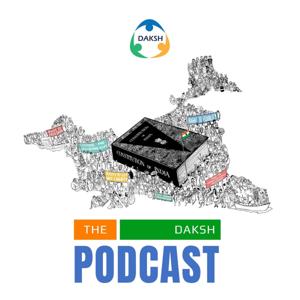


In Episode 5 of the DAKSH Podcast we discussed undertrial detention in Indian prisons.
One of the tragedies of the Indian prison system is the high proportion of undertrial prisoners (around two-thirds). Undertrial prisoners are kept in prison while awaiting trial or during their trial. The high proportion of such prisoners in our system has not budged in the last 3 decades since the issues started getting media and judicial attention.
Prolonged undertrial detention violates their rights to liberty and fair trial, and adversely impacts their lives and livelihood. The overuse of undertrial detention effectively ends up punishing people before they are convicted, and makes a mockery of their right to be presumed innocent until proven guilty.
This week we chatted with Dr Vijay Raghavan about undertrial detention in Indian prisons. Dr. Vijay Raghavan is a Professor at the Centre for Criminology and Justice, TISS and the Project Director of Prayas. Prayas has been working for the past 30 years towards rehabilitation and social reintegration of persons in prison, women rescued from commercial sexual exploitation, and children in conflict with the law.
Reading list:
Aparna Chandra and Keerthana Medarametla, Bail and Incarceration: The State of Undertrial Prisoners in India in Approaches to Justice in India 2017 https://www.dakshindia.org/Daksh_Justice_in_India/16_chapter_06.xhtml#_idTextAnchor068
Justice under trial: A study of pre-trial detention in India, Amnesty International India 2017.
Sudhir Krishnaswamy, Sindhu K Sivakumar, and Shishir Bail. "Legal and judicial reform in India: a call for systemic and empirical approaches." Journal of National Law University Delhi 2.1 2014, 1
Vrinda Bhandari, Inconsistent and Unclear: The Supreme Court of India on Bail 6(3) NUJS L. Rev. 549-558 (2013)
Vrinda Grover, ‘The Adivasi Undertrial, a Prisoner of War: A Study of Undertrial Detainees in South Chhattisgarh’ in Contesting Justice in South Asia (2018): 201.
CREDITS:
Host: Leah Verghese
This is a Maed in India production.
Production Head & Editor: Joshua Thomas
Sound Mixing: Kartik Kulkarni
Project Supervisor: Shaun Fanthome
This womens’ day, we reflect on the contributions of the women members of the Constituent Assembly that framed our Constitution. The Constituent Assembly was formed in 1946, before India gained independence. The Assembly consisted of 389 members, out of whom 15 members were women. Each of them had extensive experience in the national freedom struggle and local movements relevant to their place of operation. They also shaped the Indian women's’ movement and balanced these interests with nationalist goals. Along with this, they faced the challenges of sexism within the constituent assembly and patriarchal mores in their personal lives, all of which contributed to their ideas of what a future India would look like.
In episode 4 of the DAKSH Podcast we spoke to Priya Ravichandran, an independent analyst in the field of politics and policy-making who has written extensively about the women in the Indian constituent assembly in her blog ‘15 for the republic’. We explored with her, the motivations, experiences and rich lives of these women - both inside and outside the Constituent Assembly and mused on how far we are from the idea of India they had worked for.
Reading list:
Priya Ravichandran’s blog available at https://15fortherepublic.wordpress.com/
The Constituent Assembly Debates available in the Parliament’s digital library at https://eparlib.nic.in/handle/123456789/4
Speeches of the women members of the Constituent Assembly https://rajyasabha.nic.in/rsnew/publication_electronic/Selected%20Women%20Speech_Final.pdf
Priya Ravichandran, The Women Who Helped Draft Our Constitution, Mint https://www.livemint.com/Leisure/dLi6ZIdW6CgswZCGdOA9VM/The-women-who-helped-draft-our-constitution.html
HS Anupama, Samvidhana Mattu Mahile, Ladai Prakashana publications, 2019 in Kannada (ಸಂವಿಧಾನ ಮತ್ತು ಮಹಿಳೆ)
Youtube series by The Scroll on Women in the Constituent Assembly hosted by Priya Ravichandran. The first episode is available at https://www.youtube.com/watch?v=1ldVv2TFZME
Host: Anindita Pattanayak
This is a Maed in India production.
Production Head & Editor: Joshua Thomas
Sound Mixing: Kartik Kulkarni
Project Supervisor: Shaun Fanthome
Reading list:
CREDITS:
Host: Sandhya PR
This is a Maed in India production.
Production Head & Editor: Joshua Thomas
Sound Mixing: Kartik Kulkarni
Project Supervisor: Shaun Fanthome
This week we chatted with Anuj Bhuwania who will help us peel the layers of the onion that public interest litigation has become. Anuj is a Professor at the O.P. Jindal Global University in Sonipat. He is the author of ‘Courting the People: Public Interest Litigation in Post-Emergency India’, the subject of today’s discussion. Anuj in his book has studied PILs related to the national capital of Delhi in some detail and revealed some disturbing trends often overlooked in the glorified coverage of PILs in the media
Reading list:
CREDITS:
Host: Leah Verghese
This is a Maed in India production.
Production Head & Editor: Joshua Thomas
Sound Mixing: Kartik Kulkarni
Project Supervisor: Shaun Fanthome
In Episode 1 of the DAKSH Podcast we discussed policing in India. The police are at the frontline of the criminal justice system yet they are possibly the most feared and the least trusted arm of the system. Every time there is a high profile incident of police excess there is talk of police reform. Yet as the saying goes the more things change the more they remain the same. In this episode we chatted with Vipul Mudgal who helped us understand the nuances of the policing system better and suggest paths to reform. Vipul is the Director and Chief Executive of Common Cause. Common Cause is a Delhi-based organisation that has been in the vanguard of the campaign for probity in public life and integrity of institutions. Over the years, it has earned a reputation and credibility for its initiatives, advocacy and public interest litigations (PILs). Common Cause periodically publishes the Status of Indian Policing Report an indepth evaluation of policing across India through an analysis of official data and elaborate perception surveys.
Reading list:
CREDITS:
Host: Leah Verghese
This is a Maed in India production.
Production Head & Editor: Joshua Thomas
Sound Mixing: Kartik Kulkarni
Project Supervisor: Shaun Fanthome
From the publisher's feed
15 Listeners

29 Listeners

46 Listeners

8 Listeners

1 Listeners

13 Listeners

1 Listeners
0 Listeners

0 Listeners
22 Listeners

0 Listeners

0 Listeners

0 Listeners

2 Listeners

0 Listeners

0 Listeners

0 Listeners

0 Listeners