
Sign up to save your podcasts
Or

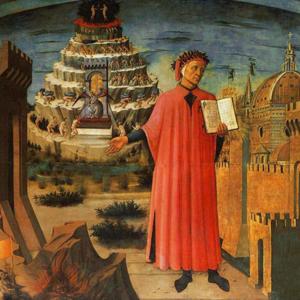


In this episode we'll look at the historical background of Dante's First Epistle to Cardinal Niccolò in 1304, by outlining the events in Florence from January to June of the year 1300. After a brief peace in the city, the two rivaling families of the Donati and the Cerchi import another family feud from Pistoia, thus becoming the Bianchi and Neri factions. Violence breaks out on May 1st 1300 at the Piazza di Santa Trinità, and on June 15th, Dante becomes a member of the governing council of six Priors, in Florence.
Thanks for listning;
In this episode we'll look at the main highlights from Dante's Epistle XIII to Lord Can Grande della Scala, his Patron in Verona, to whom Dante dedicates the Third Canticle of the Divine Comedy, the Paradiso.
We'll also look at Dante's expressed practial purpose and overall meaning of the Divine Comedy, and the four established levels of interpretation in the Medieval and Ancient Traditions:
Thanks for listening!
In the Epistle XI to the Italian Cardinals in 1314, Dante both makes a plea to elect an Italian Pope and return the Papacy to Rome, and also compares the Church to the Greek Myth of Phaethon, who loses control over Apollo's Sun Chariot - and burns down the world.
We'll also discuss the contexts provided by Italian scholars Claudio Rendino and Gian Luca Potestà.
https://dantescomedy.com/dantes-plea-to-return-the-papacy-to-rome
Thanks for listening!
In 1314 Dante wrote an Epistle to the Italian Cardinals defending himself from the charge that he was behaving like Uzzah in the old Biblical Stories, who was struck dead as he touched the Holy Ark. Dante then separates the Church, from the Scripture.
https://dantescomedy.com/dantes-relationship-to-scripture-and-to-the-church
Thanks for listening!
After ascending up the mountain we’re entering into the Garden of Eden, where the Pilgrim meets Beatrice and drinks from the two rivers of Lethe and Eunoë. The first river is to remove the memories of sins, and the second is to restore the memories of all the Good in the world and in Life. There are also two big allegorical scenes with the symbolic entering of Scripture, and the History of the Church up to Dante’s time in the thirteen hundreds. After the final moments by the river of Eunoë – the Pilgrim is now fully reborn, ready and eager, to rise into the Stars.
Enjoy!
Recommended version for joining this series is Mark Musa’s Penguin Classics Edition here: https://amzn.com/0140444424
On the Seventh and last Terrace we’ll meet the souls of the Lustful, and the Pilgrim is talking with the poets Guido Guinizelli and Arnault Daniel. And then they meet the Angel of Joy, and go through the wall of Fire – the spiritual purification. The final Terrace ends with a beautiful dream of flowers and the Active and Contemplative Life, and in the very last verses Virgil has a final and Crowning Speech for the Pilgrim.
Enjoy!
Recommended version for joining this series is Mark Musa’s Penguin Classics Edition here: https://amzn.com/0140444424
As the Pilgrim, Virgil and Statius enter the Sixth Terrace they come to a strange tree and hear a voice within – symbolic of the “theophany” where the Divine shows itself to the three Poets. This is in some ways the result from the “spiritual release” in the previous Terrace, as the soul is now having an increased capacity to perceive the Divine. We also meet the Gluttons, who are very thin souls and metaphorically spiritually “starved” – which expands on the theme of the nature of the Soul and its relation to the Earthly Body.
Enjoy!
Recommended version for joining this series is Mark Musa’s Penguin Classics Edition here: https://amzn.com/0140444424
In the Fifth Terrace we’ll meet the penitents for the Vice of Avarice or Greed, as well as the moment of the whole Mountain trembling and the meeting of the transitional figure of the Roman Poet Statius, who was a secret Christian. This symbolizes an important expansion of the figure of Virgil as a guide, and a gradual change towards Beatrice and the nature of the Earthly Paradise and Paradiso itself.
Enjoy!
Recommended version for joining this series is Mark Musa’s Penguin Classics Edition here: https://amzn.com/0140444424
When we reach the Fourth Terrace the night is coming closer, and Virgil is giving an explanation to the Pilgrim about Love as the motive force for also the Vices, in the three versions of misdirected Love, too little Love, and excessive Love. This three-fold explanation also gives the structure of the Seven Levels of the Mountain, and the theme of Love (with the Natural and Rational Love) then becomes the central theme at the Heart of Purgatory (in Chapter 17), and also for the whole Divine Comedy as a literary work. Love is that which moves the Sun and the Other Stars – and Dante connects our Free Will with the opportunity to choose the Good Love as the guiding Light in our lives.
Enjoy!
Recommended version for joining this series is Mark Musa’s Penguin Classics Edition here: https://amzn.com/0140444424
The Terrace of Wrath is clouded in thick, black smoke, symbolic of the blinding nature of the emotion of Wrath and Anger. This level opens with examples of Meekness and Gentleness, before we get some thoughts on Reason as important to mitigate and manage the emotion of Wrath, and the role of Free Will in creating the evil in the world, as explained by the soul Marco Lombardo. The attack on the Church is also especially wrathful in these chapters. But the overall message is a positive one, our ability and capacity for the Good.
Enjoy!
Recommended version for joining this series is Mark Musa’s Penguin Classics Edition here: https://amzn.com/0140444424
From the publisher's feed