
Sign up to save your podcasts
Or

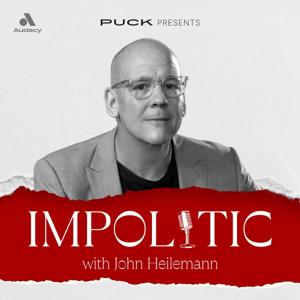

The story of John Brown and Harpers Ferry is a pivotal piece of American history that's neither well-known nor well-understood — to the extent it's known or understood at all. In 1859, Brown, a militant white abolitionist and religious zealot, led a raid on the federal armory in that small Virginia (now West Virginia) town to acquire weapons and spark a slave revolt to end the peculiar institution and cleanse America of its original sin. The raid was a debacle, failing utterly in its immediate objectives, but ultimately helped to set in motion the chain of events that led to the Civil War. In 2013, the writer and musician James McBride published a novel, "The Good Lord Bird," that was a heavily fictionalized but also historically rooted account of Brown's life. The book went on to win the National Book Award for Fiction that year, and, last fall, spawned a seven-part Showtime mini-series, produced by Blumhouse Television, starring and co-created by the celebrated actor Ethan Hawke as Brown (a performance for which Hawke has been nominated for a Golden Globe this year) and Grammy and Tony Award-winning "Hamilton" phenom Daveed Diggs as the Black abolitionist icon Frederick Douglass.
The TV incarnation of "The Good Lord Bird" is an incendiary, irreverent, at times hilarious, at times moving entertainment — beautifully written, gorgeously shot, studded with standout performances. But it's also something more than a stellar costume drama. In its treatment of racism not as an individual moral failing but a system of oppression; its examination of white guilt, ally-ship, and redemption; its illustration of the arguments between incrementalism and radicalism; and its forcing of the question of nonviolence versus by-all-means-necessary-ism, "The Good Lord Bird" is, as Matt Zoller Seitz put it in his review for Vulture, “a historical epic of real vision ... [that] speaks to the present as well as the past ... lead[ing] us to connect what happened back then with what’s happening on American streets right now.” As Black History Month comes to a close, Heilemann sits down with Diggs, Hawke, and McBride to discuss the series, their collaboration, and what Hawke has called the "dangerous" territory where art and race intersect — and that "The Good Lord Bird" illuminates so incandescently.
Hosted on Acast. See acast.com/privacy for more information.
 View all episodes
 By Audacy | Puck

4.8
43714,371 ratings
The story of John Brown and Harpers Ferry is a pivotal piece of American history that's neither well-known nor well-understood — to the extent it's known or understood at all. In 1859, Brown, a militant white abolitionist and religious zealot, led a raid on the federal armory in that small Virginia (now West Virginia) town to acquire weapons and spark a slave revolt to end the peculiar institution and cleanse America of its original sin. The raid was a debacle, failing utterly in its immediate objectives, but ultimately helped to set in motion the chain of events that led to the Civil War. In 2013, the writer and musician James McBride published a novel, "The Good Lord Bird," that was a heavily fictionalized but also historically rooted account of Brown's life. The book went on to win the National Book Award for Fiction that year, and, last fall, spawned a seven-part Showtime mini-series, produced by Blumhouse Television, starring and co-created by the celebrated actor Ethan Hawke as Brown (a performance for which Hawke has been nominated for a Golden Globe this year) and Grammy and Tony Award-winning "Hamilton" phenom Daveed Diggs as the Black abolitionist icon Frederick Douglass.
The TV incarnation of "The Good Lord Bird" is an incendiary, irreverent, at times hilarious, at times moving entertainment — beautifully written, gorgeously shot, studded with standout performances. But it's also something more than a stellar costume drama. In its treatment of racism not as an individual moral failing but a system of oppression; its examination of white guilt, ally-ship, and redemption; its illustration of the arguments between incrementalism and radicalism; and its forcing of the question of nonviolence versus by-all-means-necessary-ism, "The Good Lord Bird" is, as Matt Zoller Seitz put it in his review for Vulture, “a historical epic of real vision ... [that] speaks to the present as well as the past ... lead[ing] us to connect what happened back then with what’s happening on American streets right now.” As Black History Month comes to a close, Heilemann sits down with Diggs, Hawke, and McBride to discuss the series, their collaboration, and what Hawke has called the "dangerous" territory where art and race intersect — and that "The Good Lord Bird" illuminates so incandescently.
Hosted on Acast. See acast.com/privacy for more information.

4,458 Listeners

302 Listeners
6,668 Listeners
3,348 Listeners
12,633 Listeners
4,630 Listeners
8,473 Listeners
8,090 Listeners
266 Listeners
85,636 Listeners

107 Listeners
4,007 Listeners

690 Listeners
559 Listeners
10,446 Listeners
9,240 Listeners
374 Listeners
2,608 Listeners
1,171 Listeners
1,887 Listeners
12,794 Listeners
2,064 Listeners
201 Listeners
2,280 Listeners
3,192 Listeners
84 Listeners
7,020 Listeners
116 Listeners
3,467 Listeners
239 Listeners
808 Listeners
1,090 Listeners
794 Listeners
171 Listeners