
Sign up to save your podcasts
Or

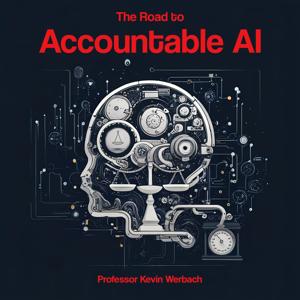

Professor Werbach interviews David Weinberger, author of several books and a long-time deep thinker on internet trends, about the broader implications of AI on how we understand and interact with the world. They examine the idea that throughout history, dominant technologies—like the printing press, the clock, or the computer—have subtly but profoundly shaped our concepts of knowledge, intelligence, and identity. Weinberger argues that AI, and especially machine learning, represents a new kind of paradigm shift: unlike traditional computing, which requires humans to explicitly encode knowledge in rules and categories, AI systems extract meaning and make predictions from vast numbers of data points without needing to understand or generalize in human terms. He describes how these systems uncover patterns beyond human comprehension—such as identifying heart disease risk from retinal scans—by finding correlations invisible to human experts. Their discussion also grapples with the disquieting implications of this shift, including the erosion of explainability, the difficulty of ensuring fairness when outcomes emerge from opaque models, and the way AI systems reflect and reinforce cultural biases embedded in the data they ingest. The episode closes with a reflection on the tension between decentralization—a value long championed in the internet age—and the current consolidation of AI power in the hands of a few large firms, as well as Weinberger's controversial take on copyright and data access in training large models.
David Weinberger is a pioneering thought-leader about technology's effect on our lives, our businesses, and ideas. He has written several best-selling, award-winning books explaining how AI and the Internet impact how we think the world works, and the implications for business and society. In addition to writing for many leading publications, he has been a writer-in-residence, twice, at Google AI groups, Editor of the Strong Ideas book series for MIT Press, a Fellow at the Harvarrd Berkman-Klein Center for Internet and Society, contributor of dozens of commentaries on NPR's All Things Considered, a strategic marketing VP and consultant, and for six years a Philosophy professor.
Transcript
Everyday Chaos
Our Machines Now Have Knowledge We'll Never Understand (Wired)
How Machine Learning Pushes Us to Define Fairness (Harvard Business Review)
 View all episodes
 By Kevin Werbach
5
2424 ratings
Professor Werbach interviews David Weinberger, author of several books and a long-time deep thinker on internet trends, about the broader implications of AI on how we understand and interact with the world. They examine the idea that throughout history, dominant technologies—like the printing press, the clock, or the computer—have subtly but profoundly shaped our concepts of knowledge, intelligence, and identity. Weinberger argues that AI, and especially machine learning, represents a new kind of paradigm shift: unlike traditional computing, which requires humans to explicitly encode knowledge in rules and categories, AI systems extract meaning and make predictions from vast numbers of data points without needing to understand or generalize in human terms. He describes how these systems uncover patterns beyond human comprehension—such as identifying heart disease risk from retinal scans—by finding correlations invisible to human experts. Their discussion also grapples with the disquieting implications of this shift, including the erosion of explainability, the difficulty of ensuring fairness when outcomes emerge from opaque models, and the way AI systems reflect and reinforce cultural biases embedded in the data they ingest. The episode closes with a reflection on the tension between decentralization—a value long championed in the internet age—and the current consolidation of AI power in the hands of a few large firms, as well as Weinberger's controversial take on copyright and data access in training large models.
David Weinberger is a pioneering thought-leader about technology's effect on our lives, our businesses, and ideas. He has written several best-selling, award-winning books explaining how AI and the Internet impact how we think the world works, and the implications for business and society. In addition to writing for many leading publications, he has been a writer-in-residence, twice, at Google AI groups, Editor of the Strong Ideas book series for MIT Press, a Fellow at the Harvarrd Berkman-Klein Center for Internet and Society, contributor of dozens of commentaries on NPR's All Things Considered, a strategic marketing VP and consultant, and for six years a Philosophy professor.
Transcript
Everyday Chaos
Our Machines Now Have Knowledge We'll Never Understand (Wired)
How Machine Learning Pushes Us to Define Fairness (Harvard Business Review)

4,416 Listeners

113,527 Listeners

56,976 Listeners
212 Listeners

7,243 Listeners
1,624 Listeners

62 Listeners

562 Listeners

512 Listeners

5,592 Listeners

16,527 Listeners

10,973 Listeners
678 Listeners
47 Listeners
40 Listeners