
Sign up to save your podcasts
Or

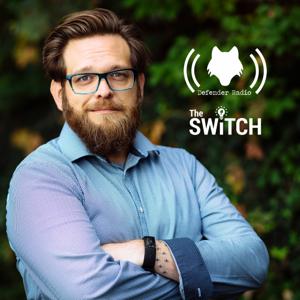


The Switch is a new bi-weekly show on the Defender Radio Podcast feed, produced by The Fur-Bearers and hosted by Michael Howie.
This show will feature short - about 10-minute-long - interviews with people who are making a difference in combatting climate change and protecting wildlife and their habitat through daily choices. These solutions are meant to be accessible, meaning available to most people living in Canada regardless of who they are and their socioeconomic situations.
Upcoming episodes include subjects like:
Subscribe to or follow the Defender Radio podcast feed wherever you listen to get updates as new episodes are available. Currently, the publication schedule is alternating The Switch and Defender Radio episodes, so a new episode should drop every Monday on the feed.
Want to suggest topics for the show? Reach out to us at [email protected], by visiting DefenderRadio.com or engaging host Michael Howie on social media via Instagram (www.instagram.com/howiemichael), TikTok (www.tiktok.com/@howiemichael) or Facebook (www.Facebook.com/DefenderRadio).
The Switch is produced by The Fur-Bearers (www.TheFurBearers.com), a charitable non-partisan organization whose mandate is to advocate on behalf of fur-bearing animals in the wild and in confinement, promote coexistence solutions in communities and protect the habitats of fur-bearing animals across Canada. You can follow The Fur-Bearers on Instagram (www.instagram.com/furbearers), Twitter (www.twitter.com/furbearers) and Facebook (www.facebook.com/FurFree).
There are few mammals who are as outwardly tough and intimidating as Gulo gulo, the wolverine. These solitary individuals are considered a species of special concern federally and threatened in some jurisdictions like Ontario and are notoriously difficult to monitor or track for scientific purposes.
But modern technology is changing that. The combined use of digital photography and videography with unmanned aerial vehicles, or drones, is creating opportunities to track and hone in on the specific areas that wolverines may be using as a home base. With that knowledge, researchers and managers are able to create land-use recommendations that protect the much needed space of wolverines, and ultimately help individuals, as well as the entire species, thrive.
A recent project undertaken by ecologist and wolverine researcher Nikki Heim with UAV professional Alex Taylor utilized this method in the spring of this year. A quick disclosure: The Fur-Bearers did provide partial funding for this project. You can read more at TheFurBearers.com. Nikki and Alex joined Defender Radio to explain how the convergence of their skills is offering new hope for protecting wolverines, the limits and importance of ethical use of UAVs, and what comes next in their project.
Learn more about Nikki and Alex's preliminary report: https://thefurbearers.com/blog/drones-to-locate-and-protect-wolverine-den-sites/
Learn more about wolverine research: https://www.wolverinewatch.org/
Learn more about UAVs: https://ravenwest.ca/
Follow Defender Radio on Instagram (www.instagram.com/howiemichael) and Facebook (www.facebook.com/DefenderRadio/).
More than two dozen incidents of coyotes scratching and biting people have occurred in Vancouver's Stanley Park since December 2020. You've likely seen media coverage of this – and yes, much of it has been wildly sensational with a great deal of guess work.
But the truth is difficult to find in this series of events. Factually, we're aware of many pieces of evidence: coyotes are a natural part of the landscape in Canada and British Columbia; Stanley Park is not just a park, but a massive forest and ecosystem; prior to 2020, only a handful of bites or interactions had occurred with coyotes; and, as everyone agrees, these behaviours are concerning.
In much of the media coverage, however, entire swatches of fact are left out, such as the massive shift in human use of the park following the start and progression of the coronavirus pandemic, or the apparent lack of enforcement of feeding bylaws and park use restrictions. This coverage also leaves out the nuance often necessary in a conversation about evidence and ecosystems, something that numerous advocates and experts have noted.
As such, this special report is an in-depth conversation with Dr. Kristen Walker, a professor at UBC who has worked on the ground in Stanley Park recently to collect evidence and begin forming an understanding of changes to coyote behaviour. Our interview was recorded approximately one week ago – and as static media, may not include the most recent information or news.
This week's episode art is a trail camera capture of a coyote in Stanley Park, provided by Dr. Kristen Walker.
To learn more about Dr. Kristen Walker's work, visit https://www.landfood.ubc.ca/kristen-walker/
The Fur-Bearers' Living With Wildlife pages: https://thefurbearers.com/our-work/living-with-wildlife/solutions/
Coyote Watch Canada: https://www.coyotewatchcanada.com/site/home
Find Defender Radio on Instagram (https://www.instagram.com/howiemichael/) and Facebook (https://www.facebook.com/DefenderRadio/).
Follow The Fur-Bearers on Instagram (https://www.instagram.com/furbearers/), Facebook (https://www.facebook.com/FURfree/), Twitter (https://twitter.com/furbearers), LinkedIn (https://www.linkedin.com/company/the-fur-bearers/) and YouTube (https://www.youtube.com/channel/UCHxrcRm5jLnpIjvTmN9MV9Q).
Want to learn more about how to listen to Defender Radio on your smart device? Check out the videos and links at www.DefenderRadio.com.
The name Takaya may ring a bell if you follow wildlife news. He was the lone wolf who lived on Discovery Island and other islands in the Salish Sea, an archipelago on the eastern coast of Vancouver Island. The word, Takaya, means wolf in the Indigenous language of the Tsleil-Waututh Nation.
Cheryl Alexander, a conservationist, photographer and educator, spent several years forming a distanced, but unique relationship with Takaya. Neither interfered with the other, but Cheryl was able to gain deep insight to Takaya's life. Through this time, Cheryl witnessed a government set on killing Takaya; media villainzing him after an encounter with campers; his perseverance through dangers both human and environmental; and his tragic death at the hands of a hunter.
A 2019 documentary, Takaya: Lone Wolf, captured the hearts of many as his story, as told by Cheryl, beamed around the world. And in a 2020 book, Cheryl has loving assembled her photos, thoughts and anecdotes of Takaya, along with her own journey of discovery about wolves and the region, in a beautiful story that shows who he was.
Cheryl joined Defender Radio recently to discuss Takaya, the process of writing and assembling her book and how a chance encounter with a wolf while kayaking changed her life. Learn more about Takaya at www.TakayasLegacy.com.
See more of Cheryl Alexander's photography and work: https://www.wildawake.com/
Follow Takaya's Legacy on Facebook (https://www.facebook.com/takayalonewolf) and Instagram (https://www.instagram.com/takayalonewolf/).
Get your copy of Takaya (2020, Rocky Mountain Books): https://rmbooks.com/book/takaya/
How to pronounce Takaya: https://youtu.be/vsNZIftbMdg
More from Rocky Mountain Books: https://rmbooks.com/
Follow Defender Radio Podcast on Instagram (https://instagram.com/howiemichael) and Facebook (https://www.facebook.com/DefenderRadio/).
How to Subscribe to Defender Radio videos: https://thefurbearers.com/media/defender-radio/
Having a chipmunk come up, sniff your finger cautiously, then nip a treat and run off is magical; I won't lie – it's pretty remarkable. But the consequence of that single moment of joy for a person can lead to devastating impacts to ecosystems, communities and individual animals.
Be it for a close-up experience, because of a perception of hunger and need, or even incidental feeding from outdoor pet food or bird feeders, most folks who feed wildlife do so with goodness in their heart. This episode isn't about blaming or shaming – because that simply doesn't work. It's about understanding the complexity of nature and animal behaviour, and the role – often negative – humans end up playing.
You only need to look to British Columbia's black bears to see the significant impacts of failing to take down bird feeders or be aware of the impact of unintentional and intentional feeding – hundreds of bears killed every year by conservation authorities. You can identify feeding in a significant number of cases when coyotes inappropriately interact with people. And, even with little chipmunks and squirrels, as I note later in this interview, feeding can end up wreaking havoc in an ecosystem or causing behaviour that the public views as aggressive or bold.
To go in-depth on feeding – from causes, to impact to solutions, I reached out to Dr. Sara Dubois, Chief Scientific Officer of the BC SPCA, who is also a professor at University of British Columbia. Dr. Dubois has an impressive background on the subjects of wildlife, ethics, humane treatment of animals in numerous sectors, and, of course, the impact of feeding wildlife.
To learn more about the BC SPCA, visit https://spca.bc.ca/
To learn more about the BC SPCA's resources on wildlife feeding, visit https://spca.bc.ca/faqs/feeding-wildlife-bad/
This week's episode art provided by Christiane Cottin (@nanididada on Instagram), who originally submitted the photo to this year's BC SPCA's Wildlife-In-Focus Photo Contest. Check out more entries at https://spca.bc.ca/events/event/wildlife-in-focus/.
Follow Defender Radio on Instagram: https://instagram.com/howiemichael
Follow Defender Radio on Facebook: https://www.facebook.com/DefenderRadio/
Check out past episodes of Defender Radio on The Fur-Bearers page: https://thefurbearers.com/blog/defender-radio/
Find Defender Radio on Spotify (and subscribe!): https://open.spotify.com/show/53h2PqGuJCc5qZgvtVvVmx
Find Defender Radio on Apple Podcasts (and subscribe!): https://podcasts.apple.com/ca/podcast/defender-radio-podcast-for-wildlife-advocates-animal/id718357541
Copy and paste this RSS feed into your preferred podcast player to subscribe to Defender Radio: https://defenderradio.libsyn.com/rss
Host Michael Howie brings you updates on The Fur-Bearers' Read-a-Thon event happening soon and how to register, as well as a look (and the need for your participation) in a new series coming to your Defender Radio podcast feed!
Episode art for this week from the collection created by Michelle Lee of Broadview Design for The Fur-Bearers' Read-A-Thon event.
Michelle Lee on Instagram: https://www.instagram.com/broadviewdesign/
Register for the Read-a-Thon or donate now: https://TheFurBearers.com/read
Follow Defender Radio on Instagram: https://instagram.com/howiemichael
Follow Defender Radio on Facebook: https://www.facebook.com/DefenderRadio/
Read-a-Thon tutorial videos: https://thefurbearers.com/our-work/outreach-education/events/read-a-thon/
Parachutes for Pets in Calgary is a grassroots organization that is working to build community supports to protect the connection between people and their companion animals. Their programs include providing pet hampers that have food and supplies, vaccine and wellness clinics, emergency pet packs and more. Often, their services are called upon when people are leaving abusive situations and need support to keep their pets with them.
I connected with Melissa David, founder of Parachutes for Pets, to discuss the evolution of the organization, the needs they address and how you can support them – or create supports in your own community.
Learn more about Parachutes for Pets at https://www.parachutesforpets.com/
Ending Violence Association of Canada: https://endingviolencecanada.org/
National Coalition Against Domestic Violence: https://ncadv.org/
Domestic Violence Resources (Canadian Association of Social Workers): https://www.casw-acts.ca/en/resources/domestic-violence-resources
Mental Health Services in Canada: https://www.canada.ca/en/public-health/services/mental-health-services/mental-health-get-help.html
Mental Health Services in America: https://www.nimh.nih.gov/health/find-help/
Kids Help Phone: https://kidshelpphone.ca/
Urban Resource Institute, America's largest domestic violence residential service provider. and the National Domestic Violence Hotline, recently released the results of their national survey. The PALS survey, part of URI's People and Animals Living Safely, clearly showed the fear for safety of pets is a critical component in a persons' decision in leaving abusive situations. The findings are staggering – with 97% of respondents saying that keeping their pets is an important factor in deciding to seek shelter, and 50% saying they would not consider shelter for themselves if they could not take their pets with them.
To discuss the important findings in this survey, I was joined by Danielle Emery, URI's Director of People and Animals Living Safely program.
Read the PALS report: https://urinyc.org/palsreport/
Learn more about Urban Resource Institute: https://urinyc.org/
Ending Violence Association of Canada: https://endingviolencecanada.org/
National Coalition Against Domestic Violence: https://ncadv.org/
Domestic Violence Resources (Canadian Association of Social Workers): https://www.casw-acts.ca/en/resources/domestic-violence-resources
Mental Health Services in Canada: https://www.canada.ca/en/public-health/services/mental-health-services/mental-health-get-help.html
Mental Health Services in America: https://www.nimh.nih.gov/health/find-help/
Kids Help Phone: https://kidshelpphone.ca/
There's been a lot of talk about the wildlife trade since the SARS-CoV-2 pandemic hit the global stage in early 2020. While much of the attention has been paid to locales overseas, the United States is also involved in the wildlife trade; in fact, more than $2 billion of items – over 400,000,000 items - were imported in 2014 alone.
Faunalytics, a non-profit that conducts research and shares knowledge to help advocates help animals effectively, took 15 years of data from legal wildlife import data and analyzed it. The results are staggering. I was joined by Karol Orzechowski, Faunalytics' content director, to discuss the wildlife trade report, the Canadian connection, and what we can all do to make a difference.
Read the Faunalytics report: https://faunalytics.org/wildlife-imports/
Follow Defender Radio on Instagram: https://www.instagram.com/howiemichael
Follow Defender Radio on Facebook: https://www.facebook.com/DefenderRadio/
Learn more about The Fur-Bearers: https://thefurbearers.com/
Old growth logging is in the news cycle again, with the Fairy Creek blockade on Vancouver Island being the latest in the persistent debate on how to manage old growth trees. Much of the media coverage is glossing over the intricacies of old growth logging – why is it more valuable, why is it a risk to ecosystems and endangered species, and what tools exist for community members speaking out. Charlotte Dawe, conservation and policy campaigner at the Wilderness Committee, joined Defender Radio for a primer on Old Growth forests and logging and how advocates can have their voices heard.
Episode cover art of old growth cuts in BC photo provided by Wilderness Committee
Wilderness Committee Old Growth Tools and information: https://www.wildernesscommittee.org/oldgrowth
Extinction Story Map:
https://storymaps.arcgis.com/stories/706a64b95cbb4d9b9b6d2af60cc03b4e
The Narwhal: Fairy Creek Blockades (feature article): https://thenarwhal.ca/topics/fairy-creek-blockade/
Defender Radio Facebook https://www.facebook.com/DefenderRadio/
Defender Radio Instagram https://instagram.com/howiemichael
The Fur-Bearers Facebook: https://www.facebook.com/FurFree/
The Fur-Bearers Instagram: https://www.instagram.com/furbearers/
The Fur-Bearers Twitter: https://www.twitter.com/furbearers/
From the publisher's feed

438 Listeners
3,421 Listeners