
Sign up to save your podcasts
Or

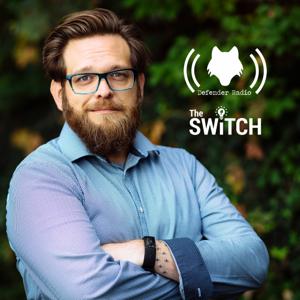


Defender Radio is back after a pandemic-related hiatus. New episodes will be launching this month so stay tuned! In this update, hear from host/producer Michael Howie on the hiatus and changes in his personal life, how the show will be changing (only a little), and how you can help find new topics, special features and more.
Follow The Fur-Bearers on:
Facebook: https://www.facebook.com/FURfree/
Twitter: https://twitter.com/furbearers
Instagram: https://www.instagram.com/furbearers/
Sign up for email updates: https://thefurbearers.salsalabs.org/enewssignup/index.html
Getting governments to change isn't easy; often, there are roadblocks in the path to communicating an issue, particularly ones related to non-human animals. There are tools out there, however, that are making it easier and more effective for Canadian parliamentarians to hear from constituents and learn more about issues related to animals in Canada.
Nathaniel Erskine-Smith, Liberal MP for Beaches-East York, sponsored House of Commons Petition e-3096, drafted by The Fur-Bearers calling on the federal government to end fur farming; he's also one of the founding members of the Liberal Party's Animal Welfare Caucus and a new all-party format of the animal welfare caucus. Nathaniel joined Defender Radio to discuss Petition e-3096, the parliamentary process behind petitions and why some aren't as effective, as well as providing background on the animal welfare caucus and how all Canadians can ask their MP to get involved in this important educational initiative.
Sign Petition e3096: https://petitions.ourcommons.ca/en/Petition/Details?Petition=e-3096
Check out Nathaniel Erskine-Smiths' website: https://beynate.ca/
Follow The Fur-Bearers on
Facebook: https://www.facebook.com/FURfree/
Twitter: https://twitter.com/furbearers
Instagram: https://www.instagram.com/furbearers/
YouTube: https://www.youtube.com/channel/UCHxrcRm5jLnpIjvTmN9MV9Q
As we press through these colder months of the winter, I'm seeing more questions about coyotes pop up on social media and traditional media. Of course, this is often in response to bad memes or misinformation designed to frighten people, rather than educate them. Check out TheFurBEarers.com for some the articles we've written to try and respond to these concerns.
But it's also an opportunity to talk about aversion conditioning – commonly referred to as hazing – and the role it can play in mitigating and ending human conflict with coyotes. Lauren Van Patter, a Queen's University PhD candidate and my good friend Lesley Sampson of Coyote Watch Canada worked together to pen a paper that outlines the scientific literature on aversion conditioning, as well as the experiences of the Coyote Watch Canada Canid Response Team. Titled, Advancing Best Practices for Aversion Conditioning to Mitigate Human-Coyote Conflicts in Urban Areas and published openly in the journal Human-Wildlife Interactions, the paper also prompted an outstanding essay on TheConversation.com.
Lauren and Lesley joined Defender Radio to talk about the importance of this paper, why we need to understand what is and isn't proper aversion conditioning and how we can coexist with our essential wild neighbours.
The Paper: https://digitalcommons.usu.edu/hwi/vol14/iss2/7/
TheConversation.com article: https://theconversation.com/how-coyotes-and-humans-can-learn-to-coexist-in-cities-147738
Lauren Van Patter's Queen's University page: https://www.uoguelph.ca/ccsaw/people/lauren-van-patter-0
Coyote Watch Canada: www.coyotewatchcanada.com
The coronavirus pandemic has forced a lot of change in the world in the last 13 months. One of the most notable, unfortunately, is an increase in plastic waste entering our oceans. Personal Protective Equipment, or PPE, which is frequently made with plastics more than doubled in size as a global industry in response to the pandemic.
Oceans Asia, a non-profit focused on marine conservation, released a dire report indicating 1.56 billion facemasks entered the marine environment in 2020. But PPE is just the tip of the pollution iceberg.
To dive into where this waste comes from, how it impacts the planet, and what we can all do to make a difference today and into the future, Dr. Teale Phelps Bondaroff joined the Defender Radio podcast.
Read the OceansAsia report: https://oceansasia.org/covid-19-facemasks/
Follow The Fur-Bearers on Facebook (https://www.facebook.com/FURfree/), Instagram (https://www.instagram.com/furbearers/), Twitter ( https://twitter.com/furbearers) and LinkedIn (https://www.linkedin.com/company/the-fur-bearers/)!
Luci Cudman, the executive director of the North Shore Black Bear Society and Ellie Lamb, bear behaviour expert and bear viewing guide and instructor joined me for a call the late days of fall 2020 to talk about how our actions – and inactions – impact the behaviour of bears, why some strategies to coexist aren't as successful as others, and how we as individuals can truly make a difference for bears and other animals in our communities.
I've got good news, better news and bad news, folks. The good news is that yesterday a book launched that will change minds, hearts and lives around the world. The better news is that Jo-Anne McArthur, co-editor of this book, took time out of an incredibly busy schedule this morning to chat with me about it. The bad news is that, because it's 2020, the recording software I use didn't record my side of our conversation. Which, for many, may be the best news of all.
Let's start at the beginning. Hidden: Animals in the Anthropocene by Jo-Anne McArthur and Keith Wilson, with a Foreword by Joaquin Phoenix, is now available.
A short synopsis from the book's media kit:
HIDDEN: Animals in the Anthropocene is an unflinching book of photography documenting our relationship with non-human animals in the 21st Century. It focuses on the invisible animals in our lives: those with whom we have a close relationship and yet fail to see. They are the animals we eat and the animals we wear. They are the animals used in research and for entertainment, as well as the animals we sacrifice in the name of tradition and religion.
HIDDEN includes the work of a global community of photographers, 40 of the world's best animal photojournalists who work globally to investigate, document, and expose animal use.
I spent a few hours flipping through my review copy, experiencing the images and reading the accompanying essays, facts and contextual copy. My review can be broken down to two sentences: Hidden is the heart-wrenching documentation of the unnatural things we've done to this planet and its inhabitants. We can only hope that this clear story – one that shows truth without apology or hyperbole – is enough to help us change our ways.
Jo-Anne, founder of We Animals, joined me for a conversation about the new book; but as I noted, an error in my recording software kept only Jo-Anne's part of that conversation.
I spent about an hour and a half trying to reverse engineer my questions (I keep notes, not fully written questions) before realizing that there's ethical implications behind that I'm not comfortable with and it would likely just sound weird. As such, I'm presenting Jo-Anne's answers, again the important part, with simple subject prompts from me.
I apologize to listeners and Jo-Anne for this issue, though I think Jo-Anne's own interview skills really shine as a result.
This episode is brought to you by AnimalStone.com. Use promocode DEFENDERRADIO to get 10% off your order at AnimalStone.com!
Get Hidden at WeAnimalsMedia.org's shop: https://weanimalsmedia.org/our-work/buy-books-and-prints/
Get Hidden on Amazon: https://www.amazon.com/Hidden-Animals-Anthropocene-Jo-Anne-McArthur/dp/1590566386/
Sign up for email alerts with The Fur-Bearers: https://thefurbearers.salsalabs.org/enewssignup/index.html
Follow The Fur-Bearers on
Facebook: https://www.facebook.com/FURfree/
Twitter: https://twitter.com/furbearers
Instagram: https://www.instagram.com/furbearers/
A lot of animals are tested upon and killed in the name of science, particularly biomedical research. In conversation, many people adopt a utilitarian attitude – the lives and deaths of these non-human animals is to benefit human health, an acceptable trade off.
But what if it wasn't benefiting human health – and what if, before the experiments even began, there was a solid chance the research would never, ever have human applications?
Those are some of the questions being posed by the Center for Contemporary Sciences, a new organization that is, quote, "pioneering a paradigm shift towards innovative, evidence-based research methods that are based on human biology. Through collaboration, we champion technologies that are better for humans and that replace animal testing."
Dr. Jarrod Bailey, Director of Science and Technology at the Center for Contemporary Sciences, joined Defender Radio to discuss the current state of animal testing and why it continues to fail, the results of a just published paper following up on so-called breakthroughs using animal testing in decades past, and we even get into the use of squalene in COVID vaccinations and animals being tested on during a pandemic.
Some of the content of this episode may be upsetting to listeners as we discuss animal testing; if you'd like to learn more about the work of the CCS without listening, please visit contemporarysciences.org.
Center for Contemporary Sciences: https://contemporarysciences.org/
Clinical impact of high-profile animal-based research reported in the UK national press (study): https://openscience.bmj.com/content/4/1/e100039
Coronavirus Vaccine Makers Are Not Mass-Slaughtering Sharks (NY Times article): https://www.nytimes.com/2020/10/13/science/sharks-vaccines-covid-squalene.html
Anthrozoology is a fascinating field of study – simply put, it examines the interactions between humans and other animals. This is a broad concept, which is why so many fields overlap with it: anthropology, biology, philosophy, psychology and more.
To me, the concept of combining these fields is daunting and intimidating; but thanks to many dedicated and passionate anthrozoologists, I've found the journals and discussions more approachable than many other, more specific disciplines. Among the dedicated and passionate are three University of Exeter students who love the field of study so much and see such potential for it that they started a podcast!
The Anthrozoology Podcast is hosted by University of Exeter PhD students Sarah Oxley Heaney and Kris Hill, along with PhD candidate Michelle Szydlowski. The trio of anthrozoologists have arrived at Exeter's program from different places (both literally and figuratively, as we scheduled this group call across three different time zones) and with different specific interests. But it takes only the briefest moment of conversation to understand what drew them together – shared passion, dedication and excitement for doing more for humanity, non-human animals and the planet.
Their new podcast, The Anthrozoology Podcast, can be found on YouTube, Spotify and other places podcasts can be heard; to get to know this new show and the people behind it, Michelle, Kris and Sarah joined Defender Radio.
The Anthrozoology Podcast on YouTube: https://www.youtube.com/channel/UCSQVZSokl8e2RVW4JamCkmg
The Anthrozoology Podcast on Spotify: https://open.spotify.com/show/5ExQnaOKCVFnyecPbnFZSn
This episode supported by AnimalStone.com! Use promocode DEFENDERRADIO at checkout for 10% off at www.AnimalStone.com!
Get Email Updates From Defender Radio and The Fur-Bearers: https://thefurbearers.com/sign-save-animals
Defender Radio Patreon: www.Patreon.com/DefenderRadio
Become a Defender with The Fur-Bearers as a monthly donor: www.TheFurBearers.com/monthly.
Remember to click 'Subscribe' wherever you listen!
In a world with a 24-hour news cycle, robot trolls on the internet and unprecedented political changes, knowing where we stand on some core issues can be a bit… difficult. Fortunately, there are tools that can cut through the noise and help us find answers to understand where Canadians and Americans stand on animal-related matters.
Mario Canseco, president of Research Co., polled Canadians and Americans on their views regarding eating animals, hunting for meat, trophy hunting, keeping animals in zoos and aquariums and rodeos. Of significance, the survey also found that 81% of Canadians and 75% of Americans oppose killing animals for their fur.
Mario joined Defender Radio to discuss these findings, how surveys can be misused or misinterpreted during elections, and why animal advocates can feel hopeful.
Read the survey, press release and full data set: https://researchco.ca/2020/09/22/canada-us-animals/
This episode was sponsored by www.AnimalStone.com. Use promocode DefenderRadio to get 10% off at www.AnimalStone.com!
Sign up for email updates about Defender Radio and The Fur-Bearers: https://thefurbearers.com/sign-save-animals
It's season eight! We've got a lot to catch up on – the pandemic, the outstanding contest, what's going on with The Fur-Bearers and more – and we will catch up on all of that with a special episode soon. This week I want to dive right into our interview because of the timeliness and need for action on this issue.
Southern Mountain caribou in British Columbia are on the brink of collapse – and despite promises to create endangered species legislation, the last government continued to auction off sections of caribou habitat to logging companies. A cutblock auction is taking place in the Argonaut Creek drainage, which is home to the endangered North Columbia caribou herd.
This news came as a result of an investigation by Wilderness Committee, Echo Conservation Society and Wildsight.
To give us a quick overview of this long-standing issue and what the latest is, as well as how you can take action, Charlotte Dawe from Wilderness Committee joined Defender Radio.
TAKE ACTION: https://www.wildernesscommittee.org/take-action/cancel-caribou-habitat-destruction-argonaut-creek
Defender Radio on Facebook: https://www.facebook.com/DefenderRadio/
Defender Radio on Instagram: https://www.instagram.com/howiemichael/
Defender Radio on Twitter: https://twitter.com/defenderradio
Defender Radio Patreon: https://www.patreon.com/DefenderRadio
This episode sponsored by AnimalStone.com! Get 10% off by using promocode DEFENDERADIO at AnimalStone.com.
From the publisher's feed

438 Listeners
3,421 Listeners