
Sign up to save your podcasts
Or



What happens when a documentary filmmaker turns the camera on her own family’s experience of dementia?
In this reposted episode of Dementia Caregivers’ Corner Podcast, award-winning filmmaker Kimberley Littlemore reflects on both her parents being diagnosed with Alzheimer’s disease and her decision, with their permission, to document their journey.
We explore the emotional impact of diagnosis, sensory and perceptual changes, and how films rooted in lived experience can help families understand dementia and challenge stigma.
We also discuss the potential of film to raise dementia awareness in Sub-Saharan Africa.
Listen again—or discover this conversation for the first time—and share it with someone who may find it helpful.
Episode Title: Grieving Someone Who Is Still Here: Dementia, Caregiving and Finding Yourself Again
In this deeply personal episode of the Dementia Caregiver’s Corner Podcast, dedicated to my beloved younger sister, Gaone Dineo Kebonye, I’m joined by grief educator Caroline Shelby, founder of Grief Clarity Labs.
Together, we explore grieving someone who is still alive, the silent mental load of dementia caregiving, and the guilt and “what ifs” that can accompany loss.
Caroline shares how we can better support someone who is grieving, rediscover our identity after caregiving ends, and learn to move with grief.
We also discuss her upcoming book.
Three key takeaway words points:
Grief can begin before someone dies.
Caregivers need emotional support too.
Rediscovering yourself after loss takes time.
Caroline is offering a free 30-minute conversation about grief. To book your conversation, visit griefclaritylabs.com/call
Episode Title: What Is It Like to Live with Huntington’s Disease? Todd’s Story of Family, Faith and Hope
Huntington’s disease is an inherited condition that can affect movement, thinking, behaviour and emotions, and can cause dementia. Yet it remains a condition we hear too little about.
In this episode, Juliah welcomes Todd to share his lived experience of Huntington’s disease. Their conversation explores recognising changes, receiving a diagnosis, navigating everyday life and approaching family conversations about an inherited condition.
They also discuss stigma, advocacy and what meaningful support looks like when a person’s independence and choices remain at the centre. Todd reflects on the role of faith as he navigates uncertainty and finds hope.
Join us for a personal conversation about Huntington’s disease—and why listening to those living with it matters.
Episode Title: Mild Cognitive Impairment vs Dementia: What’s the Difference? Sharon Lukert’s Story of Hope
In this reposted episode of the Dementia Caregivers’ Corner Podcast, I revisit my conversation with Sharon Lukert, a retired Buddhist chaplain and author of Until My Memory Fails Me.
Sharon shares her personal experience of living with Mild Cognitive Impairment (MCI), from noticing the first changes in her memory to navigating the emotions surrounding a diagnosis.
Drawing on more than 20 years of supporting people through illness, grief, and end-of-life care, she reflects on finding meaning and connection as her own life changes.
We explore everyday coping strategies, spirituality, mindfulness, and the importance of community. At the heart of this conversation is a person whose experiences, relationships, and voice deserve to be heard.
Whether you are experiencing memory changes, supporting someone you love, or working in care, Sharon’s reflections offer an invitation to listen with compassion.
In This Episode
• Recognising the first signs of memory changes.
• The emotional experience of Living with Mild Cognitive Impairment: Sharon Lukert’s Story of Hope
that support independence.
• Finding grounding through spirituality and mindfulness.
• The role of family, friendship, and community.
• The inspiration behind Until My Memory Fails Me.
A Reflection to Take Away
When memory begins to change, the need for love, belonging, dignity, and meaningful connection remains. Sharon reminds us to make space for the person’s story—and to listen.
Connect with Sharon
Book: Until My Memory Fails Me
Website: sharonlukert.com
LinkedIn: Sharon Lukert
Related Episodes
• Living with Dementia: Dallas Dixon Reveals What Real… — USA
• C.O.R.E. C.A.R.E. Principles in Dementia Care — Australia
• Honouring Jennifer Josey (1944–2024): A Journey… — UK
Please share this episode with someone who may find comfort, understanding, or encouragement in Sharon’s story.
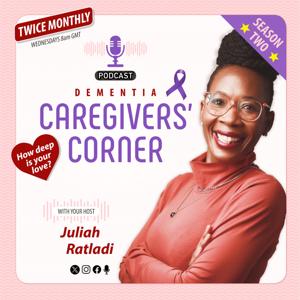
Dementia Caregivers’ Corner Podcast—How deep is your love?
Episode Title: When the Coffee Stops Smelling: The Overlooked Link Between Smell and Dementia
Repost: In this episode of the Dementia Caregivers’ Corner Podcast, I’m joined by Duncan Boak, co-founder and CEO of SmellTaste, to explore the often-overlooked impact of changes to smell and taste.
Duncan shares his personal experience of losing his sense of smell following a severe head injury and how this led him into advocacy and support for people living with smell and taste disorders.
We discuss the relationship between smell, memory and dementia, and why changes in smell and taste can affect much more than enjoyment of food. They can influence appetite, emotional wellbeing, quality of life and everyday safety — including the ability to detect smoke, gas or spoiled food.
We also explore sensory experiences such as smell hallucinations and why caregivers and healthcare professionals need greater awareness of olfactory impairment in dementia care.
Duncan also discusses his contribution to A New Approach to Dementia: Examining Sensory and Perceptual Impairment, edited by Professor Andrea Tales, Professor Jan Kremláček and Dr Emma Richards.
In this episode:
• Duncan’s personal journey with smell loss
• The connection between smell, taste, memory and dementia
• How sensory changes can affect eating and everyday life
• Safety risks associated with loss of smell
• Smell hallucinations and other overlooked sensory experiences
• Support and advocacy for people affected by smell and taste disorders
• Why sensory impairment deserves greater attention in dementia care
An important conversation reminding us that dementia is about much more than memory loss.
#DementiaCare #DementiaAwareness #OlfactoryImpairment #SensoryPerception #SmellAndTaste
Episode Title: When the Eyes and Brain See Differently: Understanding Vision Changes in Dementia
Repost: Vision changes in dementia can go far beyond poor eyesight. A person may be able to see clearly, yet struggle to interpret what they are seeing.
In this episode, Juliah Ratladi is joined by Advanced Clinical Practitioner and Independent Prescribing Optometrist David Knight to explore the complex relationship between vision, perception and dementia.
Drawing on clinical expertise and real-life caregiving experiences, they discuss how different dementias can affect visual perception, whether poor eyesight may contribute to cognitive decline, challenges with vision assessments, and practical changes families can make at home to improve safety and independence.
A fascinating conversation for families, caregivers and healthcare professionals who want to understand why, in dementia, seeing isn't always as simple as what meets the eye.
Repost: What happens to the mother–daughter relationship when dementia enters the family?
In this episode of the Dementia Caregivers’ Corner Podcast, Donna Houston shares her experience as the daughter of renowned dementia activist Agnes Houston MBE, who was diagnosed with early-onset Alzheimer’s at the age of 57.
Donna reflects on the early signs before her mum’s diagnosis, the challenges they faced navigating a system that did not always provide the support they needed, and how they made a conscious decision to face dementia together.
We also explore an important question for families: Should adult children become caregivers for a parent living with dementia? Donna shares her perspective on balancing being a daughter with providing care, protecting their relationship, and what nearly two decades alongside dementia have taught her about love, family and resilience.
🎧 Tune in for an honest daughter’s perspective on what it means when dementia becomes part of family life.
Dementia care. How deep is your love?
Repost: When we talk about dementia, memory loss is often the first thing that comes to mind. But dementia can also change the way a person sees, hears, tastes, smells, touches and makes sense of the world around them.
These sensory and perceptual changes can have a profound impact on everyday life, yet they remain one of the less understood and less discussed aspects of dementia...
After listening to Agnes, think about a behaviour you have seen in someone living with dementia that you previously found difficult to understand.
Could sound, sight, touch, taste, smell or the way they perceive their surroundings have played a part?
Sometimes understanding what the person may be experiencing is the beginning of understanding the behaviour.
🎙️ Dementia Caregivers’ Corner Podcast
If you enjoyed this conversation or know someone who could benefit from understanding the sensory side of dementia, please share this episode.
And if you enjoy the podcast, please consider leaving a review. Every review and share helps us reach more families, caregivers, professionals and communities with dementia education and awareness.
Until next time, take care, and bye for now!
#DementiaCaregiversCorner #AgnesHoustonMBE #DementiaAwareness #SensoryChanges #DementiaCare
Can technology make everyday life easier for people living with dementia and those who care for them?
In this episode of the Dementia Caregivers' Corner Podcast, I speak with Allyson Schrier, caregiver, dementia advocate, and co-founder of Zinnia TV—a pioneering AgeTech platform designed to enrich the lives of people living with dementia through engaging, dementia-friendly video content.
After caring for her husband, Allyson transformed her personal experience into an innovative solution that is helping families, caregivers, and care providers around the world create more meaningful moments while reducing stress.
How Allyson's caregiving journey inspired the creation of Zinnia TV.
The role of technology in supporting people living with dementia.
Simple ways to make digital tools accessible for older adults.
Why compassionate, person-centred care should always come before technology.
The importance of culturally inclusive dementia care for diverse communities, including immigrant and African families.
The exciting future of AgeTech and how innovation is shaping dementia care.
✅ Great innovations often begin with lived experience.
✅ Technology should enhance human connection—not replace it.
✅ Compassion remains the most powerful tool in dementia care.
✅ Inclusive technology ensures every family can benefit, regardless of culture or language.
Whether you're a family caregiver, healthcare professional, dementia advocate, or simply interested in how innovation is transforming dementia care, this conversation is packed with practical insights and inspiration.
If you enjoyed this episode, please follow, rate, and review the Dementia Caregivers' Corner Podcast on your favourite podcast platform. Your support helps us reach more families and raise dementia awareness around the world.
Please share this episode with someone who could benefit from learning how technology and compassion can work together to improve the lives of people living with dementia and those who care for them.
Episode Title: The Dementia and Death Conversation: Why Waiting Can Cost Families
Death is one of the few certainties in life, yet it remains one of the conversations many of us avoid.
In this thought-provoking episode of the Dementia Caregivers Corner Podcast, Juliah Ratladi is joined by hospice social worker Lisa Pahl, who has spent nearly two decades supporting individuals and families through some of life's most challenging moments. Drawing on her experience in hospice care and emergency medicine, Lisa shares why talking about death isn't about giving up hope—it's about giving people a voice while they still have one.
The conversation explores the importance of advance care planning, particularly for people living with dementia, where the opportunity to express wishes can gradually be lost. Lisa also discusses the inspiration behind the Death Deck, the End-of-Life (EOL) Deck, and the Dementia Deck—innovative conversation tools designed to help families navigate topics that are often difficult to begin.
Together, Juliah and Lisa discuss cultural attitudes toward death, why many families avoid these conversations, how to introduce advance care planning compassionately, and why meaningful conversations today can prevent uncertainty and distress tomorrow.
Whether you're a family caregiver, healthcare professional, or simply someone who wants to prepare for the future with confidence, this episode offers practical guidance and gentle encouragement to start the conversations that matter most.
Because peace at the end often begins with conversations held long before the end.
To learn more about Lisa's End-of-Life Deck and Dementia Deck, or to purchase a copy, visit thedeathdeck.com.