
Sign up to save your podcasts
Or

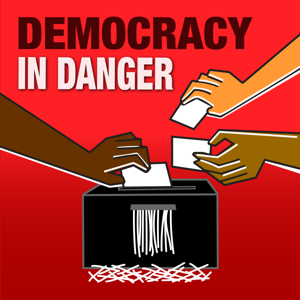


It’s been a long year: A tiny virus laid us low, protests over racial injustice erupted across the country, climate change loosed record-setting wildfires and hurricanes, and citizens voted in one of the most fraught national elections ever. So what did 2020 reveal about the state of democracy in America and across the world — and what will come in its wake? In this live recording for our season finale, a panel of experts helps Will and Siva break it all down and build it back up. Where do we go from here?
President Trump is calling for recounts and crying voter fraud while the Biden transition team roars to life, laying the groundwork for action on key issues like climate change, the pandemic and economic reignition. But our guests this week say America’s democratic institutions will continue to buckle if political leaders and citizens alike don’t take bold action to strengthen — and alter — them. Join Will and Siva for an election wrap-up and a look ahead with commentators Jamelle Bouie and Dahlia Lithwick.
Last month we learned that 545 immigrant children remained stranded in the United States, separated from their families: casualties of the president’s hard-nosed stance on immigration. And yet, despite all the tough talk and draconian policies, Trump’s administration hasn’t deported people as aggressively as his predecessor. So as Americans head to the polls this week, what should they make of this legacy, and what hope is there for a more humane future? Political scientist Elizabeth Cohen has some answers.
Amy Coney Barrett’s appointment to the Supreme Court on the eve of a presidential election has raised questions about Congress’s duty to check the power of the judiciary. Risa Goluboff, dean of the UVA Law School, offers Will and Siva some judicial — and judicious — history, and weighs the future. What will Justice Barrett do to the Supreme Court? How will it change her? And what’s with all the turtles carved into the court’s building? Well, Goluboff says, the pace of justice is slower than you may think.
Kate Manne argues that contempt for women is not a bug but a feature of Donald Trump’s politics. She says this helps explain why “masculine” issues — like the military, gun rights, law enforcement and border security — have drowned out health care, education, climate change and food protection. Manne, a philosopher at Cornell, also tells Will and Siva how such misogyny is refracted in the “himpathy” afforded to male perpetrators of sexual violence, and internalized not only by men but many women, too.
Fascism. We know what that looked like in 20th-century Germany and Italy: dictatorship, genocide, war. But can a creeping enthusiasm for authoritarianism in the 21st century — in democracies like India, Hungary and even the United States — be called “fascist”? Yale philosopher Jason Stanley thinks so. Not only that, he tells Siva and Will, but democracies are especially susceptible to fascism. Find out why.
In less than a week, Donald Trump told Americans not to let coronavirus “dominate” them, spread falsehoods about the flu, and told a violent hate group to “stand back and stand by.” These are just the sort of statements that make him a demagogue, says Texas A&M rhetorician Jennifer Mercieca. This time, Mercieca helps Will and Siva make sense of the president’s penchant for inflammatory language. How has it overshadowed the public sphere for five years, and what does it say about the state of our democracy?
When Phil Howard lived in Budapest, he watched as Hungary’s fledgling democracy was polluted with polarizing stories spread online. It’s a phenomenon now threatening political discourse everywhere, and recent tweaks meant to improve social media policies and algorithms, he says, amount to “a drop in the bucket.” But find out why Howard, a professor of internet studies at Oxford University, thinks we need more social media, not less; and how machine learning and big data might be democratized for good.
From the publisher's feed