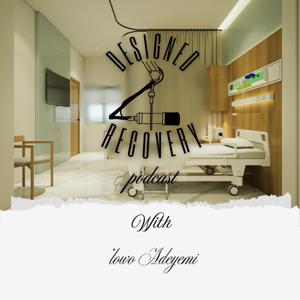
What if healthcare design could be prescribed as part of the treatment plan?
In this episode of Designed 4 Recovery, host Adelowo Adeyemi sits down with Nurse Administrator & Author of the book: ‘The Power of Love & nursing theory: when science meet spirit a new kind of nursing is born’ Winston Meikle to explore how healthcare environments influence patient recovery, caregiver well-being, and clinical performance.
Healthcare spaces are often viewed as the backdrop to care delivery, but research and frontline experience increasingly reveal that the built environment plays an active role in healing. From patient rooms and nursing stations to daylight, acoustics, and workflow planning, every design decision has the potential to affect outcomes.
Drawing on years of nursing experience, Winston shares practical insights into how healthcare environments impact patient comfort, staff efficiency, interdisciplinary collaboration, and the growing challenge of nursing burnout.
Together, they discuss why evidence-based healthcare design is becoming an essential component of modern healthcare delivery and how collaborative planning between architects, clinicians, nurses, administrators, and patients can create spaces that support both healing and human dignity.
This conversation highlights an important truth: healthcare environments are not passive containers for care—they are active participants in the healing process.
In This Episode
The Hidden Impact of Healthcare Design
Why healthcare environments influence clinical outcomes
Understanding the connection between space and healing
How the built environment affects both patients and caregivers
Evidence-Based Design and Patient Recovery
The role of daylight, acoustics, privacy, and wayfinding
How design can reduce stress and anxiety
Environmental factors that contribute to better patient experiences
Supporting family-centered care through thoughtful design
Why Nurses Need a Seat at the Design Table
The value of frontline clinical insight
Common operational challenges that designers may overlook
How collaborative healthcare planning improves functionality
Bridging the gap between design intent and clinical reality
Nursing Burnout and the Built Environment
Environmental contributors to caregiver fatigue
Workflow inefficiencies and cognitive overload
The impact of poor layouts, noise, and long walking distances
Design strategies that support staff wellness and resilience
Creating Truly Healing Environments
Designing for dignity, comfort, and emotional well-being
Balancing operational efficiency with human-centered care
Supporting both patient outcomes and caregiver experience
Looking Ahead: The Future of Healthcare Design
Wellness-focused healthcare environments
Human-centered and evidence-based planning
Flexible, resilient, and adaptive healthcare facilities
The evolving role of design in healthcare transformation
Key Takeaway
Healing extends beyond medicine.
The spaces where care occurs influence how patients recover, how clinicians perform, how teams collaborate, and how caregivers sustain themselves over time. When evidence-based design and collaborative planning come together, healthcare environments can become powerful tools for healing, resilience, and better outcomes for everyone.
Memorable Quote
"Healthcare environments are never neutral. They either support healing—or unintentionally work against it."
About the Guest
Winston Meikle, RN is a Nurse Administrator, entrepreneur and author of the book, ‘The Power of Love, a nursing theory: when science meet spirit a new kind of nursing is born’. With frontline experience delivering patient-centered care in complex healthcare environments. His perspective offers valuable insight into how healthcare spaces influence clinical workflow, patient experience, staff well-being, and the realities of modern nursing practice.