
Sign up to save your podcasts
Or



In this episode, we sit down with Ebba Josefson Lindqvist to unpack why companies must embrace the "Give to Get" mindset, where data sharing becomes a catalyst for innovation and progress. Explore how federated learning empowers organisations to share data without compromising security or ownership. From the collaborative exchange of data to the tangible benefits gained, we explore the collaborative code that leads to AI success.
LINKS
AI Sweden: https://www.ai.se/en
Silicon Vikings: https://www.siliconvikings.com/
The New Nordics Podcast: https://open.spotify.com/show/5EmgohHxCj9LlaTDH0IWpA
Hosted on Acast. See acast.com/privacy for more information.
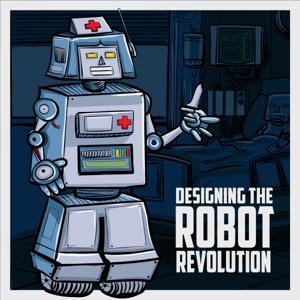
In this episode, we talk with humanoid robot expert Rafael Hostettler about how advanced robotic avatars are being designed to provide vital support and companionship in the care context. Addressing the pressing challenges of an ageing society, robotic humanoid avatars offer a solution that extends beyond geographical boundaries, enabling a human operator to achieve teleportation-like presence in any location where the Robody is deployed.
Links:
Devanthro - The Robody Company
Hosted on Acast. See acast.com/privacy for more information.
Hosted on Acast. See acast.com/privacy for more information.
In this episode, we tackle the tricky balance between human creativity and AI in innovation work. We see AI as a helper, not a replacement. AI can speed up tasks and refine ideas but can't match the human ability to make subtle connections that drive innovation. We caution against hyping up AI and warn about the 'deskilling effect' - losing our skills due to too much reliance on AI. But, by using AI carefully and learning from it, we can enhance our abilities, express ideas better, and create effective solutions to our problems. We also discuss the need to share our AI experiences and learn from each other. Remember, AI is a tool, not a craftsman. Tune in to hear more!
Reference:
AI is about to kill creativity
Hosted on Acast. See acast.com/privacy for more information.
In this episode, we're joined by Dan Silveira, who has developed a unique ethical framework for AI/ML. We focus on the six guiding lenses: Bias & Fairness, Diversity & Inclusivity, Privacy & Security, Ethical & Safe Use, Reliability & Trustworthiness, and Openness & Transparency. We discuss tools, inspired by design thinking, that fit into agile project management processes. These are especially useful in the four areas most vulnerable to bias - Discovery, Data, Experimentation, and Monitoring.
Read Dan's paper and access the tools described in the episode below:
https://openresearch.ocadu.ca/id/eprint/4044/
Hosted on Acast. See acast.com/privacy for more information.
Update! Since we released the first episode of this season - The Law and Ethics of AI Art - there has been a lot of discussion and some regulatory change when it comes to AI law and ethics. In this episode we hear the latest from assessments by researchers from Stanford - evaluating foundation model providers like OpenAI and Google for their compliance with proposed EU law on AI. What do you need to know as a designer when it comes to large language models and their legal compliance?
Do Foundation Model Providers Comply with the Draft EU AI Act?
Hosted on Acast. See acast.com/privacy for more information.
In this episode, we delve into service design, chatbots, and generative AI with Pontus Wärnestål, an expert in human-computer interaction and the author of "Designing with AI." We explore the challenges and opportunities of designing systems for the modern age, focusing on the shift from file-based structures to search and tag-based systems. Pontus highlights the importance of user research in creating effective, human-centered designs.
We also discuss the concept of "Explainable AI" (XAI), and how it can help bridge the gap between complex AI systems and non-technical users. Pontus explains the limitations of popular AI models like GPT and emphasizes the need for better communication around the truth value of AI-generated information.
The conversation looks at the ethical implications of using AI in various fields, from self-driving cars to politics. Pontus stresses the importance of human expertise and leadership, warning against the overreliance on AI-generated content. The episode highlights the powerful potential of a human-AI collaboration, where combining both entities leads to more informed decisions and better outcomes.
Hosted on Acast. See acast.com/privacy for more information.
Hosted on Acast. See acast.com/privacy for more information.
Hosted on Acast. See acast.com/privacy for more information.
Hosted on Acast. See acast.com/privacy for more information.
From the publisher's feed
Hosted on Acast. See acast.com/privacy for more information.