
Sign up to save your podcasts
Or

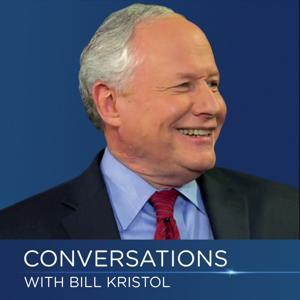

Lincoln’s Second Inaugural Address is considered one of history's most compelling examples of political rhetoric. In this Conversation, Diana Schaub, a preeminent scholar of American political thought and author of His Greatest Speeches: How Lincoln Moved the Nation, argues that while Lincoln’s Second Inaugural deserves its reputation, often its true character has not been appreciated. Over the course of her line-by-line interpretation of the dialogue, Schaub draws out some remarkable, counterintuitive, and little-appreciated aspects of Lincoln’s March 1865 address. Schaub and Kristol pay particular attention to the theological-political themes, and how the magnificent and subtle rhetoric of the speech presses the nation toward racial reconciliation and a politics of true moderation and greater humanity.
 View all episodes
 By Bill Kristol

4.7
19621,962 ratings
Lincoln’s Second Inaugural Address is considered one of history's most compelling examples of political rhetoric. In this Conversation, Diana Schaub, a preeminent scholar of American political thought and author of His Greatest Speeches: How Lincoln Moved the Nation, argues that while Lincoln’s Second Inaugural deserves its reputation, often its true character has not been appreciated. Over the course of her line-by-line interpretation of the dialogue, Schaub draws out some remarkable, counterintuitive, and little-appreciated aspects of Lincoln’s March 1865 address. Schaub and Kristol pay particular attention to the theological-political themes, and how the magnificent and subtle rhetoric of the speech presses the nation toward racial reconciliation and a politics of true moderation and greater humanity.

6,295 Listeners

20 Listeners
12,649 Listeners
4,611 Listeners

8,103 Listeners
1,342 Listeners
4,021 Listeners

4,670 Listeners
2,612 Listeners
495 Listeners
2,290 Listeners

3,198 Listeners
3,474 Listeners

1,082 Listeners
784 Listeners