
Sign up to save your podcasts
Or

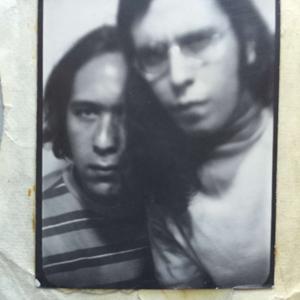


IT’S A CHOICE TO BE HAPPY
(Music and lyrics by Bill Mesnik)
What makes me happy?
Cause when I feel happy
I feel like shit
I can’t define it
I thought I was happy
But was I really happy?
I don’t know
I just can’t show it
Each soggy birthday cake makes me quiver and quake
A jog around the lake?
I can’t fake it.
What makes you happy?
Cause you always seem happy
Are you free from pain?
Oh please explain it
You say, “just be happy,
It’s a choice to be happy,”
It starts with me
I just don’t see it
You’re gracious and sweet with my air of defeat
When we pass on the street
You just greet me.
I’m gonna be happy
I’ve gotta be happy
Before I’m dead I’ll get out of my head
I’ll live and be happy
I’ll love and be happy
A smile comes first
For better or worse
I’ll dance in the sun
I’ll laugh and have fun
I’ll help everyone
(Maybe someday)….
ONE IF BY LAND, TWO IF BY SEA
PAUL REVERE AND THE RAIDERS GREATEST HITS by Paul Revere and the Raiders (Columbia, 1967)
This group, this record: they were fundamental elements in the experience of the 13 year old Captain Billy. My band, The Full House, played a smokin’ cover of “Steppin’ Out”; Dick Clark’s WHERE THE ACTION IS tv show was a can’t miss, daily after-middle school check in; I coveted those Vox amps and Mark Lindsay’s ponytail. And, re-listening to this setlist 56 years later verifies that this band kicked hard and tight. Just ask Quentin Tarantino, who included two of the cuts for the soundtrack of ONCE UPON A TIME IN HOLLYWOOD.
America’s answer to the British Invasion actually started earlier, in 1958, in Boise Idaho, when keyboardist Paul Revere and sax player Mark Lindsay met and collaborated in the instrumental group The Downbeats. Revere was the organist’s actual name, so the subsequent donning of Revolutionary outfits was a natural, if cringey gimmick. The fact that Mark Lindsay was also one of America’s best rock singers was a secret weapon.
The initial bombshell was dropped in April, 1963, in Portland, Oregon, when the group recorded the seminal rock standard “Louie Louie” in the same year and the same studio as the Kingsmen (the version everybody remembers): The Northwestern Motion Pictures and Sound Recordings, Inc. studio. But, that didn’t matter. Yes, The Kingsmen’s recording was a one hit mega-wonder, but, the Raiders became a national institution with a string of 12 top 30 hits.
The first incarnation of the Raiders dissolved around the same time that this collection came out, but they kept reforming in various line ups until Revere’s death from cancer in 2014. Like their contemporaries, The Monkees, there was a media hyped, manufactured quality (Producer Terry Melcher fattened their sound with the help of The Wrecking Crew), but the Raider’s street cred as musicians was impeccable, and very few could wail like Mark Lindsay.
HANK WILLIAMS, JR. / WHISKEY BENT AND HELL BOUND / ELEKTRA, 1979
I have a good story about Hank Williams, Jr., aka “Bocephus:”
My late wife, Chemayne grew up in the backstages and dressing rooms of the biggest rock n roll arenas in the Southeast. Her mom worked for a couple of regional mega promoters, and Chemayne had many encounters with such 70’s luminaries as Willy Nelson, James Taylor, Roger Daltry, Mick Jagger, Elton John, etc. One memorable meeting involved the son of “The Hillbilly Shakespeare.” I guess she was about eight, and Hank decided to take out and display his glass eye in order to tease her. Freaked her out so bad the memory was burned into her brain for all time.
Hank worked hard to cultivate his Outlaw image, and to both embrace, and out run the weight of his father’s immense legacy, and along the way he kicked the shit out of himself, but made some damn fine records. This album was created during his high point of the late 70s-early 80s when his combination of Country, blues, and Rock went main stream - between his monster hits Family Tradition, and All My Rowdy Friends Have Settled Down. He was so big that in the early 90s he became the identifiable voice of Monday Night Football. Not only did he embody his own “Family Tradition”, but America’s as well, it seems.
It’s worth noting also that the disc was produced by Jimmy Bowen, who also produced Frank Sinatra’s Strangers in the Night - which demonstrates some cross over wizardry in service of one of Country music’s arguably biggest cross over artists.
We got a couple of world-class curmudgeons here - who share more than might meet the ear initially: two native Californians renown for their curdled opinion of the world they inhabit, and the populace with whom they share the space; We’re talking Hollywood, specifically, but their bile was generous enough to accommodate the whole of humanity - in all its corrupt, hypocritical manifestations; both lost too early - victims of cancer’s cruelty; both musical geniuses with solid classical training and rock n roll credentials; and, funny? Goddamn right, they were!
Frank Zappa and Warren Zevon, two outlaws who could not be silenced or ignored are being celebrated here today. It should be noted that Frank was inducted posthumously into the Rock n Roll Hall of Fame; Warren is still owed his due.
FRANK ZAPPA
The man loved freaks, and had to create his own label to promote them. From the time he appeared on the Steve Allen show in the early 60’s, playing the bicycle, to the early 90’s, when he visited Czech Republic as an honored guest to the President, playwright-turned politician, Vaclav Havel after their Velvet Revolution, and throughout his vociferous fight against censorship in the halls of our Congress, Frank always stood strong for freedom of expression, and against hypocrisy.
In “Plastic People” from his second album ABSOLUTELY FREE, you can hear so many elements mixed together that have become tropes: the abrupt changes in tempo and mood, the stinging social satire, the weird orchestration, the rock n roll name checks…. Good stuff!
WARREN ZEVON
We always knew that Warren was tortured by demons. He struggled with his alcoholism for a long time and was subject to depression. But, despite it all he kept his unique humorous perspective. And, with a prodigious gift for melody, he wrote some of pop’s most haunting ballads. He was, to borrow the words of Kris Kristofferson, a “walking contradiction” who could go to the darkest of dark sides, like in his rockers about serial killers, such as Excitable Boy and Werewolves of London - then, swing 180 degrees to express wrenching heartbreak in such timeless elegies as Hasten Down the Wind and Carmelita.
In Splendid Isolation you get both - the swinging of the hips, and the stinging of the poisoned barb. It has an autobiographical persuasion which illuminates the soul of a man who longs to be left alone - the world is just too fucked up to navigate. There’s a bitter sadness articulated, but its flavored with that ever-present Zevon wit.
CAPTAIN BILLY’S MAGIC EIGHT BALL:
ALBERT KING LIVE WIRE/BLUES POWER
So, there were three “Kings” of the blues: B.B., Freddie, and Albert.
B.B. had the delicate simplicity. Less was always more with his virtuosity. He was a consummate communicator and showman, and much beloved. Freddie had the muscle and the size. A big man who stood 6’5’’, he was all grit and groan. From his early days when he recorded Hideaway, up through his resurrection in the 70s by Leon Russell’s Shelter label and the unbelievable propulsion of I’m Goin’ Down, Freddy blew the doors off whatever venue he graced, but this energy proved too much to sustain; leading to his untimely death at age 42.
My favorite was Albert. Also tall, 6’4,’’ he was nicknamed “The Velvet Bulldozer”. Brandishing Lucy, his Gibson Flying V guitar - his ear was impeccable, as was his timing, guiding him through licks that have such sinuous grace, as he bends those out of tune strings into perfect harmony, as if they are taffy - but, also displays deep emotional power - a stinging embodiment of the Cross Cut Saw in action. The sound he produced was beefy, yet lyrical at the same time.
His birth name was Nelson, but he copped the surname King, and claimed he was related to BB, in order to catch some of the latter’s reflected glory. It was a tough road for Albert, and though he never reached the widespread recognition that his namesake garnered, his influence on the younger generations - including Eric Clapton and Stevie Ray Vaughn is undeniable. Cream’s Born Under A Bad Sign was just a simulacrum - a note for note tribute.
In 1968, Albert played three nights at the legendary Fillmore West in San Francisco, and this recording, produced by Stax Records, documents that immortal outing. When you hear his dissertation on Blues Power - punctuated by those gleaming licks, that’s all you need to know.
Some philosophers posit the difficult truth that a world without grief would deprive us of a deeper appreciation of the evanescent beauty of life. Life cannot be grasped; it flows mysteriously from one moment into another - here, and gone. This is your moment to take it all in, so be present and celebrate it, they urge. When Stephen Colbert says that the devastating loss of his father and brothers in a fatal plane crash taught him gratitude one has to step back in awe and wonder to reflect on the heart tugging idea that grief may be a gift.
Today we feature two survivors of loss - physical and spiritual. When Lucinda Williams asked “If we lived in a world without tears, how would broken find the bones?…” she hinted at this enigma 17 years before a stroke almost took her life; Patti Smith survived a punishing revolving door of grief: losing her husband Fred, her brother Todd, her best friend Robert, and somehow she moved through it all to create one of the most incendiary recordings of her career - after an 8 year hiatus.
PATTI SMITH
Patti Smith is a national treasure - (I don’t throw that title around) - although, she’d probably demur saying she was just a chick from New Jersey who got lucky. But, anyone familiar with her memoir Just Kids knows it wasn’t luck that drove this waitress with artistic aspirations to migrate to New York City to seek her rock n roll fortune among the poetic luminaries of the era - it was true grit and an unshakeable confidence in her talent.
I admired her then - in Sinatra drag on the cover of her debut album Horses, with all that tomboy swagger, but I LOVE her now as our eternally youthful elder poetess, touring the world like a good will ambassador for the embattled Peace and Love generation. On the song Gone Again she rages against loss, even as she acquiesces to its inevitability.
LUCINDA WILLIAMS
Lucinda Williams is the ideal blend of tough and tender, of homespun heart and poetic sophistication. She is one of the best singer songwriters America has produced, and that’s saying something. She’s a short story Magus with an authentic Southern twang, whose autobiographical fiction stirs the heart like few others can.
Her album Car Wheels on a Gravel Road, released in 1998, brought her to the attention of a much broader national audience, and her open hearted vulnerability proved both a blessing and a curse. Her artistic output and touring schedule accelerated, but in 2020, those wheels came off the axel, when a stroke took away her ability to play and sing. Thankfully, she’s been working her way back, and the last chapter hasn’t been written yet.
In November of 2016 the family attempted a vacation to Hawaii, which turned out to be a tropical roller coaster.
There were loads of psychic shenanigans, along with luaus, snorkeling, and gentle night time island breezes...
And, oh yes - Dreams Galore!
Love is mysterious, and the death of love even more so: it’s complicated, sticky, and heart breaking. When there are children impacted, as was the case with Marvin and Anna Gaye, and Richard and Linda Thompson, the emotional brutality can resonate for generations.
Is it worthy compensation if the anguish produces great art? Life is short - Art is long, and isn’t that what every artist hopes for, that their art will endure beyond the grave? Who can weigh that balance?
Today’s cuts illuminate couples in crisis: In the case of the Thompsons, they were dissolving a recording and performing team; in Marvin’s, he was being ousted by the sister of the man who gave him his break. Neither scenario is pretty, but the resultant music remains divine.
HERE MY DEAR / MARVIN GAYE
Anna Gordy Gaye wanted a million dollars as a divorce settlement from Marvin. She took out a warrant for his arrest for failing to pay alimony, and put a restraining order on him. Check.
So, a deal was struck: in exchange for $600K (1/2 in advance; half to be taken out of royalties), Marvin would produce a new album to get her paid. Check mate.
Initially intending to make a quick knock off, Marvin became fascinated with the project, devoting himself to making it a passionate sacrifice, detailing the death of love. It was a critical and commercial failure upon its release, but has since been reconsidered, and is now thought of as one of his finest achievements.
The title cut that introduces the album disturbingly cuts off in mid-phrase - a distinctly telling gesture.
WALL OF DEATH / RICHARD AND LINDA THOMPSON
Linda was pregnant with Richard’s third child when producer Joe Boyd got them into the studio to record the album “Shoot Out the Lights” - a record which Rolling Stone designated as #9 on its list of the “Best Albums of the 1980s”.
They were supposed to tour immediately after to promote the record, but unfortunately, this had to be delayed to allow Linda to give birth. In the interim, Richard, who had fallen in love with another woman, dropped the bad news on her as they set out on tour.
After being together for 10 years, and Linda converting to Sufi Islam for Richard, renouncing worldly pleasures, she was now trapped inside a loveless, commercial obligation, ironically, to promote their finest collaboration.
Wall of Death, which closes the album, depicts love as a dangerous carnival ride in which you take your chances at calamity, but still want to go back to ride, again and again.
Films featuring Allen Ginsberg or his work:
I'm Not There (2007):
A biographical musical about Bob Dylan, featuring David Cross as a cameo appearance as Ginsberg.
The Life and Times of Allen Ginsberg (1993):
This documentary offers a comprehensive look at Ginsberg's life, featuring interviews with friends, contemporaries, and archival footage.
Heart Beat (1980):
While not directly featuring Ginsberg, this film is based on Carolyn Cassady's memoir and explores the Beat Generation, including Neal Cassady and Jack Kerouac.
We offer today two examples of eerie rock music - notable records that have been inspired by horror literature, and classic suspense. H.P. Lovecraft’s folky psychedelia, and Paul Williams’ soundtrack for Phantom of the Paradise both fit the bill for spine tingling tunefulness.
Rock’s dramatic possibilities seem obvious, but have rarely been successful. Theater would seem to be the ideal medium for rock music, but early attempts to mix the two were awkward because creators, trying to appease the commercial audiences of the late 1960s, were not attracting the young people — the folks who were actually listening to the cutting edge music of the time. This, of course, changed over the years, as the young people matured into middle age, and now into late-life. Today, they flock to see shows like Dylan’s Girl From the North Country. Rock is the standard musical vehicle for storytelling.
PHANTOM OF THE PARADISE
Paul Williams, the diminutive maestro of pop song craftsmanship starred in, and scored, Brian De Palma’s 1974 re-imagining of Phantom of the Opera, a Faustian fever dream. The composer of “We’ve only just begun” (originally a bank commercial), and many other pop hits, put his considerable chops on the line for this cinematic effort - which flopped everywhere but Winnipeg, Canada for some reason, and the soundtrack went gold there.
Williams, who started his career as a child actor, developed into a popular raconteur, a staple of late night television talk shows, and this exposure perhaps over shadowed his immense acting and musical talent. In this cut, “The Hell of It” his power is persuasive.
HP LOVECRAFT
George Edwards, a folk singer from Chicago, teamed up with Dave Michaels, a versatile, multi-instrumentalist, to create the Psyche band, HP Lovecraft. The name was chosen by their benefactors, horror aficionados Bill Traut and George Badonsky at Dunwich Records (a label also named for one of the horror master’s stories) - and the rest is history in the annals of Buried Musical Treasure. The lifespan of the group was brief, producing only two albums, with personnel changes happening practically from the beginning, but something significant was in the offing.
Spin Spin Spin, from the group’s second album is a good example of their unique mesh of folk style with classical flavors, featuring swirling harmonic pulsations - which conjure a mysterious aura. A definite time capsule from the Lava Lamp era.
From the publisher's feed
My Fellow Americans, Life is actually just a microscopic, deluded moment in time, so let's cut to the freakin' chase. One look at our impending election debacle can solidify my case. It has been my…
With Gratitude For Gena Rowlands, Nancy Sinatra, Jerry Quarry, Leo Gorcey, Arthur Alexander and Joey Heatherton, Your Splendid Bohemian, Rich Buckland.