
Sign up to save your podcasts
Or

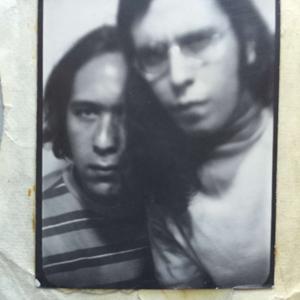


The Agony, Inspiration and Exultation Of Charles Allan Rich -
December 14, 1932 – July 25, 1995.
Never Forget To Remember Such Brilliance.
Enough Said.
Listen In Friends.
https://en.wikipedia.org/wiki/Islands_in_the_Stream_(song)
RIP DOLLY
QUESTION: HOW MUCH SHOULD I BE CONCERNED OR WORRY ABOUT MONEY?
HEXAGRAMS: 35 (ADVANCE) / Fire over earth
Moving lines 4,5,6 > 8 (SUPPORT} / water over earth
I had a friend, Brendan, who used to say when faced with the prospect of being broke: “Money is simply a medium of exchange.” He explained that money is an agreed upon social construct that places a numerical value on various goods and services, thereby simplifying the process from a barter system - (I’ll trade you some of my chickens for you to paint my house, etc) - to one where you can easily carry pieces of paper, or, computer digits on your phone, that represent your worth.
Maybe so, but this theoretical cup and balls illusion will only take us so far. CAPITALISM has run amok, enabling only a handful of billionaires to call the economic shots for everyone. The bubble of ballooning debt for the middle class to achieve even a modicum of financial security has popped, and the multitude of serfs that have, until now, been stoking the billionaire’s coffers, are about to be replaced by a cadre of uncomplaining robots. So, I ask: “What’s a peon to do? ’Tis a puzzlement,” as Yul Brenner used to say.
Brendan was always broke, but somehow managed to live lavishly, traveling the world on his impish smile and keen wits,. Of course, he had to rely on the kindness of strangers, as well as long-suffering friends for his daily ration of single malt scotch and fine cheeses. But, behind the devil may care pose, there must have been many sleepless nights on the various couches along the precipitous road.
So, today, I ask the oracle: How much should I be concerned or worried about money, or the lack thereof?
https://www.nytimes.com/2016/09/12/arts/music/prince-buster-trailblazer-of-ska-dies-at-78.html
Cecil Bustamente Campbell was born in Kingston, Jamaica, on May 24, 1938. He performed with teenage groups in Kingston; he also became a boxer, taking the name Prince Buster.
In the 1950s he began working for one of Jamaica’s top producers and sound-system disc jockeys, Coxsone Dodd. By the end of the decade he had opened a record store, Buster’s Record Shack, and was playing street parties with his own sound system, the Voice of the People. He decided to start producing songs as well as spinning them.
Jamaicans were listening to, and imitating, the American R&B that reached the island on radio stations from New Orleans and Miami. Prince Buster’s productions were more deliberately Jamaican. His production of the Folkes Brothers’ “Oh Carolina,” recorded in 1959, meshed the traditional Nyabinghi drumming of a Rastafarian musician, Count Ossie, with what would come to be known as a ska beat.
That beat, in songs like Eric Morris’s “Humpty Dumpty,” made for huge hits in Jamaica and also had an impact in 1960s Britain. Prince Buster’s instrumental “Al Capone” was a Top 20 hit there in 1965.
By the end of the 1960s ska had given way to the slower rocksteady beat, a closer precursor of reggae. Prince Buster adapted, notably with his series of singles using his Judge Dread character. But in the early 1970s he gave up producing music and concentrated on business ventures, including record stores and a jukebox company, and moved to Miami.
I’ve been watching THE PRISONER, Patrick McGoohan’s ground-breaking, dystopian fantasy television series (showing currently in its entirety on the Criterion Channel), and it has set my mind reeling. The 1968 British production tells the dream-like allegory of Number 6, a Secret Agent - (McGoohan was already identified in the public’s mind that way, having starred in the successful spy show ‘Danger Man”),- who tries to retire, but is kidnapped, whisked away, and held prisoner, under 24/7 surveillance inside a charming little seaside village (called “The Village”), which is populated by a group of cheerful, brightly dressed zombies who’ve all been assigned numbers.
The person running the asylum is #2 (the actor rotates every week) -who is trying to get number 6 to tell them why he wanted out, but 6 is defiant, refusing to comply, and every week tries to escape. Inevitably, he always ends up back where he started - no matter how elaborate the attempt. The identity of number 1 is a closely guarded secret, revealed (or, is it?) in the final episode. The production design is Mediterranean-Disney outside - Ultra modern inside, and reminiscent of A Clockwork Orange - another monumental, late sixties confection of paranoia.
McGoohan himself was a prickly, no nonsense, anti-authoritarian who produced, wrote, starred in, and directed several episodes, and this opus still stands as his masterpiece.
In this story, as in many others, the rugged individual is often held up as someone to be admired and emulated. Unfortunately, they also often end up crushed by the system they refuse to bow to. I certainly identify with artists who have carried on with their passion, despite public indifference, poverty, and self doubt: the agony of Van Gogh, the isolation and penury of Henry Darger, and the dyspeptic Charles Bukowski come to mind. They all persisted, against societal scorn, creating work that endures.
But I believe that most people (although TikTok might belie this) want to live quietly and peacefully; not to make waves, not to be disdained; but just to make a living for their families, and die having been loved and remembered by their circle.
But, then again, if one has opinions about wrongs being committed by one’s government, and one doesn’t speak out for fear of arousing unwanted attention, can one live with oneself?
So today’s question for the oracle: QUESTION: IS IT PREFERABLE TO MAINTAIN ONE’S INDIVIDUALITY, OR TO CONFORM TO THE GROUP?
The oracle’s response:
HEXAGRAM 3: “RETRENCHMENT” (MOVING LINE 2)
HEXAGRAM 60: “FRUGALITY” OR “LIMITATION”
https://www.honest-broker.com/p/the-strangest-hit-songwriter-in-history
THE JOKER / STEVE MILLER, (CAPITOL, 1973)
“The Pompatus of Love,” a nonsense phrase that Steve Miller cribbed from “The Letter,” a doo-wop song by the Medallions from 1958, entered the popular culture lexicon in 1973, when this Apostle of guitar consistency applied it to spread his Joker gospel, and ascended to Rock n Roll Godhead. It’s been used for the title of a movie starring Jon Cryer, and is included in the writings of Dave Barry, Steven King, and Michael Ondaatje - even though its meaning remains obscure.
We all sang along knowingly with: “I’m a Joker, I’m a smoker, I’m a midnight toker…”, and when the leering slide goes “Woop Woo,” we all played air guitar right along. It’s a rudimentary 1-4-5 chord sequence like thousands of other songs, and it’s filled with references from other tunes, such as Ahmet Ertegun’s Lovey Dovey, and Miller’s own Space Cowboy and Gangster of Love, but no matter - The Joker is original gold and unforgettable.
The guy is ornery, and has a right to be. I think Miller, a blues man since his teens, is underrated because of all the pop records he sold. I saw him twice - 50 years apart - and he’s still as rock solid on his axe and voice as he was back then - a master at his craft. And, although he was inducted into the Rock n Roll hall, they only gave him one ticket to attend, and he rightfully blasted the institution to the press. Respect must be paid to The Joker.
I have a secret; should I tell? Maybe you have secrets too. What might be the impact of inflicting personal information on unsuspecting receivers? In AA they say: “You’re only as sick as your secrets,” and there may be some truth in that. They say that once you’ve aired your dirtiest laundry, you can begin to heal, unafraid, with nothing to hide.
On the other hand, you might be opening a pandora’s box, as a result of your selfish need to expiate your guilt. There may be consequences and repercussions you never anticipated; hurt feelings, bewilderment - a loss of trust, ironically, just when it should be getting earned back.
So I’m asking the oracle. Let’s see what it advises…..
MY HEART TOOK A LEAP - THE POETIC INNOCENCE OF THE SHANGRI-LAS" -
RICH BUCKLAND'S EPIPHANY NOTEBOOK
Like so many pre teens growing up in the sixites I slept with a transistor radio under my pillow. That receiver was the best friend a 12 year old could possibly have. It told me only what I wanted to hear and unlike the parental tunes regulary dispensed, I could slide the dial to another frequency and change the feel and tempo. 1964 was an extraordinary year for popular music and youthful urges. My wireless companion delivered the sound of pleading voices reciting urgent love calls through the night air. The first feminine intonations that whispered directly to my adolescent hunger ariived through The Supremes in June of that year. I would wait anxiously through the bedtime darkness to hear the DJ conduct another spin of the salvation revealed within a Diana Ross plea requesting an explanation to what would become the eternal question of "Where Did Our Love Go". I was fully captured by the gentle elocution each conflicted tone incited. She was conducting a sorrowful inquest, the meaning of which I was not experienced enough to comprehend and yet fully accepted. It felt like a sensual revolution emanating from the magic of a wireless, spiritual trasmission, but more importantly a glorious awakening having nothing to do with sexual messaging. It was my initiation into the significance of lonliness. And then it became more complex. In August of that same period, a group calling themselves The Shangri-las, dispatched a 45 revelations per second record titled "Remember (Walking In The Sand )" It ignited something dark and dramatic. This was my first migraine heartache and I understood the origin. It was the voice of Mary Weiss, the groups teen vocalist from Queens NY, the very borough I lived in. She was singing a story of such anguish, I just wanted to embrace her and make it better.
"Oh, no, Oh no, Oh, no, no, no, no, no. Remember (Walking In The Sand)".
The song and it's production were the child of a music business misfit named George "Shadow" Morton" But it was the urgent hurt of Mary Weiss that has lived within me going on 55 years.
I recall ruminating, " If this is 12, what the hell will 13 be like."
I began to find out when the next Shangri-las recording was released in December. The melancholy of "Remember" surrendered to another George Morton composition sung as only Mary and her partners could. It was called "Give Him A Great Big Kiss" and made me feel better about our fate and the abyss she had us both falling into only four months earlier. Teendom was just around my Queens, NY street corner. Hope and the sound of rock and roll transmitted by Murray The K, wrestled with the gusty winds which flowed beneath the Throgs Neck Bridge where my friends and I spent long summer days.
In retrospect Mary Weiss was my first true infatuation. The emotions were real, especially for a kid who cried over Jackie Wilsons "Lonely Teardrops" at age 7. Rock and Rhythm and Blues produced awakenings and sensations with no age restrictions.
After 4 marriages I still have similar questions posed by The Shangri-las and The Supremes .
I owe a great debt to those remarkable women and their sacred voices. If we are fortunate, the eternal flame of yearning begs new understanding with each sunrise. Just give the one you love a Great Big Kiss and always Remember.
Always.
Post Traumatic Stress Disorder is a pervasive topic of conversation these days, and recently it’s been on my mind a lot as I endeavor to move past grief. It’s been over 5 years since my life partner departed suddenly - so suddenly that when it was happening, and for a long time after, I completely denied its reality. We know that death comes for us all, and no matter what age you are it’s probably best to prepare yourself, to make friends with the Reaper, and get ready to surrender to his scythe - (I heard that George Harrison used to rehearse his passing); Sarah Bernhardt slept in a coffin… but, very few of us are truly prepared, even at some pretty advanced ages - my father wasn’t reconciled to his fate even when it came at 96. The last phone conversation we had as he waited to be seen at the emergency room was fraught with annoyed bewilderment at being held there against his will.
It seems to be the primary topic of conversation that Rich and I are apt to discuss on any given day, and he has expressed frustration at my reticence to volunteer the dour details of my slide towards the inevitable, but really, why harp on it? Why dwell on the depressing aspects of life while you can still laugh ironically at those same concerns? Eat, drink, and be merry, I say. Of course, if you have to constantly watch your sodium and cholesterol while considering the lethal effects of the cocktail you’re sipping, your options for fun will be limited.
Anyway, back to PTSD… This week it’s been front and center of my consciousness because I recently consumed two items of popular culture that feature it - one 60 years old, the other recently released - namely, Rod Serling’s short lived 1965 television series, The Loner, starring Lloyd Bridges, and Christopher Nolan’s freshly minted sword and sandal epic, The Odyssey. In both, the main character struggles with PTSD - Bridges’ character in the aftermath of the Civil War, and Odysseus from his part in the atrocities recounted in the Iliad. Both men have experienced horrific and emotionally crippling events; they roam vistas rife with unremitting violence, and long to find home.
Rod Serling transplanted his WW2 experiences to the Western genre, and audiences weren’t ready for it’s moral meditations, ill suited to an escapist medium. Regarding the Odyssey, Jon Stewart has reflected that it seems like a sequel to Oppenheimer, Nolan’s rueful depiction of that protagonist’s bequest of a doomsday weapon to arm mankind with the power to destroy itself.
Echoes of PTSD resound everywhere - inside each of us, in the chaos all around, and throughout our popular culture. And, today I asked the oracle how to find peace with it.
QUESTION: HOW CAN I OVERCOME RESENTMENT?
The Oracle answered with Hexagrams 51 (Provoking), and 31 (Cutting)
Let’s examine those, along with a dream diary passage, and a song, “Cairns” composed during that time…
Chemayne used to collect stones that appealed to her. She would then cover them in varnish to make them glisten. After she died there were tons of them, and I started giving them away as gifts. One friend was so taken with them that he took a bunch and built some amazing cairns, a term which I hadn’t been familiar with, but which filled me with hope and pride for their future home.
The following song “Cairns” evokes that appreciation.
CAIRNS (Bill Mesnik)
Stones banded by layers of time
Stacking stone upon stone upon stone
Creates a monument
A tower sublime
Marking time
These cairns of stone
Chorus:
Fly away through Arches in the desert
To a windswept morning beach
Where the sun glistens on the pebbles
As you soar
Swiftly
Out of reach
You left no lost communication
Before your flight to the unknown
Just some orphans
With no destination
Lying lonely in our home
I’ll stack stone upon stone upon stone
And mark the trail of time
For some wanderer
To wonder on
Who left this cairn behind?
From the publisher's feed
My Fellow Americans, Life is actually just a microscopic, deluded moment in time, so let's cut to the freakin' chase. One look at our impending election debacle can solidify my case. It has been my…
With Gratitude For Gena Rowlands, Nancy Sinatra, Jerry Quarry, Leo Gorcey, Arthur Alexander and Joey Heatherton, Your Splendid Bohemian, Rich Buckland.