
Sign up to save your podcasts
Or

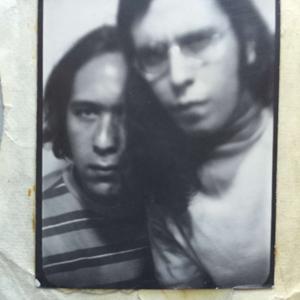


b. Timotea Aurro (a.k.a. Timi Yuro & Mrs Selnick), 4th August 1940, Chicago, Illinois, U.S.A.
d. 30th March 2004, Las Vegas, Nevada, U.S.A.
Timi Yuro moved to Los Angeles as a child (she was given the name Rosemary at birth, by her mother Edith).
In the late 50's she was singing in her mother's Italian restaurant.
Timi worked with Johnnie Ray, Phil Spector and Willie Nelson during her career.
Her debut single, 'Hurt' was released in 1961 and reached number four in the pop charts.
Produced by Clyde Otis, the song was a remake of a Roy Hamilton 1954 R & B hit.
The song was later to re-enter the charts via an excellent version by the Soul Group, The Manhattans.
'l Apologise' and Smile' were released in 1962.
Timi had several minor hits during this time, the biggest of which was 'What's a Matter Baby (Is It Hurting You)'.
The song made number 12 in the U.S., and was covered by the Small Faces a few years later as the B-side of their first single.
She recorded throughout the '60s and '70s.
Timi left the Liberty label in 1964.
She recorded for Playboy, in 1975, and in 1981 a reissued 'Hurt' which was a big hit in the Netherlands.
Timi signed to Polydor and, during the late 80's, she recorded an album of songs by Willie Nelson, but soon afterwards her performing career was curtailed by serious illness.
Timi Yuro passed away on the 30th of March 2004. She was 63.
LET ME OFF UPTOWN by GENE KRUPA WITH ANITA O’DAY AND ROY ELDRIDGE
(OKEH, 1941)
This interpretation of this artifact can be as simple, or as complicated as one cares to make it. You can frame it as an anthem of solidarity, or as just another example of cultural appropriation. I choose the former.
Granted, here you have an all white swing band, led by the theatrically energetic trapster Gene Krupa, featuring the pert suggestiveness of jazz songbird Anita O’Day in her debut at 22 years old - already displaying uncanny timing, and the horn section all genuflecting to the sole black member of the ensemble, the incomparable Roy Eldridge, who effortlessly blows the roof off the joint with his trumpet.
The song celebrates the mythical Shangri-La of Harlem - the place where any aspiring hipster needs to visit to “get groovy”. The rhythm cuts deep, but takes its time to chug and build to an explosive finish by way of Roy’s ascending wails of sound.
But fundamentally, there is a winking humor to this recording (and “Soundie” video, too) that undergirds a message of brotherhood, and the shared reverence for the music. It hints that we have more in common than what divides us, and advises any non-believers to spend some time “uptown”.
https://faroutmagazine.co.uk/marsha-hunt-muse-mick-jagger-marc-bolan/
Although both Marc Bolan and Mick Jagger were philanderers in their own respect, there was one person, in particular, that seemed to captivate them: Marsha Hunt. Hunt is a 1960s icon, a model, singer, actress and novelist, and she had relationships with both the singers of the Rolling Stones and T-Rex.
Hunt had been born in Philadelphia and was raised by her mother, her aunt and her grandmother, who she described as “three strong but very different women”. Eventually, Hunt went to the University of California, Berkeley, where she came face to face with the growing counter-culture movement and joined Jerry Rubin in protests against the Vietnam War in 1964.
In 1966, Hunt moved to London and began a career in music, first as a backing singer in Alexis Korner’s trio. She also had a brief relationship with John Mayall and was, in fact, the inspiration for his songs Marsha’s Mood’ and ‘Brown Sugar’. Shortly after, Hunt married a member of the Canterbury Scene band Soft Machine by the name of Mike Ratledge. However, their relationship soon fell apart.
Throughout the next few years, Hunt defined herself as a London artist. Her old wish to return to the United States quickly diminished, and after briefly playing with Reg Dwight (later to be known as Elton John), she achieved notoriety by starring in the musical Hair as the character Dionne. While Hunt only actually had two lines in the show, her beauty captivated audiences, and she was featured on the poster for the London production and later the recorded LP. Hunt was also the first black model to appear on the front cover of Queen magazine, and a nude photograph of her was also used on the cover of British Vogue....
https://www.theguardian.com/music/2020/mar/26/phil-ochs-the-doomed-folk-singer-who-woke-up-from-the-american-dream#:~:text=He%20died%20by%20suicide.,of%20his%20conviction%20came%20from.
As a kid in the 1950s, Phil Ochs cut class and spent afternoons at the local movie house. The Searchers and Rebel Without a Cause were two of his favourites. Always a dreamer, Ochs fantasised that one day he could be a stoic cowboy like John Wayne, a teenage rebel like James Dean, or a rockabilly sex symbol like Elvis Presley. He took his early love of Hollywood with him to New York, where he became one of the most celebrated folk singers in the world, culminating in an album that has just turned 50: Greatest Hits, titled with a savage, knowing irony.
Ochs came up in the Greenwich Village folk scene, rattling off songs at a pace that caused Bob Dylan – with whom he had a friendly rivalry – to complain “I just can’t keep up with Phil”. But Ochs couldn’t cross over like Dylan did. His sole hit song There But for Fortune, which reached No 50 in the US and the Top 10 in the UK, was performed by Joan Baez.
The peak of his career took a different form. In 1968, aged 27, Ochs agreed to help organise and perform at the Festival of Life demonstration against the Vietnam war in Chicago’s Grant Park, at the Democratic National Convention. During his performance of I Ain’t Marching Anymore, one of his most acerbic and damning anti-war songs, bursts of fire sparkled throughout the crowd as young men from across America took the song’s message to heart and burned their draft cards. It was a defining moment in Ochs’s life and one of his greatest personal achievements. “This is the highlight of my career,” he told journalist Paul Krassner as he walked off stage. He felt like a Hollywood hero...
I WILL BE THERE by VAN MORRISON (Warner Bros., 1972)
Van is a serious man. Frivolity is not his usual mode. His musical lexicon is expansive, but through every variety of expression, be it blues, jazz, country, or even skiffle, there is a bred in the bone seriousness of purpose that tells you that this gentleman means business. He can make me cry, dream, bop, stomp and shout, but rarely laugh. I will smile the smile of the awakened occasionally, upon receiving the good news, but a belly laugh…?
This one, though, makes me giggle every time, as I listen to Van swinging along the dockside, like Louie Jordan, shuffling to board the cruiser that’ll take him on your spontaneous vacation together. He’s bein’ spontaneous, baby! All he needs is his his toothbrush, his razor, his overcoat and underwear - and, he won’t miss this chance for the world.
“I Will Be There” is on the St. Dominic’s Preview album, and come to think of it “Jackie Wilson said: I’m in Heaven When You Smile” on that record is another flaskful of joy juice - two humorous helpings on one platter - what a buffet!
SHE’S A LATIN FROM MANHATTAN by Al Jolson, ( From the film: “Go into Your Dance”, 1935)
This song operates on a couple of levels: there is the theme of authenticity - someone pretending to be something they’re not, and then there is the encoded message of theatrical professionalism - a portrait of a denizen of Broadway, that golden place where exotic dreams become real, a meritocracy wherein an excellent performer can circumvent a dubious background and a lack of privilege.
Hearing this tune as a small child I intuited these fancies, and, like Pinocchio, they lured me into a life of Papier-Mache. But, hey, I’m not quibbling - I made it to The Great White Way - TWICE!
I was always happier pretending to be someone other than myself, and Jolson was the Hebraic pathfinder. The mask of “blackface” allowed Asa Yolson to hitch his Star of David to the soulful vehicle of another victim of oppression, the African-American, and ride it out of the slums, and straight towards the brass ring.
This song communicates joy at every level: Jolie’s buoyant vocal as he uncovers Dolores’s masquerade, the bouncy patter of Al Dubin’s lyric, and Harry Warren’s infectious latin rhythms all aim to elicit a smile as you contemplate that “42 Streeter,” Susie Donahue’s magic trick of erotic transformation.
https://www.filmlinc.org/nyff2022/films/personality-crisis-one-night-only/
ON SHOWTIME: MARTIN SCORSESE PRESENTS
PERSONALITY CRISIS: ONE NIGHT ONLY
Continuing his vibrant and invaluable documentaries about iconic American artists and musicians such as George Harrison: Living in the Material World, No Direction Home: Bob Dylan, and the Fran Lebowitz portrait Public Speaking, Martin Scorsese turns his camera on another beloved New York institution: the singular David Johansen. Equally celebrated as the lead singer-songwriter of the androgynous ’70s glam punk groundbreakers The New York Dolls and for his complete reinvention as hepcat lounge lizard Buster Poindexter in the ’80s, the chameleonic Johansen has created an entire genre unto himself, combining swing, blues, and rock for something at once mischievous and deeply personal. In Personality Crisis: One Night Only, Scorsese and co-director David Tedeschi (The 50 Year Argument), with the help of cinematographer Ellen Kuras (American Utopia), luminously capture the entertainer’s January 2020 Cafe Carlyle set, where he performs as Poindexter singing the Johansen songbook, bringing downtown irreverence to this storied uptown joint. Presented alongside new and archival interviews, the concert is marvelously intimate and a testament to both a lost New York and a performer who remains as fresh and exciting as ever. A Showtime release.
I AIN’T GONNA MARRY by Jim Kweskin and the Jug Band with Maria Muldaur
(From GARDEN OF JOY, Reprise 1967)
I’ve always adored Maria Muldaur - we did a podcast on her previously - and, as an adolescent I would study her braided image on the cover of “Garden of Joy” with relish. She is mostly remembered for her radio hit “Midnight at the Oasis”, but her time with JIm Kweskin and the Jug Band was an unrivaled carnival of sexy fun, and “I Ain’t Gonna Marry” is my favorite cut of all. This rendition swings with sass and bravado - Richard Greene plays the fiddle with sly insinuation, and when Fritz Richmond makes that punctuating “fart” sound at the end of the intro and middle section, I can’t help grinning from ear to ear.
The original source of the tune was obscure, and Kweskin was coy about where he found it, but thankfully, due to the far reach of the internet, I discovered that the original was written and recorded by “The Moanin’ Mama” Sara Martin 44 years earlier, in 1923, on the Okeh label, under the title “Blind Man Blues”. With all due respect to Ms. Martin, in my opinion the original doesn’t hold a candle to Maria’s interpretation.
Garden of Joy was a Reprise release, which provided a major platform for this group, who had made its bones on the smaller Vanguard label, and was positioned here to leap into the big time. That was certainly true for Maria, who recorded several albums for them after she went solo. But, here, at the summit of the Jug Band’s power, she drops this major bombshell with unimpeded charismatic power.
CBS Studio Nashville, TN, May 3, 1969
CBS Studio B, NYC May 1, 1970
The 1969 material includes:
Carl Perkins, Johnny Cash, and Billy Wotten (guitars) Marshall Grant (bass)
W.S. Holland (drums).
The 1970 sessions include:
George Harrison (guitar)
Charlie Daniels (bass & backing vocals)
Billy Mundi (drums)
*Bob Johnson (piano)
Produced by Bob Johnson, this session was conducted three days after the Nashville Skyline LP was recorded in the same studio, with different musicians.
Tracks: Nashville, 1969:
Ghost Riders In The Sky
Cupid
All I Have To Do Is Dream
Gates Of Eden
I Threw It All Away
I Don't Believe You
Matchbox (Carl Perkins)
True Love (Carl Perkins)
Telephone Line
Fishing Blues (frag.) (Henry Thomas) (1)
Honey Just Allow Me One More Chance
Rainy Day Women #12 & 35
New York, 1970:
Song To Woody
Mama You Been On My Mind *
Don't Think Twice [inst]*
Yesterday (Lennon/McCartney)
Just Like Tom Thumb's Blues
Da Doo Run Run (Barry/Spector)
One Too Many Mornings *
This one gets a little contentious. Rich, never one to shy away from challenging conventional wisdom, puts up a strict gauntlet for me to defend my love of this admittedly middle-of-the spectrum Dylan classic.
But, I hold my ground valiantly because, since the age of 13, after first hearing this cut off my Columbia record club copy of "Bob Dylan's Greatest Hits", I have pursued my Dylanological inclinations, which continue to this day.
I put this savage tone poem alongside John Lennon's "How do you Sleep?' as a blueprint on how to eviscerate someone in song. Now, of course we know who Lennon addressed, but the question as to who Dylan was lambasting remains open. This is one of the areas Rich and I address.
From the publisher's feed
My Fellow Americans, Life is actually just a microscopic, deluded moment in time, so let's cut to the freakin' chase. One look at our impending election debacle can solidify my case. It has been my…
With Gratitude For Gena Rowlands, Nancy Sinatra, Jerry Quarry, Leo Gorcey, Arthur Alexander and Joey Heatherton, Your Splendid Bohemian, Rich Buckland.