
Sign up to save your podcasts
Or

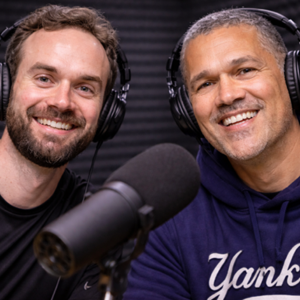


From Brooklyn to college baseball—Toby Harris (Lehigh Mountain Hawks) and Zach Powell (Vassar Brewers) reflect on the transition from high school teammates to student-athletes competing at the next level.They talk honestly about earning trust, managing freedom, balancing academics with the game, learning to prepare with more intention, and remembering that college baseball is about more than results—it’s about commitment, growth, and the people beside you.Proud of the way these two represent their families, teammates, and the Brooklyn baseball community. Keep competing. Keep growing. Why not you?⚾
Instagram: @LehighBaseball
Website: lehighsports.com/sports/baseball⚾
Instagram: @VassarBaseball
Website: vassarathletics.com/sports/baseball#CollegeBaseball #StudentAthlete #BaseballDevelopment #BrooklynBaseball #LehighBaseball #VassarBaseball
Takeaways
Chapters
The conversation covers a range of topics including personal experiences, coaching philosophies, player development, and the impact of analytics on player performance. It delves into the importance of accountability, the role of parents in a player's development, and the balance between pushing and letting a kid be. The conversation also highlights the significance of performance over analytics and the need for individualized coaching approaches based on player reactions. The conversation covers topics such as coaching relationships, player development, injury prevention, and personal experiences in baseball. Pedro shares insights on coaching philosophy, player care, and the impact of personal experiences on coaching approach. The conversation covers a wide range of topics related to baseball, player development, and the role of parents in supporting young athletes. Pedro shares insights on training, player development, and the importance of family support. He also discusses the value of time, self-awareness, and the impact of different training environments on player growth.
Takeaways
Chapters
The conversation begins with an introduction and background of the former professional Baseball player Michael Hernandez and John Jay High School Varsity baseball head coach Jonathan Pineiro, followed by a discussion on their experiences with the Youth Service and Bonnie organizations. This leads to a conversation about coaching and the developmental approach in baseball. The participants then share insights from their professional baseball experiences, and the conversation concludes with a focus on defense and hitting in baseball. The conversation delves into the process of player assessment and warm-up, emphasizing the importance of allowing players to get loose before critiquing. It then explores the significance of building confidence before delving into mechanics, focusing on the mental aspect of hitting. The discussion shifts to the importance of barrel contact and swing path, followed by insights on timing and the starting point in hitting. It then covers the role of rhythm and movement in hitting, the marathon mentality in baseball, and the value of struggle and growth in the sport.
Takeaways
Chapters
Louis Bader (dad of MLB Player Harrison Bader) shares his childhood experience of visiting Ted Williams' baseball camp and witnessing a memorable encounter with the legendary hitter.
Takeaways
Chapters
Louis Bader shares his personal experiences and insights related to his son's baseball journey, the influence of family, and the impact of the game on their lives. The journey of Harrison's baseball career, from recruitment to success, and the importance of hard work and talent in the game.
Takeaways
Chapters
This bonus episode explores (12u to 13u) the psychological and creative dimensions of a player's development as they transition through critical stages in baseball. The conversation focuses on fostering authentic self-expression and creativity on the field, highlighting how freedom from judgment and external validation allows young athletes to embrace spontaneity and authenticity in their athletic growth.
Key TakeawaysThe conversation delves into the philosophy of coaching, exploring the difference between coaching philosophy and reality, the subjectivity in coaching decisions, and the balance between player development and competition. It also highlights the importance of embracing feedback, self-reflection, and the pursuit of growth. Additionally, it addresses the challenges of coaching, including the illusion of control, the present moment audit, and the balancing act between development and competition. The conversation delves into the importance of active communication in building trust, the prioritization of player development over winning, the adaptation of coaching decisions based on game situations, and the distinction between nervousness and fear in coaching. It also explores the coach's coaching philosophy and identity, emphasizing the balance between pushing players and understanding their individual needs.
Takeaways
Chapters
We’ve officially crossed the 15-episode milestone! To kick off this next chapter of The Developmental Gap, we dive deep into a foundational element of player development that often gets ignored: the internal scoreboard.
Using "First Principles" thinking, this episode deconstructs the hidden mechanics of an athlete's inner dialogue. We look past the typical "just be positive" clichés to unpack the genuine nuance of how automatic negative self-talk takes root, how it derails performance in high-stakes moments, and the exact three-step process coaches and parents can use to help young players rewrite their mental script.
What we break down in this episode:
Talent is common. Sustained development is not. Tune in as we clear the mental dirt and get back to first principles.
Description:
Join host Jose Franco as he delves into the complexities of youth baseball, exploring themes of identity, neutrality, and the psychological impact on young athletes. This episode offers insights from philosophers like Carl Popper and Friedrich Nietzsche, providing a fresh perspective on the emotional dynamics at play in high-stakes environments.
Timestamps:
0:00 - Introduction to the PSAL City Championship
0:30 - Discussion with co-host Dylan Kane on revitalizing inner-city baseball
1:24 - The illusion of neutrality and its impact on youth sports
2:20 - Carl Popper's philosophy on intellectual humility
3:15 - The role of identity in youth baseball
4:12 - Marcel Proust on memory and objectivity
5:37 - William James on confidence and identity formation
7:24 - The responsibility of adults in shaping children's identities
9:21 - Strategies for improving inner-city baseball
13:07 - The pay-to-play dilemma in youth sports
17:33 - David Hume on passion and emotional stability
20:30 - Friedrich Nietzsche on identity and youth athletics
24:16 - The illusion of neutrality in broader contexts
32:26 - Redistribution's promise and blind spots
40:05 - Closing thoughts and resources
This description highlights the episode's key themes and provides a roadmap for viewers to navigate the content easily.
The conversation covers various topics related to baseball, tragedy, community support, and personal anecdotes. It also delves into the competitive nature of different baseball teams and the impact of individual players on the game. The conversation transitions from personal stories to discussions about specific baseball games and teams. The conversation covers various topics related to a baseball game, including player safety, equipment, coaching, field maintenance, and game strategy. It also delves into personal anecdotes and experiences related to baseball and school sports. The conversation covers various topics including coaching strategies, motivation for students, superstitions in sports, and the history of a local sports field. It also delves into the experience of playing baseball in Puerto Rico and the competitive dynamics of high school baseball.
Takeaways
Chapters
From the publisher's feed
There’s a difference between being talented and being developed.
In youth and high school baseball, that difference is often invisible—until it isn’t. It shows up in the late innings,…
The Developmental Gap is a podcast for players, parents, and coaches serious about growth over hype. We provide a roadmap for navigating the competitive landscape, refining leadership, and reaching the next level.
Hosted by Dillon Cain and Jose Franco, this show bridges the space between raw ability and disciplined development.
We are also proud to feature former MLB Pitcher Pedro Borbon Jr. as a regular contributor, adding elite professional insight into what it truly takes to sustain a career at the highest level.
Why We Do ThisEach episode explores the “why” behind baseball growth:
We avoid clichés and "internet theory." Instead, we embrace the nuance of development. In every episode, Dillon and Jose objectively unpack “baseball drama” scenarios submitted by listeners—addressing playing time, team politics, and recruiting confusion with honesty and practical insight. Our goal isn't to win arguments, but to clarify thinking for the entire community.
Though rooted in New York City culture and filmed in Brooklyn, our lessons are universal. Whether you’re navigating travel ball, high school rosters, or recruiting pathways, this is a space for thoughtful conversation shaped by real dugout experience.
Talent is common. Sustained development is not.
If you’re willing to ask harder questions about training, mindset, and long-term growth, you’re in the right place.
Welcome to The Developmental Gap. (filmed at The Brooklyn Baseball Foundry) 143 12th Street Brooklyn NY