
Sign up to save your podcasts
Or

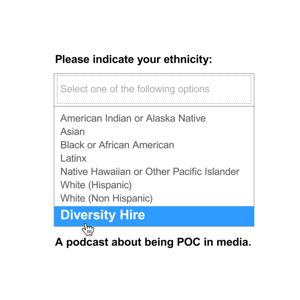


Hello and welcome to Diversity Hire election headquarters in Brooklyn, NY—the bellwether district for media idiots.
Today Arjun and Kevin invited some special correspondents—Maya Binyam and Gaby Del Valle—to talk about exit polls, post-election narratives, and DATA. We also talked about the usual things: Why POC is a meaningless term, Thomas Chatterton Williams, and gossip. Enjoy this special episode! And thank you for listening.
* Arjun’s disclaimer (0:00)
* Kevin & Arjun reporting live from Brooklyn (1:57)
* Our chat with Maya Binyam (6:29)
* What Maya did on election night (6:50)
* On poll workers and hypocritical liberals (9:20)
* Kevin took the day off (15:00)
* Maya’s reactions to election narratives (17:42)
* Would Bernie have won? The answer may surprise you (19:43)
* Nicole Hannah Jones’ tweets about the monolithic synchronicity of racial groups (27:10)
* We try to figure out why Thomas Chatterton Williams is the way he is (33:35)
* Maya’s hopes and predictions (44:36)
* Our chat with Gaby Del Valle (48:34)
* What Gaby did on election night (48:58)
* Gaby voted in Florida (51:03)
* Gaby tries to explain Florida to us (52:09)
* Gaby' reacts to a dumb fucking tweet about “the Latino vote” (53:35)
* Again, we talk about Nicole Hannah Jones’ tweets (58:56)
* Boomers don’t want to think too much about things (1:04:02)
* Gaby tries to explain the Latino vote in Florida (1:08:18)
* Why are Latinx countries flipping red? (1:11:39)
* Are conservatives a step ahead on class analysis? (1:16:30)
* How does Gaby feel? (1:18:34)
* What’s is currently at stake wrt new federal immigration laws? (1:20:34)
Vote!
Hello and welcome to Episode 18 of Diversity Hire.
Today we talked to Clio Chang about how we balance loving the work of reporting and the undeniable shittiness of the media world/life generally, why unionizing is not just great for your workplace but also your social life, how our generation’s work lives have been shaped by layoffs and how she became an expert in the unemployment beat, and much more. Kevin and Arjun also talked about Chris Christie’s Cameogate, fellow Substacker Glenn Greenwald, Thomas Chatterton Williams trying to get a haircut in Paris, and other media blowhards in the news this week.
Thanks for listening!
* Kevin and Arjun talk about shitty media men (0:00)
* Kevin’s pie is introduced (7:56)
* Clio talk about her home office (8:13)
* Clio leads us though her career timeline (10:23)
* What gravitated Clio to join the media after working at a think tank (13:22)
* How Clio become an “unemployment beat” writer (14:35)
* Navigating and documenting the unemployment bureaucracy maze (re: “My 98 Days in Unemployment Purgatory,” TNR, 2020) (15:53)
* How labor organizing fits into the future of the media (re: “The Generation Shaped By Layoffs,” Gen, 2020) (17:58)
* Arjun’s funny question: what’s the point of doing this anymore? (re: “How to Save Journalism,” TNR, 2020) (22:23)
* We miss offices (25:54)
* Are labor organizing spaces the new media hangouts? (27:18)
* Arjun’s other funny question: what do you make of the push for diversity hires? (28:17)
* On Leon Wieseltier (re: “Leon Wieseltier Was Always Hiding in Plain Sight,” Splinter, 2017) (30:58)
* The media ecosystem that props up bad men in media (re: “The Familiar Defiance of Wesley Yang,” Jezebel, 2019) (34:49)
* Kevin leaves to take out his pie and Arjun and Clio goss about him (39:09)
* How Clio was radicalized by Lucy Liu (re: “When Lucy Liu Used a Riding Crop to Seize the Means of Production,” Gen, 2020) (40:19)
* On writing about Asian America (re: “Whose Side Are Asian-Americans On?,” TNR, 2018) (44:26)
* Clio’s process when picking topics to write about (47:50)
* Clio talks about working with non-white editors (49:54)
* Arjun’s Feelings Don’t Care About Facts Corner (53:03)
* The Diversity Tribunal (1:01:51)
Hello and welcome to episode 17 of Diversity Hire.
Today we talked to freelance critic, editor, and writer Rahel Aima, who lives between Dubai and Brooklyn. We talked about the uncertain future of art criticism post the Covid lockdowns, the role art criticism used to play in the art market, why museums and galleries and most cultural institutions continue to be evil year after year, the misunderstood heyday of aughts NYC little magazines, what it's like to be a journalist beholden the whims of visa bureaucracy, and much more.
Subscribe to Rahel’s substack, niͥghͪᴛⷮliͥfeͤ.
Thank you for listening!
* Arjun & Kevin recap their Q&A zoom panel with the Harvard Crimson (0:00)
* Rahel Aima talks about being back in Dubai (6:28)
* Rahel’s career timeline (10:46)
* Discussing the early 2010s, the era of postinternet optimism and ironic hope (re: “The Printernet, The State,” Red Hook Journal) (19:28)
* The decline of the magazine as a font for intellectual culture (24:05)
* Why do we keep putting our faith into industries that continue to prove to be not trustworthy? (re: “Depleting Felix Gonzalez-Torres,” MOMUS, 2020) (26:10)
* Pointing out moral inconsistencies in our lives (30:50)
* What made Rahel gravitate toward art writing, and what has changed since then (34:30)
* Who reads art criticism? (40:15)
* Everybody resents reviews. So do we need criticism anymore? (44:15)
* What criticism does is to extend the work (48:24)
* The best criticism is adjacent (51:20)
* We’re all stuck online now. WTF happened to netart? (51:54)
* Art world’s tendency to seek relevance to a political moment on an aesthetic level (56:08)
* Art criticism under the pandemic (re: “Following Closures, Art Criticism Faces an Uncertain Future,” Study Hall, 2020) (57:52)
* On Study Hall, JOC, and journalism peer networks (59:50)
* Arjun’s Feelings Don’t Care About Facts Corner (1:02:16)
* The Diversity Tribunal (1:10:50)
Arjun’s disclaimer: The podcast is not a reflection of my employer (Conde Nast), and is a reflection of my own opinions. All opinions are my own and do not represent or reflect on the company's opinions.
Hello and welcome to Episode 16 of Diversity Hire.
Today we talked to Madeline Leung Coleman, writer and editor based in New York City, who writes about art, immigration, race, labor, food. We discussed the need for both class diversity and non-NYC perspectives in the media, why liberal arts colleges suck, the limits of a term like Asian American, and hapa pride.
Also, Kevin and Arjun talked about autumn in NYC and Kevin's OOO vibe this week. Thanks for listening!
* Arjun & Kevin talk about the elite college-NYC media feeder system (0:00)
* Madeline Leung Coleman thinks media guys *cough* Kevin & Arjun *cough* talk too much about basketball (6:55)
* Madeline leads us through her career timeline (9:22)
* Madeline talks about having a normal life and a normal job before entering media (13:55)
* Madeline shares her perspective of NYC media as a Canadian who didn’t go to an elite east coast school (14:52)
* Does the abundance of two-syllable-school alumni in media negatively affect the product journalists make? Does it make the culture worse? (21:04)
* We talk about driving (23:19)
* What does Madeline think we can stand to gain from having more class diversity in media? (24:41)
* Madeline talks about her time at Topic, a magazine that was “too beautiful to live” (26:09)
* Madeline talks about her time at The Nation and her masterful coverage of Hong Kong (30:21)
* Does it matter if you’re being edited by a POC? Does being a POC editor have an added benefit to writers? (37:01)
* What to do about anti-Asian racism (re: “Coronavirus is inspiring anti-Asian racism. This is our political awakening,” Washington Post, 2020) (40:38)
* Why doesn’t “Asian American” work as a term? (re: “What It Feels Like to Inhabit an Asian Body in America,” GEN, 2020) (45:22)
* Asian American representation politics in media and Hollywood (re: “How Chinese Food Fueled the Rise of California Punk,” Topic, 2019) (49:46)
* Will Asian American representation evolve past Crazy Rich Asians, or, white-approved Asians (52:50)
* Arjun, for some reason, talks about Rooftop Koreans (54:34)
* Madeline talks about the ways in which our people are only portrayed in relation to whiteness (56:20)
* Madeline talks about a very important person (58:32)
* Madeline has been threatening to drop the definitive hapa essay (1:01:10)
* Arjun’s Feelings Don’t Care About Facts Corner (imposter syndrome, racism) (1:02:42)
* White people will say things in front of half-white people that they wouldn’t if they were talking to a 100% nonwhite person (1:07:11)
* The Diversity Tribunal (1:10:00)
Hello and welcome to Episode 15 of Diversity Hire.
Apple Podcasts
Spotify
Today we talked to Meher Ahmad a senior editor at Rest of World, an international nonprofit journalism organization that focuses on global stories about technology and culture. We discussed Meher’s time as a hardboiled kid journalist in Indianapolis, how she went from a blogger to a globe-trotting video journalist and foreign correspondent, what it feels like to be a fish out of water as a brown ex-pat journalist and the challenges of reporting on your own home country, how the three of us balance being both cool and brown, and much more. Kevin and Arjun also talk about basketball and the wine bar of their dreams, which they hope listeners will one day help them open.
Thanks for listening!
* Kevin and Arjun talk about the NBA Finals (0:00)
* Meher talks about living on the worst block in Brooklyn (7:40)
* Meher leads us through her career timeline (9:35)
* The ins-and-outs of being a kid journalist (13:21)
* Working at Gawker and Vice during the 2010s heyday (17:31)
* Why Meher prefers print journalism to TV journalism (22:04)
* How Meher balances mental anxiety while reporting and traveling around the world (23:21) [The New York Times Magazine, Letter of Recommendation: In-Flight Moves ]
* Reporting on your home country as an ex-pat and the difficulty of being accepted by the locals (29:20)
* Meher’s meet-cute in Pakistan (34:23) [The New York Times, In My Sari, Kissing the Soccer Coach]
* Transitioning to life back in the states (36:00)
* Why the Bay Area sucks (38:00)
* Being cool and being brown (39:00) [The Outline, MIA Is Too Raw for the Radio]
* Why Kumail Nanjiani sucks (45:15)
* Representational politics SUCK! (48:00)
* Social life as an ex-pat in Karachi (50:00)
* Learning how to be an editor and learning how to cover tech (53:30) [Rest of World, Audrey Tang on her “conservative-anarchist” vision for Taiwan’s future]
* Arjun’s Feelings Don’t Care About Facts Corner (58:06)
* The Diversity Tribunal (1:06:53)
Wassup...(not hello and welcome) to a guestless episode of the pod.
Today Arjun and Kevin talked about why Arjun left Twitter, a psychoanalytic method of understanding social media (courtesy of Max Read in Bookforum), student journalists vs. old school journalists, why journalism school is a waste of time, how hopeless we feel about the future of the media, and much more. We also have some more clips for you guys.
We'll have a guest next week. Enjoy the episode!
* Arjun and Kevin try something new up top (0:00)
* Arjun talks about leaving Twitter (re: “Going Postal,” Max Read, Bookforum, 2020) (2:12)
* This kind of tweet haunts Arjun (7:56)
* Media people talking about media people with non-media people (re: Episode 13 - Everybody's Really Weird with Gaby Del Valle) (12:26)
* How young journalists are challenging the old guard’s obsession over objectivity (re: “College newsrooms challenge an industry’s status quo,” Serena Cho, CJR, 2020) (16:20)
* The freedom of college newspapers (re: Episode 7 - The Precarity Gauntlet with Marie Solis) (17:53)
* How objectivity in journalism has become a neoliberal tool for corporate media (20:51)
* Will this new class of “heroic” college journalists save us? (24:28)
* Arjun shares stories from Columbia Journalism School (27:27)
* Kevin asks Arjun whether Journalism School was worthwhile (29:34)
Clip time!
* Using the entire spectrum of your emotions in your work (re: Episode 12 - Projecting Hope with Vinson Cunningham) (33:39)
* Are we scared about the future of our profession? (re: Episode 8 - "People of Color" with E. Tammy Kim) (38:57)
* How can we look forward to work when the jobs we were promised are disappearing? (re: Episode 6: Open Mic Night with K. Austin Collins) (43:58)
* Arjun has some thoughts about the fashion choices of powerful media men (46:45)
* Arjun shares David Rudnick’s pasta twitter thread with the guys at Caputo’s and Kevin gets noticed by a listener (hey Ritu!) (49:22)
Hello and welcome to Episode 13 of Diversity Hire.
Apple Podcasts
Spotify
Today we talked to Gaby Del Valle a freelance immigration reporter and the co-author of BORDER/LINES, a newsletter about immigration policy. We discussed how Gaby connects with her sources, the prejudices publications have around her beat, how media people were not cool in high school, the pros and cons of starting a Substack newsletter (you should subscribe to Gaby’s!!), and how she balances grad school, freelancing, and many other side gigs.
(P.S. - We had some mic issues so the audio is scratchy at the start, but it gets better…we promise!!)
Thanks for listening!
* Arjun and Kevin, again, talk about nothing (0:00)
* Gaby leads us through her career timeline (6:53)
* Prejudices publications have around immigration coverage and the need for novelty (10:50)
* How Gaby is juggling all of her jobs, both writing and non-writing (14:20)
* What’s it like to be in grad school right now? (16:39)
* Gaby leads us through the reporting of a recent feature and how she develops relationships and trust with her sources. (17:50) (re: “Waiting to Be Thrown Out,” The Verge)
* Why Gaby started BORDER/LINES (w/Felipe de la Hoz) and how she developed an expertise in the subject. (25:33)
* Are newsletters really the future of journalism? Or maybe the better question is: Do normal people really care about journalists and bylines? (32:57)
* Most normal people don’t care about media people (34:27)
* WTF is a Michael Tracey? (36:16)
* Gaby’s grand theory about why media people suck (37:21)
* Are people still partying? (38:42)
* How does Gaby manage to still be a fun writer whilst writing about really depressing topics (re: “When Environmentalism Meets Xenophobia,” The Nation) (39:32)
* How to be a compassionate and understanding observer of a story (46:33)
* Has Gaby been edited by a POC and does that matter in regard to her beat? (re: “Real American Terrorists,” The Outline) (49:51)
* Writing about immigration that doesn’t take for granted material concerns and is conscious of nationalist assumptions. (51:57)
* Gaby’s own immigration story (54:43)
* Arjun’s Feelings Don’t Care About Facts Corner (56:07)
* The Diversity Tribunal (1:06:32)
Hello and welcome to episode 12 of Diversity Hire.
Apple Podcasts
Spotify
Today we talked to Vinson Cunningham, a staff writer and theater critic at The New Yorker. We discussed the politics of criticism, artistic and ethical awakenings, our collective miseducations and misspent youths, what it was like working in the Obama White House, the NBA after the so-called “strike,” THE DIASPORA, writing during and after the George Floyd protests, and so much more.
(PS: Kevin is sorry for the terrible audio on his end - his apartment is cursed)
Thanks for listening!
* Arjun and Kevin talk about nothing (0:00)
* Vinson Cunningham, staff writer at The New Yorker (3:40)
* Vinson leads us through his career timeline (5:09)
* Why Vinson stopped working in politics after his time at the Obama White House (11:57)
* Vinson details the evolution of his politics, from the Berlin Wall to 9/11 to Katrina to Obama (14:26)
* Developing politics while working for the Obama campaign/administration (20:22)
* What drew Vinson to write criticism (26:35)
* The politics of criticism (27:59)
* Understanding the argument of Afropessimism through the lens of the protests (re: “The Argument of “Afropessimism”,” The New Yorker, 2020) (33:43)
* Projecting hope of internationalist solidarity (37:30)
* Progressing past geopolitical binary arguments (re: “Transnationally Asian,” E. Tammy Kim, CJR) (40:35)
* The fleeting dream of a player-led NBA strike (re: “The Exhilarating Jolt of the Milwaukee Bucks’ Wildcat Strike,” The New Yorker, 2020) (41:18)
* Stephon Marbury and basketball’s fatal synchronicity with capitalist exploitation (re: “Stephon Marbury Has His Own Story to Tell,” The New Yorker, 2020)
* Basketball talk (49:44)
* Arjun talks about wanting to be a Knicks fan (51:09)
* Is basketball discourse ready for a white guy to be the GOAT? (53:03)
* Who cares about “diasporicism”? In essential things: unity. In nonessential things: liberty (56:40)
* Vinson’s struggle with something he said in 2017: “Is what I’m doing a credit to my race?” (re: “Jerrod Carmichael Talks with Vinson Cunningham,” WNYC, 2017) (1:01:38)
* The expectation that Black writers need to carry a searing, profound tone, (re: “An Interview With Vinson Cunningham, Staff Writer for the New Yorker” The Politic, 2017) (1:04:13)
* Struggling to maintain control of your tone when working with an editor (1:09:24)
* Arjun’s Feelings Don’t Care About Facts Corner (1:11:55)
* The Diversity Tribunal (1:17:38)
Email your questions, comments, and concerns to [email protected].
Hello and welcome to Episode 11 of Diversity Hire.
Today we talked to Katie Way, a staff writer at Vice, who covers health, culture, and the police. Our conversation looked at Katie’s experiences working at Babe.net, a content blog mill aimed at millennial women, media precarity, what it’s like to be the “main character” in a Twitter conflagration, and why you shouldn’t be friends with media people. Kevin and Arjun also talk about their very low serotonin levels and the end of summer. Thanks for listening and enjoy the episode!
* The end of summer, traditions we miss like the MOMA PS1 book fair, shorts inseam discourse, and our low energy :/ (0:00)
* Katie Way leads us through her career timeline (8:00)
* Katie on being “the queen of job precarity” (12:30)
* The workplace at Babe.net and media workplaces more generally (15:00)
* Image rehab-post Babe.net and Katie’s work at Vice (19:22)
* The representational politics beat (re: “Despite Racist Asian Tropes, YA Novel’s Film Adaptation Moves Ahead,” Vice) (24:59)
* The posting and blogging rat race and how it influenced Babe.net (re: “The Wild Ride at Babe.Net,” New York Magazine) (32:50)
* Why the social life of NYC media sucks (34:41)
* The pressure of always having a take (36:40)
* What it feels like to be the “main character” of a Twitter controversy (40:10)
* The cop social media world (re: “Cops Love to Falsely Claim People Have Messed With Their Food,” Vice) (43:00)
* The time Nicki Minaj fans came after Katie for making a joke about the Harper’s letter (46:35)
* Can you trust media to be a supportive industry ever again? (48:50)
* What happens when trolls think you’re a white journalist (50:15)
* Arjun’s Feelings Don’t Care About Facts Corner (55:15)
* The Diversity Tribunal (1:05:00)
Hello and welcome to Episode 10 (!!!) of Diversity Hire.
Haters said we wouldn’t make it...but here we are with a conversation with Giri Nathan, a co-founder of Defector Media, an exciting new worker-owned publication from the people who brought you Deadspin.
We talked about Defector’s business model and what he and his colleagues learned about running a successful sports blog during their time at Deadspin. We also ask Giri how the company plans on creating a diverse workplace.
Come for the media industry shop talk, stay for the discussions on the beauty of tennis writing, sports conspiracy theories, and Giri and Arjun’s new Tamilian Idol, Kamala Aunty.
Kevin and Arjun also talked about the “death” of the New York downtown scene and why Gen X is the worst generation. Thank you for listening, enjoy the episode, and send us questions, reactions, or any mail at [email protected]!
* Disclaimer about NBA boycotts (0:00)
* Arjun and Kevin blabber about the intrinsicality of basketball, Gen-X apolitical apathy, and the lack of accountability amongst the downtown literati (2:00)
* Giri Nathan leads us through his career timeline (12:18)
* What did Giri do between Deadspin and Defector? (17:54)
* How can a horizontally-composed organization litigate internal beefs? (20:27)
* How will Defector, which currently has a majority white male staff, commit to diversity? (22:05)
* Plans for growth and revenue models. You know, business talk. Nerd shit. (24:16)
* Is Defector a sports website? (re: “The Former Deadspin People Explain How to Launch a Worker-Owned Media Co-op That Might Succeed,” Hamilton Nolan, In These Times, 2020) (28:04)
* The pros and cons of blogging as a form, its democratizing power vs. its use as a tool under the late-capitalist ad revenue model (re: “Some Personal News From Samantha Irby,” The New York Times, 2020) (29:43)
* Arjun talks about being bullied on his music blog in 2006 (33:15)
* How is Defector going to make blogging good again? (34:32)
* Arjun announces the Thunder’s game 4 win (37:00)
* Giri’s singular venture into tennis blogging (37:09)
* Writing about sports without having to write about sports (re: “The Stefanos Tsitsipas Channel Is Always On,” Deadspin, 2019; “The World’s No. 1 Player Wants to Sell You Nootropic Garbage,” Racquet, 2020) (43:35)
* Geopolitics and sports (re: “When N.B.A. Players Go to Israel,” The New Yorker, 2015) (45:50)
* Kamala Harris and Tamil representation in pop culture (53:26)
* GIRI’S BIG CONSPIRACY THEORY (55:45)
* Basketball talk (59:50)
* Arjun’s Joel Embiid story (1:02:41)
* Arjun’s Feelings Don’t Care About Facts Corner, including diaspora and identity (1:06:52)
* Fuck Joel Stein (1:13:45)
* Corny South Asians in American culture (1:15:45)
* The Diversity Tribunal (1:20:17)
(There is a possibility that all these timestamps are all fucked up. Sorry. -Arjun)
From the publisher's feed