
Sign up to save your podcasts
Or

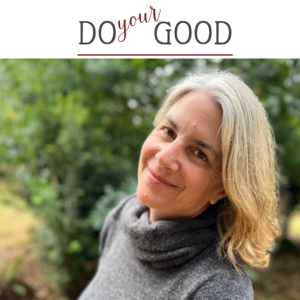


Sara Lowell, Marine Program Director and Trustee of The Marisla Foundation, joins me this week and I am excited for you all to listen to her discuss her special approach as a funder and the unique opportunities she had to navigate being a staffer at her family’s private foundation. Additionally, she’ll share special tips that will help you get as much money as you can out the door so your grantees can go out there and do their good work.
Episode Highlights:
• Sara’s early involvement in philanthropy and marine conservation.
• Marisla’s strategic approach of maintaining a slim staff while administering sizable grants.
• Pitfalls to avoid when applying an institutional low overhead model.
• How she helped nonprofits move the needle on issues by starting funder collaboratives.
• What she’s learned from being engaged with her family’s foundation, both as a family member and staffer.
• Her advice for fellow donors based on her years of experience as one.
Get the full show notes and more information here:
https://www.doyourgood.com/blog/55-sara-lowell
Joining me this week is Heather Tuininga and she will share with us how she created SAFE, an alliance composed of philanthropists who work together to move the needle to fight exploitation in Washington State. In addition to this, she discusses how she evaluates priorities and success all the while navigating the unique dynamics that come with collaborating with groups from various fields of work. Don’t miss out on this illuminating conversation!
Episode Highlights:
• Heather’s call to philanthropy to serve as an instrument for noble purposes.
• About SAFE, a funder collaborative fighting exploitation in Washington State.
• How Heather maintains a collaborative atmosphere to ensure none of the nonprofits compete with each other.
• How Heather navigates working with funders given the various dynamics present in a collaborative.
• Implementing SAFE’s Alliance model in various other issue areas and geographical locations.
• Heather’s parting words of wisdom.
Get the full show notes and more information here:
https://www.doyourgood.com/blog/54-heather-tuininga
I have the pleasure of introducing my good friend, Lisa Jaguzny to the show! With over two decades of experience working in the philanthropic world on an executive level, she will share her three most amazing experiences working with donors throughout her professional career before moving on to take the next step in lending further support to nonprofits by joining a funder collaborative.
Episode Highlights:
• Lisa’s braided journey to becoming an expert funder.
• Helping a donor family create their own nonprofit group. from scratch in the sustainable agriculture field.
• The value of participating with funder collaboratives such as the Biodiversity Funders Group.
Get the full show notes and more information here:
https://www.doyourgood.com/blog/53-lisa-jaguzny
In this episode, I’m going to talk about the top 2 most important things you need to address that will ensure you’ll be able to fund coalitions effectively. Because when you do so, you not only avoid a lot of unneeded conflicts, but you also empower these groups to a whole new level. Stayed tuned!
Episode Highlights:
• Make sure that the coalition has a clear decision-making structure and strategy.
• In case of disagreements in the coalition, make sure there’s a clear way that the groups can work through it to get to the other side.
• How you can still support coalitions from the grassroots as a small funder.
Get the full show notes and more information here:
https://www.doyourgood.com/blog/52-sybil-speaks
In this week’s episode, I discuss the differences and similarities between a general support grant and a project grant. And I think this is an important topic to talk about because a lot of people in the philanthropy world seem to struggle with this and get the two mixed up which can lead to frustration and miscommunication between you and the nonprofits you work with.
Episode Highlights:
• The differences and similarities between a general support grant and a project grant.
• Before you decide on the two types of grants, first decide which of the three types of funder you want to be.
• Some things to keep in mind to avoid running afoul of certain laws when funding project grants.
• Why it’s important for you to be clear with nonprofits on what you want to do.
Get the full show notes and more information here:
https://www.doyourgood.com/blog/51-sybil-speaks
I’m going to talk about the two important approaches you need to take into consideration when navigating the topic of salaries and compensation. By doing so, you will be able to provide support from a place of abundance over the long haul while also avoiding the pitfall of coming in with a judgemental mindset.
Episode Highlights:
• Two ways you can make the staff of a nonprofit organization feel valued while simultaneously helping them feel empowered to ask for a higher salary range.
• The two main problems that occur when you, as a donor, judge how highly a nonprofit pays their employees.
Get the full show notes and more information here:
https://www.doyourgood.com/blog/50-sybil-speaks
Collaborative giving can be so much more different from your personal giving journey. So in this episode, I’m going to discuss a simple but effective strategy that you and your team can utilize so you can identify your personal priorities while simultaneously supporting each other and the community.
Episode Highlights:
• The first thing you need to do is focus on the four key points that will help you, as an individual, find what you’re passionate about.
• Once you’ve finished your individual work, cross-reference it with your partner’s to find similarities and differences, and then identify that one big commonality.
• Identify those one or two big commonalities and find the nonprofits connected to them.
Get the full show notes and more information here:
https://www.doyourgood.com/blog/49-sybil-speaks
There is a way for you to contribute to the team’s success in moving that needle forward by being involved in the right way. So for this episode, I want to briefly discuss the 5 key points that will help you build your engagement strategy.
Episode Highlights:
• Identify which of the 3 types of donors you are and what you should do when a nonprofit asks you to get involved.
• Learn the key points that will encourage you to take a proactive approach when disagreements over strategy occur.
Get the full show notes and more information here:
https://www.doyourgood.com/blog/48-sybil-speaks
Joining me for this episode is Amanda Bocik of Evergreen Results. With nearly a decade of experience in the marketing field underneath her belt, she’ll share how she has been guiding multiple organizations towards strategic growth. Companies can bring purpose to their profit, because the more they grow, the stronger their capability is to give back.
Episode Highlights:
• How Amanda’s journey in nonprofit leadership opened her up to work with various organizations.
• Her advice to donors who want to integrate their giving into their business and ideas.
• Evergreen Results’ marketing strategies to give back to the community.
• How nonprofits can market themselves without focusing too much on organic social media growth.
Get the full show notes and more information here:
https://www.doyourgood.com/blog/47-amanda-bocik
Joining me for this week is Tim Miller, and I am so excited for you all to listen to this conversation because of his multifaceted work as someone who helps run a foundation that supports climate change nonprofits while simultaneously serving as an entrepreneur who supports business directly impacted by climate change. This has opened him up to brand new insights that have proven to be invaluable in his efforts to combat climate change at a micro and macro level.
Episode Highlights:
• His beginnings in the philanthropy world as a consultant to organizations in the transportation and energy sector.
• How PECI was first formed and later on became a foundation.
• How he avoided the problem of creating a competitive environment amongst individual nonprofits by funding coalitions instead.
• The importance of fostering new and richer conversations by directly funding environmental justice organizations.
• His venture into climate capitalism through Climate Hawk Capital.
Get the full show notes and more information here:
https://www.doyourgood.com/blog/46-tim-miller
From the publisher's feed
Welcome to the Do Your Good Podcast! Each Monday, you can expect expert guest interviews and actionable tips to help you implement your funding goals.