
Sign up to save your podcasts
Or



Question, Comment? Send it Here!
Why do we put off saving, follow investment hype, or spend money we planned to keep—even when we know better? Understanding what to do with your money and actually doing it are two different things.
In this episode, Dr. Bryan Foltice explores the knowing–doing gap through five forces that shape our financial decisions: Present Beats Future, Emotion Beats Logic, Perception Beats Reality, Social Influence Beats Independent Thinking, and The Path Influences the Choice.
From procrastination and loss aversion to overconfidence, social comparison, and mental accounting, Bryan connects behavioral finance concepts to familiar money decisions. Why do we hold on to losing investments? Why does a bonus feel different from a paycheck? And how can a free consultation leave us feeling obligated to buy?
These examples reveal how several forces can influence the same decision—and why more financial information may address only part of the problem. This episode introduces a framework for recognizing what gets between your financial intentions and your actions, setting the stage for a deeper exploration of each force.
Support the show
Subscribe to our Behavioral Finance Newsletter: https://www.moneystrong.net/behavioral-newsletter
Bryan Foltice Personal Website - www.bryanfoltice.com
Money Strong Website - www.moneystrong.net
Instagram - www.instagram.com/dr.bryanfoltice
Linkedin - https://www.linkedin.com/in/bryanfoltice
Disclaimer: www.bryanfoltice.com/cv
Question, Comment? Send it Here!
The $100 Shirt That Cost Me $10,000 | Reciprocity, Reference Points & Procrastination
How does a free personal styling session at Nordstrom turn into a $10,000 mistake?
In this episode of the Dr. Bryan Foltice Behavioral Finance Podcast, Bryan shares how a complimentary wardrobe consultation led him to purchase a $100 shirt he didn't really want, establish an expensive new household spending precedent, and procrastinate past his intended return deadline.
Using classic behavioral finance research, Bryan explores three powerful psychological forces—reciprocity, reference points, and present bias—and explains how they influence everyday spending, investment decisions, and relationships with financial advisors.
Discover why free isn't always free, how small decisions can have lasting financial consequences, and why knowing better doesn't always mean doing better.
References
Gouldner, A. W. (1960). The Norm of Reciprocity: A Preliminary Statement. American Sociological Review, 25(2), 161–178. | The social norm of reciprocity
Regan, D. T. (1971). Effects of a Favor and Liking on Compliance. Journal of Experimental Social Psychology, 7(6), 627–639. | Experimental evidence of reciprocity
Cialdini, R. B. (1984). Influence: The Psychology of Persuasion.
Support the show
Subscribe to our Behavioral Finance Newsletter: https://www.moneystrong.net/behavioral-newsletter
Bryan Foltice Personal Website - www.bryanfoltice.com
Money Strong Website - www.moneystrong.net
Instagram - www.instagram.com/dr.bryanfoltice
Linkedin - https://www.linkedin.com/in/bryanfoltice
Disclaimer: www.bryanfoltice.com/cv
Question, Comment? Send it Here!
Retirement Withdrawal Rates in Real Life: Bryan Foltice’s Two-Bucket Approach Beyond the 4% Rule
In this episode of the Bryan Foltice Behavioral Finance Podcast, we discuss how common retirement withdrawal rules hold up in real life and why anything above 4% can be dangerous due to sequence-of-returns risk and compounding inflation.
We explore the “decumulation paradox,” where lifelong savers struggle to spend after retirement, and we frame retirement as a flexible transition rather than a hard stop at 65. We then break down a practical two-bucket strategy: a conservative 3% “ground floor” built around bare-bones expenses (often helped by paying off the house and supplementing with Social Security or part-time work), plus a “bonus bucket” that unlocks additional spending once the portfolio grows beyond a threshold (e.g., 1.5x). We also discuss trade-offs between thresholds, leaving an inheritance, and spending earlier while healthy.
The full working paper can be downloaded here:
Is Less More? Improving on the "Fixed 4%" Rule for Retirement Incomehttps://papers.ssrn.com/sol3/papers.cfm?abstract_id=7461338
Chapters
00:00 Podcast Intro
00:26 Why Revisit Withdrawal Rules
01:19 Rethinking Retirement Purpose
02:50 The 4 Percent Rule Problem
04:48 Why Higher Rates Fail
05:40 Sequence Risk and Inflation
07:19 Goal of the Study
08:07 Two Bucket Strategy Basics
10:11 Bonus Bucket Spending Freedom
11:44 Thresholds and All Out Approach
13:37 Inheritance and Living More
14:28 Q and A and Wrap Up
15:57 Outro and Subscribe
Support the show
Subscribe to our Behavioral Finance Newsletter: https://www.moneystrong.net/behavioral-newsletter
Bryan Foltice Personal Website - www.bryanfoltice.com
Money Strong Website - www.moneystrong.net
Instagram - www.instagram.com/dr.bryanfoltice
Linkedin - https://www.linkedin.com/in/bryanfoltice
Disclaimer: www.bryanfoltice.com/cv
Question, Comment? Send it Here!
Retirement Withdrawals Beyond the 4% Rule: Bryan Foltice on Flexible, Inflation-Adjusted Strategies
In this episode of the Bryan Foltice Behavioral Finance Podcast, we continue to explore why fixed withdrawal rate strategies like the 4% rule can fail over longer 40–50 year retirements, creating a “decumulation paradox” where retirees either run out of money or leave far too much behind.
Today, we discuss proposed alternatives, including Guyton’s Guardrails and a complex optimization approach, and then focus on a simpler two-bucket framework: a “boring” 3% base for necessities plus an “all-out” flexible rule that spends portfolio value above a threshold (often 1.5x the initial amount).
We show how inflation-adjusting the threshold produces zero historical failure rates across 30–50 years with higher average income, and we also review Monte Carlo results showing higher failure probabilities overall but strong relative improvements in income and failure reduction versus the 4% rule.
The full working paper can be downloaded here:
Is Less More? Improving on the "Fixed 4%" Rule for Retirement Incomehttps://papers.ssrn.com/sol3/papers.cfm?abstract_id=7461338
Chapters
00:00 Podcast Welcome
00:26 Fixed Withdrawal Dilemma
01:05 Why Fixed Rates Fail
02:49 Guardrails Too Complex
05:06 Other Alternatives Reviewed
06:43 Two Bucket 3% Base
08:23 All Out Threshold Rule
10:36 When Horizons Get Longer
11:25 Inflation Adjusted Threshold
14:28 Divide Extra By Years
17:58 Monte Carlo Reality Check
21:00 How To Use With Clients
22:25 Wrap Up And Next Steps
Support the show
Subscribe to our Behavioral Finance Newsletter: https://www.moneystrong.net/behavioral-newsletter
Bryan Foltice Personal Website - www.bryanfoltice.com
Money Strong Website - www.moneystrong.net
Instagram - www.instagram.com/dr.bryanfoltice
Linkedin - https://www.linkedin.com/in/bryanfoltice
Disclaimer: www.bryanfoltice.com/cv
Question, Comment? Send it Here!
Does the 4% Rule Still Work? Inflation, 50-Year Retirements, and What the Data Really Says
In this episode, we dive into the fixed retirement withdrawal rate debate and why the popular 4% rule deserves a closer look. We discuss how the rule originated from Bill Bengen’s 1994 research, then walk through Bryan and Steve Dolvin’s analysis using U.S. data from 1928–2024 across stock/bond allocations and 30–50 year horizons.
We compare results with and without inflation adjustments, showing that outcomes change dramatically once inflation is included: the 4% rule fails 2.94% of the time over 30 years, 10% over 40 years, and 18.75% over 50 years, while higher rates like 6–8% show very high to guaranteed failure over long horizons.
We also discuss a key overlooked issue—how often portfolios leave large amounts unspent—and preview a move toward simpler “flexible” withdrawal strategies in the next episode.
The full working paper can be downloaded here:
Is Less More? Improving on the "Fixed 4%" Rule for Retirement Incomehttps://papers.ssrn.com/sol3/papers.cfm?abstract_id=7461338
00:00 Four Percent Rule Setup
02:09 Origins and Assumptions
05:22 Research Data and Method
06:58 No Inflation Results
09:45 Why Inflation Matters
14:07 Inflation Adjusted Failures
16:03 Money Left Over Problem
18:10 Asset Allocation Deep Dive
19:29 Flexible Withdrawal Teaser
20:27 Wrap Up and Next Episode
Support the show
Subscribe to our Behavioral Finance Newsletter: https://www.moneystrong.net/behavioral-newsletter
Bryan Foltice Personal Website - www.bryanfoltice.com
Money Strong Website - www.moneystrong.net
Instagram - www.instagram.com/dr.bryanfoltice
Linkedin - https://www.linkedin.com/in/bryanfoltice
Disclaimer: www.bryanfoltice.com/cv
Question, Comment? Send it Here!
In this Q&A episode, we explore four listener questions with Bryan Foltice, starting with whether he teaches the “latte effect,” where he explains he focuses more on big financial decisions like housing and car ownership while still discussing how people often underestimate spending on eating out and DoorDash and how emotional spending can add up.
We then discuss the realities of youth travel sports, including escalating travel demands, “stay-to-play” tournaments, and the significant annual costs families face.
Third, we cover why Bryan has not invested in SpaceX, emphasizing that a great company can still be a poor buy if the valuation is too high and future growth is already priced in.
Finally, we explain Bryan’s hat choices, tied to stadium visits and longstanding sports allegiances rooted in Detroit and German soccer.
00:00 Welcome and Setup
00:33 Latte Effect Debate
04:04 Tracking Spending Habits
05:18 Travel Sports Money Trap
10:55 SpaceX Valuation Check
13:54 Why I Wear Hats
17:16 Final Thoughts and Outro
Support the show
Subscribe to our Behavioral Finance Newsletter: https://www.moneystrong.net/behavioral-newsletter
Bryan Foltice Personal Website - www.bryanfoltice.com
Money Strong Website - www.moneystrong.net
Instagram - www.instagram.com/dr.bryanfoltice
Linkedin - https://www.linkedin.com/in/bryanfoltice
Disclaimer: www.bryanfoltice.com/cv
Question, Comment? Send it Here!
Behavioral-Based Financial Education: Bryan Foltice’s 6-Week One-Credit Class That Changes Money Habits
In this episode of the Bryan Foltice Behavioral Finance Podcast, we explore the practical, behavioral-based interventions behind the encouraging results from Bryan’s one-credit and three-credit personal finance classes. We discuss how the one-credit course is structured into six weekly meetings that move quickly from personal money memories and mindset-setting to paychecks (taxes, insurance, and employer retirement match), then into monthly financial planning, expense reflection, and either student-loan payoff strategies (snowball vs. avalanche) or net worth tracking and SMART goals. We also cover a high-level, engaging introduction to investing, risk/reward, diversification, and retirement planning using simple asset-allocation rules and ETFs, ending with a “Foltice Lifetime Guarantee” to support students as lifelong financial learners.
00:00 Podcast Welcome
00:26 Why Behavioral Education Works
02:23 Course Structure Overview
03:52 Money Memories Mindset
07:03 Paychecks Taxes Reality
10:33 Build Your Monthly Plan
14:25 Debt Payoff Or Net Worth
17:10 Investing Risk Reward Basics
18:43 Retirement Plan Asset Mix
23:08 Commencement Lifetime Guarantee
24:49 Keep It Simple Repeat
26:20 Wrap Up And Next Steps
27:05 Outro Subscribe
Support the show
Subscribe to our Behavioral Finance Newsletter: https://www.moneystrong.net/behavioral-newsletter
Bryan Foltice Personal Website - www.bryanfoltice.com
Money Strong Website - www.moneystrong.net
Instagram - www.instagram.com/dr.bryanfoltice
Linkedin - https://www.linkedin.com/in/bryanfoltice
Disclaimer: www.bryanfoltice.com/cv
Question, Comment? Send it Here!
1-Credit vs 3-Credit Personal Finance: What Actually Changes Student Behavior? | Bryan Foltice
In this episode of the Bryan Foltice Behavioral Finance Podcast, we explore post-class survey results comparing a one-credit Financial Well-Being course with a three-credit Personal Finance course at Butler, using 102 student responses across business/non-business majors and online vs face-to-face formats.
We discuss high engagement and applicability in both courses, strong increases in preparedness, and widespread intent to change financial behaviors immediately (84% in the one-credit course vs 80% in the three-credit course), along with a surprising edge in reported confidence for the one-credit course (62% vs 48%). We examine why “less may be more,” emphasizing stripped-down, actionable, behavior-based teaching over information-heavy financial literacy, noting research that knowledge alone rarely shifts behavior, and we reflect on improving course design, especially making the three-credit class more engaging and practical.
00:00 Podcast Welcome
00:26 New Course Experiment
03:01 Survey Goals
04:30 Who Took The Classes
05:38 Engagement To Behavior
07:33 Confidence Surprise
09:05 Major Differences
10:23 Online Class Results
11:33 Why Less Is More
13:39 Behavioral Finance Evidence
17:22 Improving The Curriculum
20:05 Final Takeaways
21:32 Outro And Subscribe
Support the show
Subscribe to our Behavioral Finance Newsletter: https://www.moneystrong.net/behavioral-newsletter
Bryan Foltice Personal Website - www.bryanfoltice.com
Money Strong Website - www.moneystrong.net
Instagram - www.instagram.com/dr.bryanfoltice
Linkedin - https://www.linkedin.com/in/bryanfoltice
Disclaimer: www.bryanfoltice.com/cv
Question, Comment? Send it Here!
Using AI Effectively: Pairing the Machine With Your Own Brainpower
In this episode, Bryan Foltice explores how AI can be used really effectively only when it’s coupled with our own brain power. We discuss how conversations about AI often lead back to this core idea, and why it helps to name and formalize a continuum for where we and others fall in our attitudes toward AI. We explore the value of understanding prior research on these perspectives, building awareness of where others might be—like blind rejection—and how we can help move toward a more skeptical, exploratory stance that still involves dipping a toe into using the technology.
00:00 AI Needs Brainpower
00:39 Mapping Adoption Spectrum
00:46 From Rejection to Skepticism
00:59 Putting AI to Work
01:01 Closing Thoughts
Support the show
Subscribe to our Behavioral Finance Newsletter: https://www.moneystrong.net/behavioral-newsletter
Bryan Foltice Personal Website - www.bryanfoltice.com
Money Strong Website - www.moneystrong.net
Instagram - www.instagram.com/dr.bryanfoltice
Linkedin - https://www.linkedin.com/in/bryanfoltice
Disclaimer: www.bryanfoltice.com/cv
Question, Comment? Send it Here!
Automation Bias in Investing: When to Trust (and Challenge) AI | Bryan Foltice Behavioral Finance Podcast
In this episode of the Bryan Foltice Behavioral Finance Podcast, we explore automation bias—the tendency to use technology as a mental shortcut in place of vigilant information seeking and processing—using examples like GPS routes and copying ChatGPT answers without thinking. We discuss early research from the 1990s on pilots and automated aircraft, outlining two error types: omission errors (failing to act when automation misses a problem) and commission errors (following a bad automated recommendation despite contradictory information). We connect automation bias to Type 1 vs. Type 2 thinking, arguing that as tasks become more complex and consequences rise—especially in investing, retirement, tax, and estate planning—we need a middle ground: use AI’s benefits while actively verifying, prompting, and challenging outputs. We close by previewing next episode’s topic: algorithm aversion.
00:00 Podcast Welcome
00:26 Automation Bias Defined
02:19 Origins in Aviation
03:47 Omission vs Commission
05:39 Why We Love Automation
08:04 GPS Jog Gone Wrong
11:35 Type Two Thinking Trigger
13:07 Finding the AI Middle Ground
16:08 Prompting and Staying Critical
17:57 Algorithm Aversion Teaser
19:37 Wrap Up and Next Episode
Support the show
Subscribe to our Behavioral Finance Newsletter: https://www.moneystrong.net/behavioral-newsletter
Bryan Foltice Personal Website - www.bryanfoltice.com
Money Strong Website - www.moneystrong.net
Instagram - www.instagram.com/dr.bryanfoltice
Linkedin - https://www.linkedin.com/in/bryanfoltice
Disclaimer: www.bryanfoltice.com/cv
From the publisher's feed
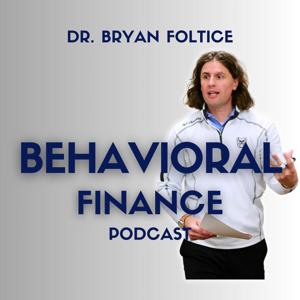
Welcome to the Bryan Foltice Behavioral Finance Podcast, where we dive deep into the fascinating intersection of financial decision-making and human behavior.
Your host, Dr. Bryan…