
Sign up to save your podcasts
Or



In the impulse "A Walk in the Forest" I encouraged you to collect and press leaves or flowers or other plant parts to use them for collages. And then, in the impulse “A personal herbarium” you already got to try a simple collage. Now I’d like to talk about the different techniques of collage, their possibilities and versatility. I want to introduce the concept. Collage is a technique that originated in the visual arts. You apply several found pieces of paper onto a canvas or piece of paper to create a new image. The word itself comes from the French "coller" meaning "to glue", and "la colle", which means “glue”, as the technique glues things onto a surface. The collage is of course not only relevant for the visual arts, but later also in literature and the performing arts. There are text collages, music collages, theater collages, film collages, or even text-image collages, as for example by the famous author Herta Müller.
There’s a magic in every beginning. It’ a wonderful energy to start something new. To start a new chapter, a new theme, a new idea, something that wasn't there before. There's a great power in that, in that newness, that unprecedentedness, and that's what we're starting with today. We’re now in this wonderful season of autumn. The colored leaves may have already fallen to the ground in great numbers, and yet autumn is a delight. Maybe the snow is already in the air, and you can literally smell it.
In the last impulse "A Walk in the Forest" I encouraged you to collect and press leaves and other plant parts. You can now use these pressed parts to make collages with natural objects from the realm of plants. The practice of pressing and drying plants is an old one. The oldest surviving herbarium dates back to as early as the 16th century (1524). It’s located in Kassel, Germany. Originally, people dried plants to have decorative material in winter. That’s how the tradition of the herbarium began. Over time, people realized that they could do this with all sorts of plants and that they could systematize the herbarium and add the roots, the buds, the flower heads, and the fruits. They became scientific works. Nowadays there are herbaria worldwide, most of them in Europe and North America. Often, they can be found in botanical gardens or natural history museums. The largest herbaria are in Paris, St. Petersburg, London, St. Louis, Vienna (they were established mainly in the times of the monarchy) and in Berlin.
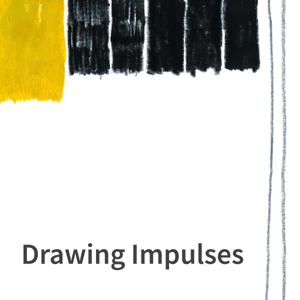
This time there are two tasks. The subject is still the spiral. We’ll stay with the spiral, it’s too good to let it go already. But the theme becomes a little more concrete: the spiral as light. You’ll approach it as follows: First, you draw a square on your drawing sheet. With a ruler. And within this square, you draw a spiral. It has one line. Only one line. Then you go into the square with a color of your choice, it can be black ink, or another tint, or charcoal or pencil or ballpoint pen. You go into the square with small strokes, which then blur into a surface, so even that only the line remains white. The background becomes dark. The spiral remains in the white of the drawing sheet. And then you confine this line as close as possible. You must frame the line from the left and the right with the color until only the spiral remains free. It would be nice if your square was quite large for the line to have enough space in it and so that you have room to go in between the lines of the spiral with your color. This is the first exercise.
This time there are again two tasks connected with each other. For this I ask you to go out into nature. Go for a walk. With open eyes. The first task is to look for leaves and other parts of plants from meadows or the wayside, which you can take home with you to press them. They can be grasses, leaves or delicate flowers, just not plants that are too thick. Lay these leaves flat between sheets of newspaper or kitchen rolls, they absorb the moisture particularly well. The leaves should not touch each other, leave plenty of room between them. When you have prepared all the collected plants in this way, weigh them down with books or other heavy objects so that they are flattened. This will take a few days.
With the fern we’ve already approached the spiral. Now I’d like to discuss it in more detail. What can a spiral be? The spiral is a primal symbol. From the observation of nature, it has found its way into science as a geometric shape and for calculating various phenomena. The spiral can move from the outside to the inside, or from the inside to the outside. We’re starting with a spiral that goes from the inside to the outside. The spiral line can move outward at the same distance until your drawing sheet ends. In theory, it could go on infinitely. On the other hand, when you make a spiral going from the outside to the inside, you start by making a circle first. That’s called a limited spiral. There are other possibilities too: The spiral can start from a point and gradually move away from the center, so that the distance from the center becomes greater and greater. There are also spirals which develop from another geometrical body as a basis. For example, you can circumscribe a sphere by drawing a circle and spiraling a line around it from the outside, sometimes stronger, sometimes more delicate. You can do the same with a cone. You can also develop a spiral around a triangle. Or you could draw a square and look how a spiral would develop inside. There are many possibilities.
Everything we do in drawing is done with love. Thus, we need empathy with what we see and with what is happening on the drawing sheet.
This time we want to turn to ferns. Already Leonardo da Vinci used ferns in his works as forms which he also used to create clouds and water. He developed these motifs from spirals. Spirals also often appear in the works of Friedensreich Hundertwasser. He was inspired by ferns in New Zealand. Besides the kiwi bird and the kiwi fruit, the silver fern is one of the most famous symbols of New Zealand. Ferns have great significance in mythology and folklore. They’re mysterious plants associated with elves; it’s said that ferns lead to the elves.
There are two major areas when working on metamorphosis and transformation. One is the development of a form, and the other is the condition in which that form finds itself. A prominent example is the phoenix. We all know the saying "like a phoenix from the ashes" – something that you think is lost, but that then appears in new glory, or when you’ve suffered a defeat, get up and continue with newfound strength. The phoenix is an animal of metamorphosis from fire. The fire is already a transformation. Because fire needs nourishment, namely wood or another flammable material, in addition to air and heat, to burn, and then actually nothing remains. Through this act of transformation, the energy of the fire is lost according to our everyday logic and observation. In mythology, something new emerges from the fire and that is the phoenix. This is incredibly exciting because naturally the phoenix unlocks an incredible range of imagination and becomes an important symbol.
When we deal with the theme of metamorphosis and transformation, there are two basic conditions to consider. The first is the freedom of the imagination, which doesn’t do well with censorship. Am I allowed to do this, should I do this, can I do this? These are questions that shouldn’t hold you back. Whatever idea jumps into your brain or pen, execute that idea immediately. This is an endless source of new possibilities you don't know yet. It’s important that you allow yourself this freedom in every moment of creating. That you realize it’s part of the concept for the imaginative new creations that make this theme so appealing.
When we think about nature and abstraction with the drawing pencil, that’s a situation that of course has a history. In the past – meaning in the 19th century and before – the only way to communicate what things look like was through realistic representation. With the development of photography, a lot changed for drawing and painting. A Monet would be unthinkable without photography. The Impressionists at the time recognized this opportunity: they were no longer forced to represent things as realism demanded, but they could abstract and express atmospheres. This was the departure into modernism and eventually paved the way for abstract art. The study of nature in drawing is still indispensable for any art education and is very topical.
From the publisher's feed
Luise Kloos' drawing impulses are a friendly invitation to draw. People who draw sharpen their perception, concentration, sensitivity and of course their creativity - joy of life included. In…