
Sign up to save your podcasts
Or

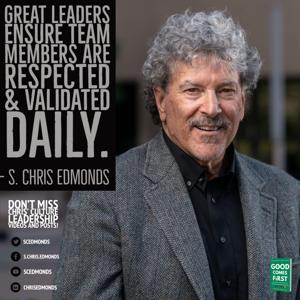


I am often asked about my three-phase culture refinement process. Today I'll share how the first phase – the "define" stage – creates a foundation for your purposeful, positive, productive work culture.
My approach is founded on this hard fact – senior leaders must drive and champion their organization's culture. They are ultimately responsible for clarity of the organization's servant purpose, values and behaviors, strategies, and goals. They can't delegate this responsibility to HR or any other function – they must model and coach their desired culture daily.
In the define stage, I help senior leaders formalize their desired culture through an organizational constitution – which includes the four elements noted above.
First, it describes the organization's present day servant purpose. This statement describes what the company does, for whom, and to what end – how what they do for customers improves customers' quality of life.
When I interview team leaders and team members in an organization, I ask, "What's the purpose of this company?" 95% of the answers fall in two categories – to "make cars" (or sell insurance or build buildings – whatever the company's tactical output is) or "to make money."
The reality is that most employees are not deeply inspired by the tactical output of the company. Nor do most employees receive a direct benefit when the company makes money. However, most employees are motivated by the opportunity to serve others – and to work alongside trusted team mates to serve others.
In today's three minute Culture Leadership Charge video episode, I describe the other three elements of an organizational constitution – and share why those elements are so critically important for a healthy work culture.
This is episode seventy-two of my Culture Leadership Charge video & podcast series. In these concise episodes, I presents the best practices for creating and maintaining a purposeful, positive, productive culture - at work, at home, and in your community.
This content was released in video format on my website, http://DrivingResultsThroughCulture.com, on August 19, 2019.
Check out my YouTube channel to view all of my 3-minute Culture Leadership Charge video episodes.
When leaders find undeniable data that their work culture is bent or broken, they must address the problem immediately.
In recent days, two highly-regarded work cultures have been faced with such undeniable data. In one case, 16 US Marines were arrested on their Southern California base, on suspicion of drug offenses and smuggling of undocumented migrants.
In the second case, Rear Admiral Collin Green communicated to all SEAL team leaders and members that, "We have a problem." In response to an entire SEAL team recently being sent home from Iraq due to allegations of sexual assault and alcohol abuse and members of a second SEAL team allegedly having abused drugs while stationed in Virginia last year, Green said, "I don't know yet if we have a culture problem. I do know that we have a good order and discipline problem that must be addressed immediately."
Workplaces face these same issues. Simply defining your desired values and behaviors doesn't mean people will actually embrace them. In today's three-minute Culture Leadership Charge video episode, I outline how leaders can ensure disciplined alignment to desired values and behaviors in your organization daily.
This is episode seventy-one of my Culture Leadership Charge video & podcast series. In these concise episodes, I presents the best practices for creating and maintaining a purposeful, positive, productive culture - at work, at home, and in your community.
This content was released in video format on my website, http://DrivingResultsThroughCulture.com, on August 5, 2019.
Check out my YouTube channel to view all of my 3-minute Culture Leadership Charge video episodes.
How healthy is your work culture?
The reality is that senior leaders can't improve their work culture unless they understand the real condition of their current work culture.
Here are three ways to solve that problem.
First, ask. This is an informal way of gathering information about cultural health. One of my clients spends three hours a week to "stay connected" to team members and team leaders across the organization.
Second, measure. This is a more formal way of gathering information about cultural health. I recommend Human Synergistics' Organizational Culture Inventory (OCI) to my clients. It provides a valid assessment of the health of one's work culture across the organization and within sub-units.
Third, refine. After listening and learning in the first two steps, begin making small changes to improve respect, relationships, and cooperation.
In today's three minute episode of my Culture Leadership Charge video series, I share details about these three ways for senior leaders to learn the condition of their real work culture and improve it, daily.
This is episode seventy (!) of my Culture Leadership Charge video & podcast series. In these concise episodes, I presents the best practices for creating and maintaining a purposeful, positive, productive culture - at work, at home, and in your community.
This content was released in video format on my website, http://DrivingResultsThroughCulture.com, on July 15, 2019.
Check out my YouTube channel to view all of my 3-minute Culture Leadership Charge video episodes.
Creating an inclusive culture requires shifts in thinking, recruiting, hiring, and operating. Our biases are not obvious to us – yet these biases inhibit the creation of truly diverse and productive work cultures.
I'm always looking for unique, healthy work cultures. I learned about Five Points Academy through an insightful TechCrunch article by Ken Kao.
The academy's owners focused on creating a community where everyone was welcomed. One owner, Steve said, "By not having the right culture, you might turn away a person – not just women but also other men – that can potentially improve your gym."
He added, "We don't want an a-hole culture – not just because women might be turned off, but men would, too." As new members joined, they consistently asked, "What environment would be welcoming for him or her?" They'd then do their best to cater to a broader range of members needs.
In this three-minute episode of my Culture Leadership Charge podcast series, I examine how Five Points Academy modeled my three-step culture refinement process – and even addressed members that didn't "fit in."
This is episode sixty-nine of my Culture Leadership Charge video & podcast series. In these concise episodes, I presents the best practices for creating and maintaining a purposeful, positive, productive culture - at work, at home, and in your community.
This content was released in video format on my website, http://DrivingResultsThroughCulture.com, on July 1, 2019.
Check out my YouTube channel to view all of my 3-minute Culture Leadership Charge video episodes.
The leader's most powerful tool boils down to two compelling words: "Thank you."
Before you dismiss this idea, let's look at the science behind the expression of gratitude – in our homes, schools, communities, and workplaces.
Author, professor, and scientist Robert Emmons shares research that found people that practice gratitude enjoy significant physical, psychological, and social benefits. Some of those benefits include a stronger immune system, lower blood pressure, higher levels of positive emotions, higher alertness, more compassion, and less isolation.
Gratitude doesn't come as naturally to us humans as crankiness. We notice and talk about things going badly more than we notice and talk about things that are going great.
In order to act from a place of gratitude, we have to train ourselves to be on the lookout for good things around us.
We have to pay attention – we have to observe good things, notice good things, and express appreciation for those good things.
The cool thing is that people are doing good things all the time – at home, in our communities, at work – everywhere. We just don't notice them.
In three-minute episode of my Culture Leadership Charge podcast series, I share how to 1) notice actions deserving of "thank you's" then 2) ensure your "thank you's" have positive impact.
This is episode sixty-eight of my Culture Leadership Charge video & podcast series. In these concise episodes, I presents the best practices for creating and maintaining a purposeful, positive, productive culture - at work, at home, and in your community.
This content was released in video format on my website, http://DrivingResultsThroughCulture.com, on June 17, 2019.
Check out my YouTube channel to view all of my 3-minute Culture Leadership Charge video episodes.
How do leaders in your organization keep their "fingers on the pulse" of the employee experience?
To stay in tune with employee perceptions and with the employee experience, leaders must make "being attuned" a priority. They must invest time and energy regularly to ask, learn, and modify.
First, ask. There are a number of effective ways to gain reliable, valid insights from employees. Use a variety of different methods regularly – from one-on-ones to informal meetups with senior leaders to town hall meetings, etc. In addition, conduct formal employee surveys at least once each year.
Employee surveys typically focus on engagement or on values alignment. Both of these angles are equally important – which is why I coach clients to do both, every year.
Employee engagement surveys provide insights into work relationships, practices, and policies.
Values alignment surveys are specific to your company's values and behaviors. These surveys provide employees the opportunity to rate their bosses (and the company's senior leaders) on the degree to which those leaders model your company's formalized valued behaviors every day.
In this episode, I outline the activities required in the learn and modify steps.
This is episode sixty-seven of my Culture Leadership Charge video & podcast series. In these concise episodes, I presents the best practices for creating and maintaining a purposeful, positive, productive culture - at work, at home, and in your community.
This content was released in video format on my website, http://DrivingResultsThroughCulture.com, on June 3, 2019.
Check out my YouTube channel to view all of my 3-minute Culture Leadership Charge video episodes.
I am working on my next book, which I'm writing with the brilliant Mark Babbitt. It's in the proposal stage and you'll hear much more about our book in the months to come.
In our research and interviews, two consistent themes are apparent: * first, the failure of leaders to improve employee engagement or the employee experience over the past 30 years, and * second, the failure of leaders in the past 10 years to adapt workplace assumptions, practices, and structure to accommodate younger generations entering the workforce.
These failures have, not surprisingly, led to increases in workplace stress.
A 2018 study by Korn Ferry found that 76% of respondents reported that stress at work had a negative impact on personal relationships. 66% report they've lost sleep due to work stress. 16% quit their jobs due to stress.
Leaders have a huge impact on workplace stress. 35% of respondents say that their boss is their biggest source of job stress. 80% say a change in leadership (a new direct boss, for example) negatively impacts their stress levels.
In this episode, I share how leaders' plans, decisions, and actions become powerful role models in their work culture (for better or worse).
This is episode sixty-six of my Culture Leadership Charge video & podcast series. In these concise episodes, I presents the best practices for creating and maintaining a purposeful, positive, productive culture - at work, at home, and in your community.
This content was released in video format on my website, http://DrivingResultsThroughCulture.com, on May 20, 2019.
Check out my YouTube channel to view all of his short, crisp Culture Leadership Charge video episodes.
How many of you have done team building activities with work groups? We've all done events like bowling or tower building or trust falls.
How often, though, have those activities translated into sustained healthier work relationships?
Not very often.
Does that mean team building is a worthless endeavor? Not at all. Effective teamwork lies at the heart of most good things that happen in workplaces.
Teams with purposeful, positive, productive work cultures accomplish things that separate individuals cannot consistently deliver.
So, how can we create effective team building that contributes to sustained healthy relationships? By engaging with others in meaningful, cooperative activities away from the workplace and then leveraging insights gathered there into positive and productive work relationships.
The most compelling team building experiences use cooperative interaction.
In this episode, I describe the powerful impact of cooperative interaction and share how to refine a typical team building activity to require collaboration.
This is episode sixty-five of my Culture Leadership Charge video & podcast series. In these concise episodes, I presents the best practices for creating and maintaining a purposeful, positive, productive culture - at work, at home, and in your community.
This content was released in video format on my website, http://DrivingResultsThroughCulture.com, on May 6, 2019.
Check out my YouTube channel to view all of his short, crisp Culture Leadership Charge video episodes.
I'm fascinated to learn how companies with purposeful, positive, productive work cultures make that happen – and make sure it keeps happening every day.
We got a wonderful "behind the scenes" look recently at one of Glassdoor's 2019 Employee's Choice Best Places to Work – Trader Joe's.
Last month, a Trader Joe's employee opened a discussion on Reddit, inviting questions about the unique work culture there, why employees are so happy there, and more.
In response to "why are employees so happy there?," this employee said, in short, "we're treated very well." This employee described five characteristics of their culture: * No bureaucracy * Be yourself * Act with integrity (which is one of their company values) * Great environment * Great coworkers
None of these characteristics surprise us Trader Joe's shoppers. We can see employees' joy and are wow'ed by the service we enjoy and by the store's terrific products.
What is shocking is that so few organizations embrace these characteristics. Despite the knowledge that integrity and respect build great workplaces, too many organizations are lousy places to work in.
In today's episode of my Culture Leadership Charge series, I share details about how Trader Joe's leverages those five characteristics to create incredible employee happiness.
This is episode sixty-four of Chris' Culture Leadership Charge video & podcast series. In these concise episodes, Chris presents the best practices for creating and maintaining a purposeful, positive, productive culture - at work, at home, and in your community.
This content was released in video format on Chris' website, http://DrivingResultsThroughCulture.com, on April 15, 2019.
Check out Chris' YouTube channel to view all of his short, crisp Culture Leadership Charge video episodes.
There are no small lies.
Every lie erodes your integrity.
In this episode, Chris shares a story about being asked to lie – by his boss – and how he handled that challenging scenario.
This is episode sixty-three of Chris' Culture Leadership Charge video & podcast series. In these concise episodes, Chris presents the best practices for creating and maintaining a purposeful, positive, productive culture - at work, at home, and in your community.
This content was released in video format on Chris' website, http://DrivingResultsThroughCulture.com, on April 1, 2019.
Check out Chris' YouTube channel to view all of his short, crisp Culture Leadership Charge video episodes.
From the publisher's feed