
Sign up to save your podcasts
Or



From Childhood Struggles to Adult Success - An Interview with Scott Smith
In this episode of the Days With Dyslexia podcast, the host conducts her first interview with Scott Smith, an adult who has dyslexia. Scott shares his early experiences with dyslexia, the challenges he faced in school, and the innovative ways he adapted to manage and eventually find success as an adult. When bedtime reading with his toddlers became difficult, he knew something needed to change. The discussion delves into his methods for overcoming reading difficulties, his mechanical and problem-solving strengths, and his achievements in both his professional and military careers. Additionally, Scott reflects on how working with the host on reading skills significantly improved his confidence and literacy, allowing him to have better career and parenting experiences.
Michelle also references the Sold a Story podcast.
Teaching Kids with Dyslexia The Difference Between Letters and Sounds
In this episode of Days With Dyslexia, host Michelle Morgan shares practical strategies for helping children differentiate between letters and sounds. Michelle explains how to use simple tools to create a visual and interactive learning experience. She emphasizes the importance of understanding this difference to enhance reading and spelling. Michelle also provides tips on using these techniques to teach spelling patterns and inflected endings, highlighting the need to address sounds, letters, and meanings in language instruction. A PDF resource is available for download to support parents in implementing these strategies at home.
Download free PDF for teaching letters vs. sounds HERE.
00:00 Introduction to the Podcast
00:35 Understanding Letters and Sounds
02:16 Practical Teaching Strategies
04:44 Using Index Cards for Learning
07:28 Letter and Sound Cards
11:14 Inflected Endings and Meaning
14:01 Clarifying Letters vs. Sounds
16:18 Conclusion and Next Steps
The Importance of Teaching Sounds and Letter Names in Dyslexia
In this episode of 'Today's with Dyslexia,' Michelle Morgan, a speech-language pathologist, explores the essential difference between letter names and sounds in language learning. She explains why understanding this difference is particularly crucial for children with dyslexia. Michelle also discusses the triple word form theory (Phonology, Orthography, Meaning) and why some teachers have, unfortunately, moved away from teaching letter names. Through various research citations, she validates the need to teach both letter names and sounds for effective literacy development. Tune in for insights and strategies to help struggling readers become more confident learners.
00:00 Introduction to the Podcast
00:29 Understanding Letter Names vs. Sounds
02:56 The Importance of Differentiating Letters and Sounds
05:55 Current Trends in Teaching Reading and Spelling
12:07 Research Supporting Letter Names
23:36 Conclusion and Next Steps
Breaking Down the New 2025 Definition of Dyslexia: What Parents Need to Know
In this episode of 'Days with Dyslexia,' host Michelle Morgan, a speech language pathologist and mother of a dyslexic child, delves into the newly released 2025 definition of dyslexia from the International Dyslexia Association. Michelle reads the extensive definition, breaks down complex terms, and explains their implications. She emphasizes the importance of early intervention and clears misconceptions about environmental influences on dyslexia. Michelle also touches on the genetic, neurobiological, and varied severity aspects of dyslexia. Listen in for practical advice and resources to help your child overcome reading and spelling challenges.
00:00 Introduction to the Podcast
00:29 New 2025 Definition of Dyslexia
01:56 Reading the New Definition
03:20 Breaking Down the Definition
10:31 Understanding Dyslexia Causes
17:47 Early Oral Language and Literacy
20:47 Secondary Consequences of Dyslexia
25:36 Psychological and Employment Impact
26:55 Importance of Early Intervention
29:38 Conclusion and Resources
Link to IDA's new definition of dyslexia.
Head-to-Hand Writing Program
In this episode of Days with Dyslexia, host Michelle Morgan, a speech-language pathologist, discusses the differences between speech-to-print (sounds first) and print-to-speech (print first) literacy instruction. She explains why traditional Orton-Gillingham methods may not be the most effective for all children, particularly those with dyslexia. Michelle outlines five key differences between a sounds-first vs. print-first approaches, including scope and sequence, teaching the job of each letter, handling irregular words, spelling patterns, and the role of letter names and sounds in writing. The episode aims to help parents understand why a sounds-first approach can be more effective and introduces resources for further guidance.
00:00 Introduction to Days with Dyslexia
00:37 Understanding Orton-Gillingham
02:07 Speech to Print Instruction
02:38 Simplifying Terms: Sounds First vs. Print First
03:27 Advantages of Sounds First Approach
04:07 Five Key Differences Between Approaches
04:14 Scope and Sequence
05:46 Teaching the Job of Each Letter
07:09 Irregular Words Instruction
09:01 Spelling Patterns and Syllable Division
13:21 Writing and Sound Association
14:50 Conclusion and Resources
Understanding and Fixing Letter Reversals in Children with Dyslexia and Dysgraphia
In this episode of 'Days with Dyslexia,' host Michelle Morgan, a speech-language pathologist and mother to a child with dyslexia, dysgraphia, and ADHD, delves into the issue of letter reversals in young learners. She explains when letter reversals are developmentally normal, why they happen, and how to address them effectively.
Michelle discusses the 'Head-to-Handwriting' program, which utilizes a systematic approach to teach letter directionality and handwriting, incorporating executive function skills and sound-letter associations to reduce letter reversals and build strong literacy foundations.
00:00 Introduction to Days with Dyslexia
00:28 Understanding Letter Reversals
01:14 Why Letter Reversals Happen
03:42 When to Be Concerned About Letter Reversals
05:02 Introducing the Head to Handwriting Program
05:25 Teaching Directionality and Letter Formation
07:36 Addressing Common Methods and Their Limitations
08:54 Effective Techniques for Teaching Letter Formation
11:39 Executive Function and Letter Writing
17:26 Transitioning from Letters to Words
19:31 Conclusion and Final Thoughts
Want to learn more about the Head-to-Hand Writing Program? Check it out here: https://dayswithdyslexia.com/head-to-hand-writing-program/
Two Small Changes for Helping Children with Dyslexia: Reading and Spelling Strategies
In this episode of Days with Dyslexia, speech-language pathologist Michelle Morgan shares two simple, science-backed strategies parents can use at home to strengthen reading and spelling for children with dyslexia, dysgraphia, or ADHD.
The first strategy focuses on teaching 'smooth and stretchy speech' to help children sound out words more naturally and ease the strain on their working memory.
The second strategy involves saying the sounds of letters as children write them, building stronger connections between letters and sounds in the brain.
Michelle emphasizes the importance of these techniques for developing strong literacy skills and provides practical guidance for parents on how to implement them at home.
00:00 Introduction to Days with Dyslexia
00:54 The Importance of Building Strong Connections
01:53 Smooth and Stretchy Speech for Reading
03:01 Addressing Common Reading Challenges
08:14 Making Writing Easier with Sound Connections
12:42 Practical Tips and Encouragement
16:40 Conclusion and Next Steps
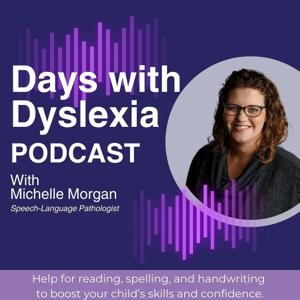
Welcome to the Days with Dyslexia podcast! I’m Michelle Morgan—speech-language pathologist, mom of three, and parent to a child with dyslexia, dysgraphia, and ADHD.
When I first searched for help for my daughter, I quickly realized how few professionals truly understand dyslexia. That journey led me to dig deep into the research, train extensively, and eventually open a private practice serving kids with dyslexia and dysgraphia.
But what drives me most is helping parents. I believe every family deserves access to practical tools and knowledge to support their child’s literacy journey.
On this podcast, you’ll find:
✅ Practical strategies for building reading, spelling, and handwriting skills at home
✅ Advocacy insights so you can confidently navigate the school system
✅ Conversations on related challenges like ADHD and executive function
✅ Guest episodes with professionals and parents who share their expertise and experiences
Each week, I’ll bring you hope, help, and how-to tips so you can support your child with less frustration and more confidence.
Hit subscribe so you never miss an episode—and join me as we dive into the world of dyslexia, one step at a time.
From the publisher's feed
The Days with Dyslexia podcast helps parents support kids with dyslexia, reading struggles, spelling challenges, and handwriting difficulties.
I’m Michelle Morgan, a mom and speech-language…