Earth Matters

Earth Matters

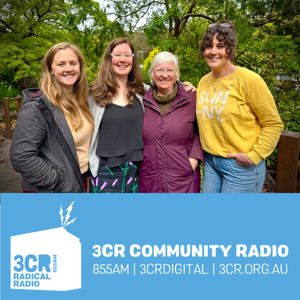
By Bec Horridge, Claudia Craig, Mia Audrey & Keiran Stewart-Assheton.
Download on the App Store

Earth Matters episodes

  • Earth Matters: Beyond the Fossil Fuel Deadlock; Building an international roadmap for a just transition, Part 2
    Janet Salisbury in conversation with Tzeporah Berman and Dr Amanda Cahill continues evaluating the  "Transitioning Away from Fossil Fuels" conference held in Santa Marta, Colombia. This conference represents a significant multilateral process outside the conventional UN climate negotiations, aiming to develop an international roadmap for a just transition from fossil fuels, with a focus on phasing out fossil fuel production."It's not a lack of money, it's not a lack of technical know-how, this is about power and how we tackle it." – Amanda CahillEarth Matters #1578  was produced by Bec Horridge in collaboration with the Women’s Climate Congress
    28 min
  • Exploring Extreme Heat Returns: Hot histories - what can past heatwaves teach us?
    October is History Month around Australia! Earth Matters listens back to the first episode of the Exploring Extreme Heat series – Hot Histories. We delve into the near past to discover how Australians of European background lived through heatwaves in the 19th and 20th centuries, and what their experiences mean for Australians today. We hear from settler Australian environmental historians Rochelle Schoff and Mandy Paul who spoke at a History Council of Victoria Making Public Histories event last year. The event was convened by Margaret Anderson, manager of the Old Treasury Building in Naarm/Melbourne. Rochelle Schoff is a La Trobe University PhD Candidate and member of the Parched research project team. Mandy Paul  is a public historian researching the history of heatwaves in Tarntanya/Adelaide and Head of Collections at the History Trust of South Australia. Thanks to the History Council of Victoria for providing access to the recording of Making Public Histories—Thinking about the weather: Heatwaves and history in twentieth century Australia event held on 27 November 2025. You can watch the full event here. Note: Statements made by Anangu community members shared by Rochelle Schoff were sourced from the following research paper, Bardsley, D. K., & Wiseman, N. D. (2016). Socio-ecological lessons for the Anthropocene: Learning from the remote Indigenous communities of Central Australia. Anthropocene, 14, 58–70. https://doi.org/10.1016/j.ancene.2016.04.001 Earth Matters Exploring Extreme Heat series explores what intense heat events mean for Australians across the continent. We hear from settler Australians, migrant communities and First Nations people living in different parts of so-called Australia to understand how heat affects us, and whether current adaptation practices are sufficient to equip us for a hotter future. Part One – Hot HistoriesPart Two – The Mental Health Impacts of HeatPart Three (coming soon) – Hot houses in remote arid central AustraliaPart Four (coming soon) – Hot Futures: adaptation and education This week’s show is episode #1578 produced by Claudia Craig.
    28 min
  • Beyond the Fossil Fuel Deadlock; Building an international roadmap for a just transition
    Unpack the  "Transitioning Away from Fossil Fuels" conference held in Santa Marta, Colombia. This conference represents a significant multilateral process outside the conventional UN climate negotiations, aiming to develop an international roadmap for a just transition from fossil fuels, with a focus on phasing out fossil fuel production."What I consider to be a major gap in international climate policy is that for 30 years we've talked about reducing emissions and not production." – Zipporah Berman"It's not a lack of money, it's not a lack of technical know-how, this is about power and how we tackle it." – Amanda CahillEarth Matters #1578  was produced by Bec Horridge in collaboration with the Women’s Climate Congress
    28 min
  • First Nations Women's Voices in Leadership, Responsibility and Caring for Country. Part 2.
    Join this Women's Climate Congress yarn exploring the many ways First Nations women are leading change through culture, community, governance and Country.Explore the profound, spiritual connection between Indigenous identity, language, and ancestral lands.Emphasizing the urgent climate threats facing frontline communities, particularly the Torres Strait Islands, advocating for community-led solutions, truth-telling, and collective healing."To tell someone who is inherently spiritually, culturally and through identity and through everything in the world is connected to something that you've got to detach from traumatic. Ours is a slow, traumatic burn." – Barbara EbuaiPassionate, deeply personal, and urgent, underscoring the universal human responsibility to protect our shared planet through Indigenous wisdom and collaborative action.Co-hosted and facilitated by Janet Salisbury, Founder of Women's Climate Congress, and Celeste Ackerly, Trawlwoolway woman, conservation and First Nations governance and engagement practitioner, this webinar brings together remarkable First Nations women whose leadership reflects the strength, resilience, and responsibility carried by women across generations. Conversationalists: Polly Cutmore – Gamilaroi/Wiri/Anaiwan Elder, Traditional Owner and nationally respected advocate for Aboriginal water rights and cultural governance. Sandra Woosup – Angkamuthi Traditional Owner, Chairperson, language keeper and community leader dedicated to strengthening culture, language and women-led leadership on Country. Barbara Ibuai –   a Zenadth Kes (Torres Strait) climate advocate, Saibai Koedal woman, and founder of Climate Collective Zenadth Kes (CCZK) – a civil society response to climate adaptation in her region.Earth Matters #1576  was produced by Bec Horridge in collaboration with the Women’s Climate Congress

    28 min
  • Strong Women, Living Country: First Nations Women's Voices in Leadership, Responsibility and Caring for Country
    What does leadership look like when it begins with responsibility rather than authority?How do First Nations women continue to care for Country, strengthen language, advocate for water, preserve culture in the face of increasing climate change impacts, and create spaces where communities can heal, lead and thrive? Join Women's Climate Congress for an evening of yarning that explores the many ways First Nations women are leading change through culture, community, governance and Country. Co-hosted and facilitated by Janet Salisbury, Founder of Women's Climate Congress, and Celeste Ackerly, Trawlwoolway woman, conservation and First Nations governance and engagement practitioner, this webinar brings together remarkable First Nations women whose leadership reflects the strength, resilience and responsibility carried by women across generations.Speakers: Polly Cutmore – Gamilaroi/Wiri/Anaiwan Elder, Traditional Owner and nationally respected advocate for Aboriginal water rights and cultural governance. Sandra Woosup – Angkamuthi Traditional Owner, Chairperson, language keeper and community leader dedicated to strengthening culture, language and women-led leadership on Country. Barbara Ibuai –   a Zenadth Kes (Torres Strait) climate advocate, Saibai Koedal woman, and founder of Climate Collective Zenadth Kes (CCZK) – a civil society response to climate adaptation in her region.Through this yarn, we'll explore:Caring for Country through water, language and cultural responsibility.The unique role of First Nations women in leadership and decision-making.Women-led approaches to caring for community and future generations.Cultural authority, self-determination and governance.Building genuine partnerships that honour First Nations knowledge and leadership.Earth Matters #1575 was produced by Bec Horridge in collaboration with the Woman’s Climate Congress

    28 min
  • Nature in the City
    Many of us talk about nature as something that exists away from people, outside cities. For the vast quantity of us who call urban environments home, this makes it hard to appreciate, connect with, and work to protect the complex and remarkable web of life that surrounds us. What other stories can we tell, that embrace the multispecies liveliness of the urban community? How might you fight for its health and biodiversity? On this show, Mia interviews Dr Kylie Soanes, a research fellow based at the University of Melbourne who’s finding innovative ways to encourage urban biodiversity. Then, we hear a group of children from Camp Kinderland—a summer camp in western Massachusetts—reflect on their relationships to nature in New York City.  Banner image by Ana from Camp Kinderland. -------------------------------------------------------------- Dr Kylie Soanes is a conservation biologist with her sights set on saving species in cities and towns. Kylie is based at the University of Melbourne where she completed her PhD in 2015, building rope bridges to help endangered possums cross busy highways. A skilled science communicator, Kylie shares her passion for nature conservation with broader audiences through the media such as The Conversation, The Guardian and ABC Radio National, public talks and her research blog. Ana, Juniper, Eliza, Huxley, Sima and Kayden are attendees of Camp Kinderland, a summer camp in western Massachusetts with a Communist history and a unique political education program. Information on the Chipko movement, which Eliza mentions during her story: https://www.britannica.com/topic/Chipko-movement  John Oldham Park, which Kylie mentions as a favourite urban nature spot: https://visitperth.com/see-and-do/parks-gardens-and-reserves/venues/john-oldham-park More on the Birarrung trial floating wetlands: https://www.melbourne.vic.gov.au/birrarung-trial-floating-wetlands  Earth Matters #1573 was produced by Mia Audrey on Wurundjeri Woi Wurrung Country.
    0 min
  • Data Centres Part 2: Are They Really That Bad?
    Off the back of part one—an interview with independent climate expert Ketan Joshi last month—Mia brings in other perspectives on the data centre boom.  You’ll hear from Professor Priya Rajagopalan of RMIT Univeristy; Dr. Thomas Nann, CEO of Allegro Energy and a globally recognised expert on long-duration energy storage.; and Britney Henderson, Greens candidate for the western metropolitan region in Victoria’s upcoming state election and a vocal opponent to the major data centre expansion in Narrm/melbourne’s west. Guests: Professor Priya Rajagopalan is the Director of the Post Carbon Research Centre for Infrastructure and the Built Environment and Associate Dean (Research and Innovation) in the school of Property, Construction and Project Management at RMIT University. She is a building scientist with extensive experience in energy and indoor environmental quality of buildings and urban climatology. Dr Thomas Nann is a globally recognised expert and pioneer on micro-emulsion storage technology. He can speak about long-duration energy storage, climate policy and data centre energy profiles as well as Australia’s clean energy future. Britney Henderson is the Greens’ Lead Candidate for Western Metropolitan in Victoria. She is a Bunurong person living and raised in Narrm (melbourne)’s West, by a big, staunch queer Aboriginal family. Links: Wiki community for the campaign for a data centre moratorium: https://datacentremoratorium.net/index.php/Data_Centre_Moratorium_Wiki:About(link is external) Western Warrang (sydney) resistance: https://swelteringcities.org/2026/04/21/data-centres-ai-urban-heat-and-community-action-comes-together-in-western-sydney/(link is external) Petition: Stop the expansion of data centres in New South Wales: https://www.megaphone.org.au/petitions/halt-the-expansion-of-data-centres-in-nsw Petition: Stop the AI Data Centre Frenzy: https://greens.org.au/vic/campaigns/stop-ai-data-centre-frenzy  Earth Matters #1572 was produced by Mia Audrey on Wurundjeri Woi Wurrung Country.
    28 min
  • The Importance of Protecting Dingoes
    This program is all about the important role dingoes have in the environment. We were joined by Co-Founder of the Dingo Conservancy Jo Samuel-King. She shed light on the difficulties in protecting dingoes, their lack of protections, common misconceptions and how beneficial they are in ecosystems. To find more information search The Dingo Conservancy on Facebook or go to dingoes.net We then hear from Sonya Grant, First Nations dingo coordinator from the organisation Dingo Culture. She speaks on the connection First Nations peoples have with dingoes, explaining how First Nations Rangers traditionally survey for dingoes and debunks the “wild dog” theory.For more information go to dingoculture.com
    28 min
  • US offshore mineral extraction in American Samoa waters. / Human rights abuses and deforestation for sugar in West Papua
    Interviewed by Priya Kunjan, Dr Sabrina Suluai-Mahuka, founder of youth-centred environmental organization Finafinau, joins us from Pago Pago to discuss recent progress in the United States government's moves to advance offshore mineral extraction in the waters off American Samoa in the face of significant resistanceSabrina spoke with us about the cultural and environmental impacts that deep sea mining for critical minerals will cause, and the ongoing fight to prevent this from happening in the waters off the islands of American Samoa. Interviewed by Priya Kunjan, Louise Byrne of the West Papua Women's Office discusses the connections between Sugar Research Australia, the Indonesian sugar industry, and alleged rights abuses and illegal deforestation in Merauke, West Papua. In December 2025, Greenpeace published the report 'Sweet Promises, Bitter Reality: Inside the Merauke Sugarcane Project' detailing serious concerns about the role of the Indonesian state and agribusiness in land theft and mass deforestation in Merauke. More recently, Royce Kurmelovs of Deepcut News has written about the connections between the Australian government-funded body Sugar Research Australia and land clearing in Merauke. Louise has been working for West Papua's freedom and self-determination since 1999, and helped found the West Papua Office in Docklands in 2014. Utube Video Pesta Babi: Kolonialisme di Zaman Kita (Pig Feast: Colonialism in Our Time), an investigative documentary examining contemporary colonialism, militarisation, and large‑scale development projects in West Papua YouTube . For more information, you can visit the West Papua Women's Office at 211/838 Collins Street, Docklands 3008 (VIC), and contact them at [email protected](link sends e-mail) or via SMS at 0424 745 155. I would like to acknowledge the Kulin Nation – true owners, caretakers and custodians of the land from which we broadcast. 3CR pays respect to Elders, past and present of the Kulin Nation. We recognise their unceded sovereignty.Earth Matters #1570 was produced on Widjibul Weiable lands in the Budjalumg Nation by Bec Horridge
    28 min
  • Great Barrier Reef: A divers tale. [and transcript]
    We delve into the critical state of the Great Barrier Reef through the lens of Tony Fonts, President of the Whitsunday Conservation Council and a veteran diver with 45 years of immersive experience. Tony upacks the impacts of poor water quality, unsustainable fishing practices and that: "the greatest threat to the reef by far is climate change."He describes the devastating effects of coral bleaching he witnessed firsthand.He also comments on the new federal nature laws and the Queensland "fast-track development bill that threatens to dismantle critical environmental protections, eroding public consultation and transparency. "It's not too late. Every little bit of a degree that we pull back on gives the Great Barrier Reef... a better chance of a good future." Earth Matters #1569 was produced on Widjibul Weiable lands in the Budjalumg Nation by Bec Horridge
    28 min

About Earth Matters

From the publisher's feed

Local and global environmental issues from grassroots, activist perspectives with a strong social justice focus. Distributed nationally on the Community Radio Network.

More shows like Earth Matters

Stuff You Should Know by iHeartPodcasts

Stuff You Should Know

78,338 Listeners

Keep Left by Chris Gaffney & Irene Bolger.

Keep Left

0 Listeners

Gardening Show by Emma Herd, Virginia Heywood, John Arnott, Chloe Foster & Chloe Thomson.

Gardening Show

1 Listeners

Published...Or Not by Jan Goldsmith, David McLean and Lisa Moule

Published...Or Not

0 Listeners

Freedom of Species by The Freedom of Species Team

Freedom of Species

3 Listeners

Politics Now by ABC Australia

Politics Now

79 Listeners

Women on the Line by Cleis Hart, Kannagi Bhatt, Phuong Tran & Scheherazade Bloul.

Women on the Line

1 Listeners

Lost in Science by Chris Lassig, Stuart Burns, Claire Farrugia and Linden Ashcroft.

Lost in Science

3 Listeners

Anarchist World This Week by Dr Joe Toscano

Anarchist World This Week

14 Listeners

Brainwaves by Members of Wellways Australia

Brainwaves

3 Listeners

Tuesday Hometime by Jan Bartlett

Tuesday Hometime

1 Listeners

POPULAR FRONT by Jake Hanrahan

POPULAR FRONT

812 Listeners

ABC News Daily by ABC Australia

ABC News Daily

149 Listeners

The Poor Prole’s Almanac by The Poor Prole’s Alamanac, Bleav

The Poor Prole’s Almanac

753 Listeners

The Rest Is Politics by Goalhanger

The Rest Is Politics

3,062 Listeners

ZOE Science & Nutrition by ZOE

ZOE Science & Nutrition

2,045 Listeners

Empire: World History by Goalhanger

Empire: World History

2,453 Listeners

The Rest Is Politics: Leading by Goalhanger

The Rest Is Politics: Leading

836 Listeners