
Sign up to save your podcasts
Or

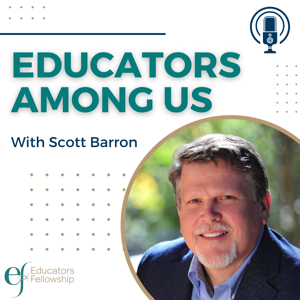


If we knew then what we know now. Wouldn't that be a gift? But how could we, when we were so young, and thought we knew it all? Sometimes, when a piece of advice finally lands or a familiar face in the mirror reminds us of someone who guided us along the way, we realize, "Oh, now I get it". These moments or maturity shift how we see our work, our relationships, and the people who helped shape us.
In this episode of Educators Among Us, host Scott Barron, Chief Reinvention Officer with School Growth, explores these "maturity moments". He explains that wisdom often reveals itself in hindsight, how perspective changes as we grow, and why these moments matter so deeply for anyone committed to serving others.
This episode reminds us that humility, clarity, and reflection are essential tools for transforming our service and strengthening the communities we lead. We need seize and build upon these maturity moments. Because while the pace of life may try to drown out reflection, choosing to pause and to see differently can change the way we see the world around us.
Takeaways
-Growth often becomes visible only after perspective shifts.
-Wisdom from parents, mentors, and teachers often makes sense years later.
-Educators shape lives in ways they may never fully witness.
-We see the world not as it is, but as we are—perspective must be renewed. -Humility opens the door to clearer insight and deeper understanding.
-Meaningful reflection prevents us from losing our purpose in the rush of life.
-Our decisions—not our origins—ultimately define who we become.
-"Maturity moments" offer opportunities to embrace wisdom rather than resist it.
-Pausing to reflect strengthens both professional growth and personal identity.
Chapters
00:45 Introduction:
01:54 Answers to Unasked Questions
04:40 When Did They Get So Smart?
07:49 Limitations of Perspective
10:06 Resembling Our Decisions
12:40 Lifelong Learners
13:34 A Coaching Question
—-----------------------------
Educators Fellowship is a non-profit organization that encourages educators in their calling and in their faith.
www.educatorsamonguspodcast.com
www.educatorsamongus.com
https://www.edfellowship.org/
Sign up for weekly encouragement messages here:
Buy the book, Love'em and Lead'em, here:
https://www.linkedin.com/in/scottebarron/
https://www.facebook.com/SchoolGrowth/
https://twitter.com/schoolgrowth
https://www.linkedin.com/company/school-growth
People don't always tell us where their limits are. You step forward with good intentions, trying to help or clarify, or lead, and somehow you still land on a sensitive spot. It's a critical part of leadership. Doing the right thing can still create discomfort, even when it's done with care. In fact, when done with tact, "Stepping on Toes" doesn't have to hurt so much.
In this episode of Educators Among Us, host Scott Barron, Chief Reinvention Officer with School Growth, explores what it means to lead with tact when difficult conversations or uncomfortable truths can't, and should not be avoided.
"Step on Some Toes" centers around the idea of "invisible toes," those unseen expectations and unspoken assumptions that quietly shape how people react. As leaders, we need to have the honest conversations with gentle firmness and the kind of leadership that risks discomfort for the sake of growth.
Takeaways
-Tact allows leaders to speak truth without causing unnecessary harm.
- "Invisible toes", those unspoken expectations and assumptions, can create hidden conflict.
-Avoiding hard conversations promotes mediocrity and confusion.
-Love and accountability can coexist without diminishing either.
-Courageous leadership often means stepping forward even when it's uncomfortable. -Unexpressed expectations undermine trust and clarity.
-Educators lead best when they own the responsibility to address issues directly.
-Conflict handled with compassion can create long-term growth.
-Wise leadership doesn't retreat from discomfort.
Chapters
00:43 Introduction
01:48 Leadership is Hard
02:46 A Good Pedicure
05:48 Stepping on Toes
08:27 Good Intentions and Hard Decisions
10:57 Coaching Question.
—-----------------------------
Educators Fellowship is a non-profit organization that encourages educators in their calling and in their faith.
www.educatorsamonguspodcast.com
www.educatorsamongus.com
https://www.edfellowship.org/
Sign up for weekly encouragement messages here:
Buy the book, Love'em and Lead'em, here:
https://www.linkedin.com/in/scottebarron/
https://www.facebook.com/SchoolGrowth/
https://twitter.com/schoolgrowth
https://www.linkedin.com/company/school-growth
There are days when communication feels harder than it should. You speak thoughtfully, you reach out with the best intentions, yet the message lands short or gets lost. If it seems like no one is listening, remember that communication isn't about what we say. It's about what they trust to be true. And so the question becomes, "Why should they listen to you?"
In this episode of Educators Among Us, host Scott Barron, Chef Reinvention Officer with School Growth, talks about communication, our efforts to get our message across, and the frustration we feel when it seems we aren't being heard. Like the tree that falls in an empty forest, did we even make a sound?
He highlights the things that block communication: noise, fear, overloaded schedules, broken trust, and even our own habits. He draws a distinction between noise and meaning, explaining that communication only works when it travels through relationship. And if that relational channel gets clogged, the message fails to be heard.
Are we communicating, or are we just making noise? As educators seeking to make an impact, it's important to know the difference.
Takeaways
-Clear communication depends on trust, not volume -Leaders must adjust tone, timing, and voice to match the moment -Noise, fear, and overload are major obstacles in schools -Communication is meaning carried through relationship -Trust is fragile and requires intentional habits -Listening builds more credibility than speaking -Good communication makes action easier for others -Personal presence matters more than polished messaging
Chapters
00:45 Introduction
02:22 A Culture of Trusted Communication 04:14 Falling Trees
06:06 Constraints and Habits
08:07 Earning Trust
11:54 Coaching Question
—-----------------------------
Educators Fellowship is a non-profit organization that encourages educators in their calling and in their faith.
www.educatorsamonguspodcast.com
www.educatorsamongus.com
https://www.edfellowship.org/
Sign up for weekly encouragement messages here:
Buy the book, Love'em and Lead'em, here:
https://www.linkedin.com/in/scottebarron/
https://www.facebook.com/SchoolGrowth/
https://twitter.com/schoolgrowth
https://www.linkedin.com/company/school-growth
Not everything deserves a reaction or a response. Things like the email that stings, the comment in a meeting, the post online that you know is wrong. You can't fight every battle and still have energy left for the work and people that matter most. Learning which issues deserve your voice, and which ones don't, shows wisdom and discernment.
In this episode of Educators Among Us, host Scott Barron, Chef Reinvention Officer with School Growth, talks about the art of choosing your battles in school life. He explores how wise educators handle disagreements without becoming argumentative people.
Scott shares situations educators face regularly, like sharp emails, tense conversations, sudden flare-ups, and moments where emotions run high. He highlights the difference between engaging important issues and getting dragged into distractions that only drain your influence.
Takeaways
-Choosing your battles keeps you effective -Discernment helps you know what deserves your energy -Not everything needs a response -Quick reactions can make things worse -Restraint protects relationships -Some issues matter, some don't -Steadiness builds trust-Picking your battles grows your influence -A simple daily self-check strengthens the habit
Chapters
00:41 Introduction
01:30 What We Don't Know
02:08 Conflict Factories (put first title here)
04:40 Capital K Kingdom
08:22 Social Media
11:17 Choosing Your Battles
14:22 A Coaching Question
—-----------------------------
Educators Fellowship is a non-profit organization that encourages educators in their calling and in their faith.
www.educatorsamonguspodcast.com
www.educatorsamongus.com
https://www.edfellowship.org/
Sign up for weekly encouragement messages here:
Buy the book, Love'em and Lead'em, here:
https://www.linkedin.com/in/scottebarron/
https://www.facebook.com/SchoolGrowth/
https://twitter.com/schoolgrowth
https://www.linkedin.com/company/school-growth
We're better together. But we can become divided. When challenges rise and tensions build, the real test of any team isn't how talented they are, it's how united they stay. When people stick together through the messy, complicated parts, they create something stronger than "Us vs Them" can ever achieve.
In this episode of Educators Among Us, host Scott Barron, Chef Reinvention Officer with School Growth, In this episode of Educators Among Us, host Scott Barron shares stories and reflections that capture what it means to "get sticky." The alternative, the "Us vs Them" is a dangerous path, and oftentimes not even fair.
Drawing from Proverbs and experience, he emphasizes that sticky teams win. Trust, collaboration, and shared purpose can turn conflict into strength. In education and in life, staying sticky means staying together, united.
Takeaways
– The best teams are the stickiest ones, united even when it's messy.
– Conflict is part of growth; it's how we handle it that defines us.
– "Side by Side" living beats "us against them" thinking every time.
– Vulnerability and safety build trust within teams.
– Sticky teams prioritize mission over ego or personal gain.
– Encouragement and prayer can change a hard day for someone else.
– Getting sticky means getting through it, over it, and on with it together.
Chapters
00:38 Introduction
2:05 Storms and Sunsets
4:03 Sticking Together
6:20 Us Against Them
10:35 Sticky Teams Win
14:26 Coaching Question
—-----------------------------
Educators Fellowship is a non-profit organization that encourages educators in their calling and in their faith.
www.educatorsamonguspodcast.com
www.educatorsamongus.com
https://www.edfellowship.org/
Sign up for weekly encouragement messages here:
Buy the book, Love'em and Lead'em, here:
https://www.linkedin.com/in/scottebarron/
https://www.facebook.com/SchoolGrowth/
https://twitter.com/schoolgrowth
https://www.linkedin.com/company/school-growth
What do you see when you look at the people around you? Sometimes it's easier to notice flaws, frustrations, and failures. But the greatest educators have a different kind of vision. They see potential where others see problems. They treat people as if they already are who they could become. They get it, and that changes everything.
In this episode of Educators Among Us, host Scott Barron, Chef Reinvention Officer with School Growth, explores how perspective shapes our purpose and impact as educators. Scott unpacks how a shift in mindset can turn ordinary work into transformational influence. He even makes an analogy using his favorite comfort food, grits, and how some don't like them. But they've never had these! And when they do, they get it!
This podcast explores how wise educators look beyond the surface and refuse to let cynicism take root. How toxic sarcasm and judgment can quietly damage school culture, while humility and encouragement can revive it. And how true wisdom comes from believing in others even when they can't yet see their own potential.
Takeaways
– Seeing potential shapes outcomes
– Wise educators focus on possibilities, not failures
– Encouragement fuels transformation
– Cynicism and sarcasm erode trust
– Grace opens doors for growth
– Judgment blinds us to potential
– Every ending creates new beginnings
– Believing in others builds culture
– Great educators choose hope daily
Chapters
00:45 Introduction 02:56 What do you see?
04:46 Comfort Foods
06:15 Possibilities And Limitations
09:12 Seeing What They're Missing
13:24 Great Expectations
14:49 Coaching Question
—-----------------------------
Educators Fellowship is a non-profit organization that encourages educators in their calling and in their faith.
www.educatorsamonguspodcast.com
www.educatorsamongus.com
https://www.edfellowship.org/
Sign up for weekly encouragement messages here:
Buy the book, Love'em and Lead'em, here:
https://www.linkedin.com/in/scottebarron/
https://www.facebook.com/SchoolGrowth/
https://twitter.com/schoolgrowth
https://www.linkedin.com/company/school-growth
The greatest educators know that learning isn't about delivering information; it's about sparking discovery. When we ask the right questions, we don't just fill minds, we awaken them.
In this episode, Scott Barron, Chief Reinvention Officer with School Growth, welcomes longtime friend and education leader David Arrell, Assistant Director with the Ohio Christian Education Network/Center for Christian Virtue. Together, they discuss how the expansion of school choice is reshaping education and how the best leaders cultivate environments that nurture curiosity, community, and courage.
They talk about the importance of returning to fundamentals and guiding students to think critically. It is true that education thrives when curiosity is encouraged and leadership is intentional. When teachers, parents, and communities learn to ask better questions and inspire students to do the same, schools become catalysts for lasting change.
Takeaways
-Real transformation in education begins with leadership, not policy.
-Curiosity drives learning more effectively than memorization.
-Schools can model stability and purpose for families and communities.
-Teaching how to think builds confidence and independence.
-Leadership development requires humility, courage, and vision.
-Asking the right questions builds stronger classrooms and cultures.
-Reflection fuels growth for both teachers and students. -Great schools are built by leaders who inspire other leaders.
Chapters
00:50 – Introduction
04:46 – Dave's path into teaching
10:11 – Leadership and school choice
13:22 – Family values and success
17:47 – Back to basics in learning
20:44 – Power of questions and curiosity
_______
Educators Fellowship is a non-profit organization that encourages educators in their calling and in their faith.
www.educatorsamonguspodcast.com
www.educatorsamongus.com
https://www.edfellowship.org/
Sign up for weekly encouragement messages here:
Buy the book, Love'em and Lead'em, here:
https://www.linkedin.com/in/scottebarron/
https://www.facebook.com/SchoolGrowth/
https://twitter.com/schoolgrowth
https://www.linkedin.com/company/school-growth
In the life of an educator, heartbreak is inevitable. Not just for us, but for others. It's important to know that what breaks your heart, matters. It matters to resist the temptation to become callous, to care even when it doesn't make sense, and to choose integrity even when no one sees. That is how we can build heartbreak bridges.
In this episode of Educators Among Us, Scott Barron, Chef Reinvention Officer with School Growth, reflects on what it means to walk through heartbreak with wisdom, integrity, and unreasonable grace. He encourages educators to consider not just what breaks their own heart, but how they respond when others are grieving too.
He names the dangers of collective coldness or belonging built on shared contempt, and calls educators back to the moral courage of doing what's right even when it's hidden. Of choosing grace when it doesn't make sense.
These heartbreak bridges are the unseen but powerful connections that make healing possible.
Takeaways
– Heartbreak is a shared part of the educator's journey
– Integrity is a responsibility, not a default
– Trust is built through presence, not just solutions
– Some cultures quietly applaud pain, and that erodes everything
– Belonging rooted in shared hate is dangerous and empty
– True friends don't judge. They simply show up
– Grace matters most when it's least deserved
– Keyboard boldness is often foolishness in disguise
– Educators must choose to move toward others, not away
– Caring beyond reason defines the most impactful leaders
Chapters
00:42 Introduction
02:37 What Breaks Our Hearts
6:38 Healing the Heartbreak
08:22 Integrity
10:20 Caring Beyond Reason
11:10 A Coaching Question
—-----------------------------
Educators Fellowship is a non-profit organization that encourages educators in their calling and in their faith.
www.educatorsamonguspodcast.com
www.educatorsamongus.com
https://www.edfellowship.org/
Sign up for weekly encouragement messages here:
Buy the book, Love'em and Lead'em, here:
https://www.linkedin.com/in/scottebarron/
https://www.facebook.com/SchoolGrowth/
https://twitter.com/schoolgrowth
https://www.linkedin.com/company/school-growth
Acceptance just might be the most essential ingredient to meaningful education. When educators, students, and leaders alike feel truly seen and valued, the entire environment shifts toward growth and unity.
In this episode of Educators Among Us, Scott Barron, Chef Reinvention Officer with School Growth, highlights the power of acceptance and its transformative impact within schools. Drawing from real experiences, scripture, and leadership insight, he challenges listeners to create spaces where everyone can say, "You're one of us."
Educators, you are invited to take this idea of "acceptance" into practice. You are challenged to make colleagues, students, parents, administrators, and board members one of us. Each day offers a chance to turn differences into alignment and relationships into strength.
Takeaways
-Acceptance has the power to elevate both joy and connection.
-True community is built on vulnerability and shared values, not proximity.
-"Connection by agree" is stronger than "connection by decree." -Schools thrive when acceptance replaces standardization of association.
-Every educator can use their influence to make others feel they belong. -Shared principles convert conflict into collaboration.
-Small acts like a smile, a greeting, or a ritual communicate inclusion.
-1 Corinthians 12 reminds us that belonging means shared suffering and shared joy.
-The health of a school culture depends on how we treat each other daily.
Chapters
00:41 Introduction
01:20 The Power Of Acceptance
05:01 Connection by Agree
07:22 We're together
08:36 Communicating Acceptance
09:43 Make Them One of Us
10:51 A Coaching Question
—-----------------------------
Educators Fellowship is a non-profit organization that encourages educators in their calling and in their faith.
www.educatorsamonguspodcast.com
www.educatorsamongus.com
https://www.edfellowship.org/
Sign up for weekly encouragement messages here:
Buy the book, Love'em and Lead'em, here:
https://www.linkedin.com/in/scottebarron/
https://www.facebook.com/SchoolGrowth/
https://twitter.com/schoolgrowth
https://www.linkedin.com/company/school-growth
We often hold tightly to what we already believe, even when new information challenges us to think differently. It feels safer to confirm our assumptions than to question them—but that habit can quietly limit our growth. True wisdom begins when we recognize the pull of self-deception and make space for humility, truth, and change.
In this episode of Educators Among Us, Scott Barron, Chef Reinvention Officer with School Growth, explores the concept of motivated reasoning and how it affects the way we lead, teach, and interact with others. He shares how unchecked bias and confirmation-seeking can erode relationships, blind us to opportunities, and damage the culture we're trying to build in our schools and communities.
Scott also emphasizes the importance of celebrating growth at the close of a quarter, setting new goals with clarity, and seeking wisdom beyond professional development.
Through prayer, wise counsel, and accountability, leaders can cultivate the self-awareness that strengthens both their personal journey and their organization.
Takeaways-Motivated reasoning blinds us to truth by confirming what we already believe. -Even with the same evidence, people often interpret events differently. -Confirmation bias can damage problem-solving, negotiations, and relationships. -Progress requires humility and the ability to change our minds. -Wisdom doesn't just happen—it must be pursued with intention and counsel. -Self-awareness is critical in education, families, and communities alike. -Leadership calls for truth, not illusions, and for listening over pride.
Chapters
00:40 Introduction
01:39 Congratulations!
03:30 Rethinking
05:00 Same Game, Different Story
06:08 Motivated Reasoning
07:52 Self Deception vs Self Awareness
09:30 Next quarter
10:32 A Coaching Question
—-----------------------------
Educators Fellowship is a non-profit organization that encourages educators in their calling and in their faith.
www.educatorsamonguspodcast.com
www.educatorsamongus.com
https://www.edfellowship.org/
Sign up for weekly encouragement messages here:
Buy the book, Love'em and Lead'em, here:
https://www.linkedin.com/in/scottebarron/
https://www.facebook.com/SchoolGrowth/
https://twitter.com/schoolgrowth
https://www.linkedin.com/company/school-growth