
Sign up to save your podcasts
Or

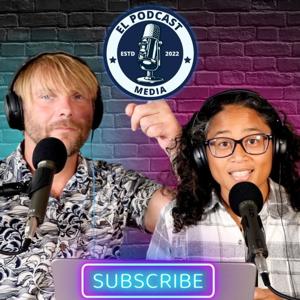


Award-winning travel writer Tim Leffel and expat Mary Ellen Lee share the unfiltered realities, benefits, and challenges of living abroad in Mexico and Panama — from cost of living to healthcare, safety, visas, and reinvention in retirement.
Guest Bios:
Topics Discussed:
3 Best Quotes:
"We were paying more just on rent in Tampa than we now pay for everything in Mexico."
– Tim Leffel on the staggering cost differences that make expat life appealing.
"You don’t retire to die—you retire to live. And living here lets you truly start over."
– Mary Ellen Lee on how moving abroad sparked her personal renaissance.
"Once you get a taste of life outside the U.S. for half the price—healthier, more fun, and more interesting—it's hard to go back."
– Tim Leffel on why expat life often becomes permanent.
📺Watch Full Podcast on YouTube➡️https://youtu.be/OsVDCuRgYuo?si=Nqoyp90FleU-MWk5
🎙 The Pod is hosted by Jesse Wright
💬 For guest suggestions, questions, or media inquiries, reach out at https://elpodcast.media/
📬 Never miss an episode – subscribe and follow wherever you get your podcasts.
⭐️ If you enjoyed this episode, please rate and review the show. It helps others find us.
Thanks for listening!
Professor Marcelo Bucheli unpacks the political and economic legacy of the United Fruit Company, exposing how bananas shaped coups, corruption, and the myth of the Banana Republic across Latin America.
Guest bio:
Marcelo Bucheli is a professor at the University of Illinois and a visiting scholar at Harvard Business School, specializing in international business history and foreign direct investment. He is the author of Bananas and Business, a deeply researched account of the United Fruit Company’s influence in Latin America.
Topics discussed:
Top quotes:
📺Watch the full episode ➡️ https://youtu.be/YGqejPmUdkg
🎙 The Pod is hosted by Jesse Wright
💬 For guest suggestions, questions, or media inquiries, reach out at https://elpodcast.media/
📬 Never miss an episode – subscribe and follow wherever you get your podcasts.
⭐️ If you enjoyed this episode, please rate and review the show. It helps others find us.
Thanks for listening!
Jamie Gehring, author of Madman in the Woods, shares her chilling firsthand account of growing up next to Ted Kaczynski, the Unabomber, revealing untold stories of proximity, grief, and the enduring ripple effects of domestic terrorism.
Guest Bio: Jamie Gehring is the author of Madman in the Woods: Life Next Door to the Unabomber, a true crime memoir detailing her childhood growing up in Lincoln, Montana—mere yards from Ted Kaczynski’s cabin. A speaker and writer, Gehring weaves personal narrative with investigative research, offering a unique insider perspective on one of America’s most infamous domestic terrorists.
Topics Discussed:
Best Quotes:
“No one—no one—suspected the quiet hermit next door was the most wanted domestic terrorist in American history.”
“When he told my dad he lived on $200 a year, we didn’t think twice. He was just eccentric. Not a killer.”
“You can’t talk about Ted Kaczynski without confronting the unsettling truth that he saw parts of our future before we did.”
📺Watch the full podcast on YouTube➡️ https://youtu.be/xNVDLoBn0Zo
🎙 The Pod is hosted by Jesse Wright
💬 For guest suggestions, questions, or media inquiries, reach out at https://elpodcast.media/
📬 Never miss an episode – subscribe and follow wherever you get your podcasts.
⭐️ If you enjoyed this episode, please rate and review the show. It helps others find us.
Thanks for listening!
Denise Kiernan shares the extraordinary history of Biltmore House, America's largest private home, and the powerful legacy of the Vanderbilt family during the Gilded Age.
Guest Bio: Denise Kiernan is a New York Times bestselling author, journalist, and producer whose books include The Last Castle, The Girls of Atomic City, and We Gather Together. She hosts “Craft: Authors in Conversation” and lives in Asheville, North Carolina, near the Biltmore Estate.
Topics Discussed:
2 Best Quotes:
📺Watch on YouTube ➡️ https://youtu.be/jSSSXJ9SE24
🎙 The Pod is hosted by Jesse Wright
💬 For guest suggestions, questions, or media inquiries, reach out at https://elpodcast.media/
📬 Never miss an episode – subscribe and follow wherever you get your podcasts.
⭐️ If you enjoyed this episode, please rate and review the show. It helps others find us.
Thanks for listening!
A conversation with Chris Smaje on why lab-grown food won't solve our problems—and why local, ecological farming is the real path forward.
👤 Guest Bio: Chris Smaje
Chris Smaje is a UK-based social scientist, writer, and small-scale farmer with two decades of hands-on agricultural experience. He’s a leading advocate for agroecology and local food systems, and author of A Small Farm Future and Saying No to a Farm-Free Future.
🧠 Topics Discussed
💬 Top Quotes
“We're being told food is software—but sunlight is still free. Manufactured food isn't.”
“If you move people off the land and into cities, you're not solving ecological problems—you're centralizing control.”
“The problem isn't farming—it's how we farm and who controls it.”
“Progress isn’t spending more time on your phone. It’s being part of a thriving community and growing your own food.”
🎙 The Pod is hosted by Jesse Wright
💬 For guest suggestions, questions, or media inquiries, reach out at https://elpodcast.media/
📬 Never miss an episode – subscribe and follow wherever you get your podcasts.
⭐️ If you enjoyed this episode, please rate and review the show. It helps others find us.
Thanks for listening!
Wall Street Journal reporter Gregory Zuckerman joins to unpack the secretive world of Jim Simons and Renaissance Technologies, exploring how the most successful trading firm in history continues to beat the market.
Guest Bio: Gregory Zuckerman is a senior special writer at The Wall Street Journal, where he covers hedge funds, private equity, and financial markets. He is the bestselling author of The Man Who Solved the Market, which tells the story of Jim Simons and the rise of quantitative investing.
Discussed Topics:
Top 3 Quotes:
📺Watch the full podcast on YouTube➡️https://youtu.be/xBI4ETrO3ZU?si=lIUmDwLEvXY4KDdw
🎙 The Pod is hosted by Jesse Wright
💬 For guest suggestions, questions, or media inquiries, reach out at https://elpodcast.media/
📬 Never miss an episode – subscribe and follow wherever you get your podcasts.
⭐️ If you enjoyed this episode, please rate and review the show. It helps others find us.
Thanks for listening!
Dr. Marion Nestle, leading nutrition expert and author of Food Politics, joins the show to expose how food industry funding distorts science, policy, and our diets.
Guest info: Dr. Marion Nestle is a renowned nutritionist, author, and Professor Emerita at NYU, known for her influential work on food politics, industry influence on science, and public health advocacy.
Topics discussed:
Best quotes:
📺Watch the full pod on YouTube➡️https://youtu.be/kt35SZnfj5A
🎙 The Pod is hosted by Jesse Wright
💬 For guest suggestions, questions, or media inquiries, reach out at https://elpodcast.media/
📬 Never miss an episode – subscribe and follow wherever you get your podcasts.
⭐️ If you enjoyed this episode, please rate and review the show. It helps others find us.
Thanks for listening!
Entertainment journalist Christian Toto discusses how Hollywood became woke, the role of censorship, China’s influence, and the cultural consequences of cancel culture.
👤 Guest BioChristian Toto is a film critic, author, and host of the Hollywood in Toto podcast. He’s a regular contributor to national media outlets and the author of Virtue Bombs: How Hollywood Got Woke and Lost Its Soul, a sharp critique of modern entertainment's ideological shift. With a background in journalism and a passion for pop culture, Toto offers a contrarian perspective on the intersection of politics and Hollywood.
📌 Topics Discussed“If Hollywood keeps making movies about The Blacklist, one day they’ll realize—they’re the villains now.”
“Woke isn’t about justice—it’s about power. And power protects its own.”
“Ghostbusters 2016 wasn’t just a reboot—it was a turning point where the media decided criticism equaled misogyny.”
“The worst thing about cancel culture isn’t who gets canceled—it’s the fear it creates, the self-censorship.”
“Free speech is everything. It’s the battle of our time.”
🎙 The Pod is hosted by Jesse Wright
💬 For guest suggestions, questions, or media inquiries, reach out at https://elpodcast.media/
📬 Never miss an episode – subscribe and follow wherever you get your podcasts.
⭐️ If you enjoyed this episode, please rate and review the show. It helps others find us.
Thanks for listening!
Author and environmental journalist Judith Schwartz explains how regenerating soil health—with the help of grazing animals—can restore ecosystems, improve food nutrition, and even mitigate climate change.
Guest Bio: Judith D. Schwartz is a journalist and author who writes about nature-based solutions to global environmental and economic challenges. Her work has appeared in Scientific American, Yale Environment 360, and The New York Times. She is the author of Cows Save the Planet, Water in Plain Sight, and The Reindeer Chronicles.
Topics Discussed:
Top 3 Quotes:
📺Watch the podcast on YouTube➡️https://youtu.be/1oSYBbkSFz8
🎙 The Pod is hosted by Jesse Wright
💬 For guest suggestions, questions, or media inquiries, reach out at https://elpodcast.media/
📬 Never miss an episode – subscribe and follow wherever you get your podcasts.
⭐️ If you enjoyed this episode, please rate and review the show. It helps others find us.
Thanks for listening!
Psychologist Dr. Larry Rosen joins us to discuss the psychological toll of smartphones, social media, and digital distraction—and what we can do about it.
Guest Bio: Dr. Larry Rosen is a retired psychology professor and former department chair at California State University, an expert on the psychology of technology, and author of The Distracted Mind: Ancient Brains in a High-Tech World and six other books examining how tech reshapes behavior, cognition, parenting, and mental health.
Topics Discussed:
Top 3 Quotes:
🎙 The Pod is hosted by Jesse Wright
💬 For guest suggestions, questions, or media inquiries, reach out at https://elpodcast.media/
📬 Never miss an episode – subscribe and follow wherever you get your podcasts.
⭐️ If you enjoyed this episode, please rate and review the show. It helps others find us.
Thanks for listening!
From the publisher's feed
940 Listeners
611 Listeners

5 Listeners