
Sign up to save your podcasts
Or

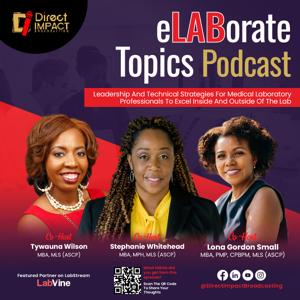


A recent Gallop survey found that 51% of the US workplace are disengaged which means they are checked out and not happy. This could be due to staffing challenges, constant changes, unfavorable working conditions, conflict in the workplace or numerous other things. When you look around your lab, does this seem to be the case? You can learn a lot from watching dogs believe it or not. It doesn't have to be super technical either. If you want to be happier at work, and move ahead in your career, try to think more like a dog! In this episode, co-host Tywauna Wilson discuss simple steps to becoming happier at work; life advice that can be learned from watching your dog.
Five simple steps to become happier at work:
Call to Action:
What tip will you practice more of today, to create a happier work environment for yourself and your team? Drop in the the comments or let us know on LinkedIn: eLABorate Topics Group
Be a Supporter!
To connect with Tywauna for more strategies or join the monthly leadership roundtable, find her on LinkedIn at Tywauna Wilson or connect here.
Lab professionals are hugely versatile and the skills we gain while obtaining a degree in Clinical Laboratory Science set a good foundation to learn new skills in other career fields. Tune in and listen to this quick conversation as co-host, Stephanie Whitehead talks with Grace Stankiewicz about tactics to find and transition into opportunities outside of the typical clinical laboratory setting.
If you are thinking about transitioning into a new, career path – be sure to listen to this episode for tips on how to be successful!
Be sure to share this episode with a fellow Lab Scientist!
If you are interested in the ASCP Mentorship program, visit this website for more information: https://mentorship.ascp.org/home
Special Guest Bio:
After many years of working primarily as a Blood Banker in various clinical settings and position levels, Grace Stankiewicz, BS, MT(ASCP) was provided the opportunity to start on a new career pathway working for Korchek Technologies, LLC. As a third-party vendor, Korchek provides an array of solutions for health care facilities that are frequently too short handed to complete crucial IT projects within expected timelines. Grace’s work has included validating transfusion medicine software, validating patient data that needs to be migrated from legacy to new systems, providing on site training, as well as go live support for clients as they implement new software. Her strong clinical background, as well as her ability to understand and perform essential build updates in Blood Bank software made the transition to a non-clinical position work so well. “I continue to learn and grow as a Medical Technologist with every new project I am assigned. The role that Information Technology plays in healthcare is ever-expanding, and I am grateful to be a part of it.” Listeners can reach out to Grace at: [email protected].
Be a Supporter!
Listen on Spotify, Apple Podcast or your favorite podcast platform
Don’t forget to subscribe to the show on your phone, tablet or notebook so you never miss an episode!
Be sure to leave a comment, and share with a fellow medical laboratory professionals!
Be a Guest!
If you have a leadership or laboratory message to share and would like to be a guest on the show, please reach out to us at [email protected] or Direct Impact Broadcasting on Social Media.
In this episode of eLABorate Topics podcast, Lona Gordon Small, MBA, PMP, CPBPM, MT (ASCP) discussed the topic of Patient Safety and clarified the difference between lab safety and Patient Safety.
She discussed the Comprehensive Unit Safety Program (CUSP) introduced in the lab, the Science of Safety and steps you could use to introduce Patient Safety in the lab.
The steps discussed
Listen to the full episode for details in trying to create a patient safety culture in your lab team.
You tube video on Patient Safety
https://www.ahrq.gov/hai/cusp/videos/04a-science-safety/index.html
To reach Lona Small and learn more about this and other similar topics email her at [email protected]
On LinkedIn Lona Gordon Small
Listen to this episode and other episode on directimpactbroadcasting.com and your favorite podcast platform.
Reach out to us at [email protected] to suggest topics you would like us to discuss or if you would like to be a guest on this podcast.
You have an opening and are ready to recruit the newest member of your team. There are a few considerations before submitting your next requisition. From planning what to do with the position, to interviewing and asking the right questions, this episode is for you!!
Key Takeaways from the show:
If you have experience or success tips with hiring and recruiting, we would love to hear from you. Please share your experience and best practice in the comments!
Be a Supporter!
Listen on Spotify, Apple Podcasts or your favorite podcast platform
Don’t forget to subscribe to the show on your phone, tablet or notebook so you never miss an episode!
Be sure to leave a comment, and share with a fellow medical laboratory professionals!
Be a Guest!
If you have a leadership or laboratory message to share and would like to be a guest on the show, please reach out to us at [email protected], Direct Impact Broadcasting on Social Media, or complete the Guest Interest Form.
Co-host Tywauna Wilson sat down to talk with Lindsey Clark, MPH, MLS (ASCP) about Laboratory Professional Credentialing & The Importance of Forming a Professional Identity.
Medical laboratory science is often referred to as the hidden profession. Many healthcare professionals working in the same hospital as laboratory professionals do not fully understand what we do, so can we really expect that from patients, the public, the media, and politicians? One major reason for the lack of understanding is the absence of a cohesive professional identity among laboratory professionals.
Lindsey talks about how there are many credentialing agencies and job titles out there today, and discuss the importance of forming a more unified professional identity. Several national organizations are working towards more standardized certifications and job titles to help decrease confusion within and outside of the field. We ended the interview with detailing those efforts and making suggestions for how laboratory professionals can help promote and advocate for the profession no matter what their role.
Guest Bio:
Lindsey Clark is an Assistant Professor in the Department of Laboratory Sciences at UAMS in Little Rock, Arkansas. She teaches Current Topics in Medical Laboratory Sciences and Molecular Diagnostics to both traditional MLS and MLT-to-MLS distance students. Lindsey is heavily involved in Interprofessional Education at UAMS, where she advocates for laboratory science students and professionals to play a larger role in interprofessional teams. Her research interests include biological and laboratory safety, virtual reality training, and interprofessional education for lab science students. She also works to promote the profession on social media and you can find her on Twitter, Instagram, and Facebook under @LindseyInTheLab.
Be a Supporter!
Listen on Spotify, Apple Podcasts or your favorite podcast platform
Don’t forget to subscribe to the show on your phone, tablet or notebook so you never miss an episode!
Be sure to leave a comment, and share with a fellow medical laboratory professionals!
Be a Guest!
If you have a leadership or laboratory message to share and would like to be a guest on the show, please reach out to us at [email protected], Direct Impact Broadcasting on Social Media, or complete the Guest Interest Form.
In this episode co-host, Stephanie Whitehead, discusses solutions to the laboratory national workforce shortage with Jim Payne and Dana Powell Baker. Tune in as they discuss how current laboratory professionals can engage with local high schools and clinical laboratory programs to impactful and increase the laboratory workforce!
Be sure to share this episode with a high school or CLS student in your local area!
For more information on topics mentioned in this episode:
Also, revisit episode 15 of this podcast, “Emerging Solutions and Opportunities for the Clinical Laboratory Workface” (featuring Dana Powell Baker) for more information on this topic.
Special Guest Bio:
Jim Payne is currently the Phlebotomy and Medical Laboratory Assistant program teacher at the WEMOCO Career and Technical Education Center in Spencerport, New York. He worked in two research laboratories at the University of Rochester after graduation with a biology degree from Stony Brook University. Over the last eight years, Jim has created a comprehensive and student employable laboratory science program. His program allows students to study for a career directly out of high school in a field with high demand or as the opportunity to explore a career that allows them to enter college with the experience and passion for a field that they know they will love to work in and be successful. Listeners can connect with Jim using his email, [email protected], or on LinkedIn at https://www.linkedin.com/in/jamespayne4/.
To learn more about his laboratory program, please visit: https://www.monroe2boces.org/WEMOCO.aspx
Dana Powell Baker is a Clinical Assistant Professor in the Department of Clinical Laboratory Sciences – School of Health Professions. As an ASCP-certified Medical Laboratory Scientist, Ms. Baker’s areas of expertise include the following: Infectious Disease Testing, Immunohematology, Learning and Development, Interprofessional Education, and Healthcare Simulation. Ms. Baker has been highlighted by other professional organizations, such as AABB and ASCLS, for her voluntary contributions in both service and leadership on various committees and task forces in promoting the clinical laboratory science profession. Currently, Ms. Baker serves on the ASCP Council of Laboratory Professionals and actively engages in the mentorship of emerging laboratory professionals. Regionally, Dana is an active member of the Heart of America Association for Blood Banks (HAABB) and the Kansas City Regional Simulation Alliance (KCRSA) while serving as a Representative-at-Large for ASCLS-Kansas. Listeners can reach out to Dana Powell Baker on Twitter, instagram, Linkedin or at [email protected]
Be a Supporter!
Listen on Spotify, Apple Podcast or your favorite podcast platform
Don’t forget to subscribe to the show on your phone, tablet or notebook so you never miss an episode!
Be sure to leave a comment, and share with a fellow medical laboratory professionals!
Be a Guest!
If you have a leadership or laboratory message to share and would like to be a guest on the show, please reach out to us at [email protected] or Direct Impact Broadcasting on Social Media.
Lona Gordon Small, MBA, MT (ASCP) sat down to talk with Meredith Hurston, MHA, MT (ASCP) about her experience in a corporate mentorship program, and the take-aways that could help medical labs and medical lab professionals adopt mentorship.
Meredith is a native of Flint, Michigan, currently residing in Baltimore, Maryland. She is a medical laboratory scientist by trade who also nurtures her entrepreneurial spirit. She is a graduate of The University of Michigan-Flint and a member of Delta Sigma Theta Sorority, Inc. After completing a graduate degree in healthcare administration, Meredith now works at one of the nation’s top-rated hospitals as a QA Specialist focusing on quality and patient safety. In addition to working in the lab by day, Meredith also owns Maurita’s Essentials, where “Our dream is to transform your dry skin to help you achieve a gorgeous and glowing
complexion through our small-batch handcrafted skin care products”.
Meredith spoke about how she started her lab journey as a Phlebotomist. Meredith discussed that her curiosity, guidance from other medical lab professionals, and her willingness to make changes, led her into the field of medical lab Science.
She spoke about curiosity and research as her strengths, and how those qualities helped her in her current role as a Quality Specialist in Quality and Patient Safety. Meredith discussed some take-aways as a mentee in a formal mentorship program at The Johns Hopkins Hospital.
As Meredith discussed her mentorship experience, some important points that were brought to light included:
· A mentor should first have the willingness to help the mentee to grow.
· There should be regular time allotted for mentor mentee interactions.
· A mentor should be willing to connect the mentee to available opportunities aligned to the mentee’s aspirations.
· A mentee should first want to be mentored.
· A mentee should be encouraged to reach out to mentor when there is need, and guide the interaction.
· Have written guidelines to follow in for a formal mentorship program.
Meredith discussed the need for mentorship for medical lab professionals, and the importance of exposing medical lab professionals to different career options in the field. She gave a few suggestions on how a lab could establish a mentorship program.
Listen to the podcast for the detailed discussion and all the valuable information Meredith shared.
You can connect with Meredith on twitter at @meredithhurston and email her at [email protected]
Be a Supporter!
Listen on Spotify, Apple Podcasts or your favorite podcast platform
Don’t forget to subscribe to the show on your phone, tablet or notebook so you never miss an episode!
Be sure to leave a comment, and share with a fellow medical laboratory professionals!
Be a Guest!
If you have a leadership or laboratory message to share and would like to be a guest on the show, please reach out to us at [email protected], Direct Impact Broadcasting on Social Media, or complete the Guest Interest Form.
Co-Hosts Tywauna Wilson, Lona Small, and Stephanie Whitehead discuss lab preparation for the new lab modified CAP inspection process.
Key Takeaways from the show:
Currently, CAP has a modified inspection process that consists of two routes:
Hybrid Inspection:
The hybrid inspection consists of a remote document review followed by an on-site inspection focused on the direct observation portion of the inspection.
Virtual Inspection:
When it is not possible for an inspection team to come onsite, the CAP may conduct a virtual inspection followed by an on-site visit, as required for CLIA laboratories, four to six months after, or once it is safe to do so. The direct observation may be the most challenging part of a virtual inspection but it can be accomplished with a mix of live streaming, post-audit reviews, and technical interviews.
Some of the considerations for inspection prep include:
For additional Inspector tools visit the CAP website: Additional CAP Prep Tools
If you have experience or success tips with the new modified process, we would love to hear from you. Please share your thoughts and experience in the comments!
Be a Supporter!
Listen on Spotify, Apple Podcasts or your favorite podcast platform
Don’t forget to subscribe to the show on your phone, tablet or notebook so you never miss an episode!
Be sure to leave a comment, and share with a fellow medical laboratory professionals!
Be a Guest!
If you have a leadership or laboratory message to share and would like to be a guest on the show, please reach out to us at [email protected], Direct Impact Broadcasting on Social Media, or complete the Guest Interest Form.
Navigating complicated workplace scenarios and managing people can be difficult!
Tune into this entertaining episode as returning special guests, Kristine Talamante and Joycelyn Jones, join co-host Stephanie Whitehead to review some complicated work place scenarios and debate how they would handle each situation. You’re sure to be entertained and while getting some great advice!
Be sure to comment letting us know how you would handle each situation or send us any interesting work place scenarios that you would like us to debate on an upcoming episode.
For a deeper dive into conversations with Kristine and Joycelyn, tune in to their previous episodes on the eLABorate Topics podcast!
· Episode 7, “The Secret” featuring Joycelyn Jones
· Episode 11, “When Compassion Hurts; Hope for the 2nd Victim” featuring Kristine Talamante
· Episode 16, “The Power in Being an Essential Worker” featuring Joycelyn Jones & Kristine Talamante
· Episode 39, “2021! Reflect and Restart your Career!” featuring Joycelyn Jones & Kristine Talamante
Returning Special Guest Bios:
Kristine I. Talamante MSN, RN is currently working as an Assistant Director of a Palliative Care team for a large hospital. Kristine is a strong advocate in Self-care, team morale and ensuring that staff feels safe. She has focused her passion on working with healthcare professionals and teams about compassion fatigue and burnout, moral distress, and most recently, Trauma Informed Care. Listeners can reach out to Kristine at [email protected].
Joycelyn Jones, MSHRM, PHR, SHRM-CP is a Certified Human Resource Professional with over 15 years of HR Management experience. She serves as an expert in consulting, executive coaching, employee relations, and conflict management with advanced knowledge of HR policies and employment laws. Listeners can reach out to Ms. Jones using Facebook at “Joyce Jones” or Instagram at “1ladyjones”. She also has a Facebook Group entitled “Virtuous Women”.
Please leave questions, comments, or subjects you would like to hear on this show!
Be a Supporter! Listen on DirectImpactBroadCasting.com, Spotify, Apple Podcast or your favorite podcast platform. Don’t forget to subscribe to the show on your phone, tablet or notebook so you never miss an episode! Be sure to leave a comment, and share with a fellow medical laboratory professionals!
Be a Guest! If you have a leadership or laboratory message to share and would like to be a guest on the show, please reach out to us at [email protected] or connect with us on Direct Impact Broadcasting through Social Media.
Lona Small sat down and talked with Michael Camp, Lab Information System Manager.
Michael A. Camp is a Laboratory information system (LIS) manager at a large Greater Baltimore Area hospital where he and his time oversees the LIS for four hospitals.
Michael’s IT responsibilities include designing, building, testing, and implementing laboratory tests that are used by the Medical Technologist along with system support. He has a BS in Structural Biochemistry from Syracuse University, a BS in Medical Technology from U of Maryland, and a master’s in Information Systems Management from Towson.
Michael has approximately eleven years as a Medical Technologist with a Microbiology specialty before he began the Laboratory IT journey. Michael’s self-taught computer skills and laboratory background helped guided him into a satisfying IT career. As a Syracuse student, Michael discovered how to repair and construct personal computers for his fellow students. Later, he learned a skill set that he would utilize today in customizing hardware and software.
Michael has knowledge in Laboratory LIS and EMR’s such as Soft SCC, Cerner, and Epic provide him with a versatile perspective for everyday IT problem solving. Having a background in computers and the Laboratory allows Michael to effectively communicate and become a liaison for both IT and Lab during complex integration conversations. Michael believes that anyone from a Laboratory background and a passion for computers can become an excellent Laboratory information system analyst.
Michael discussed his interesting journey using his unique strengths and curiosity for computers and science, which culminated in his current role.
Michael had so many great nuggets that he learned on the way and tools for success that he shared on this episode.
A few examples were:
Michael gave some great tips for medical lab professionals who are interested in a role in information system.
Check out the podcast to get the full scoop.
Michael is on all social media platform as Michael Camp. He can also be reached by email at [email protected].
Be a Supporter! Listen on Spotify, Apple Podcast or your favorite podcast platform. Don’t forget to subscribe to the show on your phone, tablet or notebook so you never miss an episode! Be sure to leave a comment, and share with a fellow medical laboratory professionals!
Be a Guest! If you have a leadership or laboratory message to share and would like to be a guest on the show, please reach out to us at [email protected] or Direct Impact Broadcasting on Social Media.
From the publisher's feed