
Sign up to save your podcasts
Or

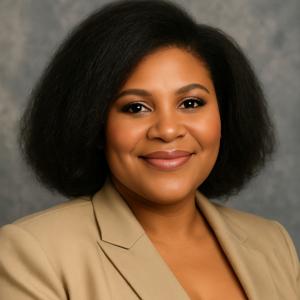


Does saying "no" make you feel like a "bad" Christian?
If you’ve experienced spiritual abuse or high-control religion, you’ve likely been trained to believe that having a self is a sin. You might feel that setting a boundary is an act of rebellion. But what if boundaries are actually one of the most faithful things you can do?
In this episode, we are dismantling the lie that protecting your peace is selfish. We’re reframing boundaries not as "blocking people out," but as stewarding the garden God gave you.
In this video, you will learn:🌿 Why boundaries are about stewardship, not rebellion.🌿 The 3 clear signs you are setting a healthy boundary (and not just being "difficult").🌿 Why Jesus Himself set limits—and why you should too.🌿 How to handle the guilt that comes with saying "no" to family or church leadership.
Resources & Healing:Counseling Website: Restoring You Christian Counseling | Catonsville, MD
Book an Appointment:
https://book.carepatron.com/Restoring-You-Christian-Counseling/Elisha?p=F869i2fsQCahi2s-K3afuw&s=6ZZMlbpB&i=XgXzcJJJ
Related Topics:Spiritual abuse healing, setting boundaries as a Christian, overcoming religious trauma, biblical boundaries, Christian mental health, emotional abuse recovery, dealing with church hurt.
#SpiritualAbuse #ChristianBoundaries #ReligiousTrauma #MentalHealth #ChristianCounseling #HealingJourney
Do you find yourself hiding your tears because you don't want to "bother" your adult children?Grief in older adulthood is a unique journey. It often comes with a fear of becoming a burden to family members who are busy with careers and kids. But silence doesn't heal; it isolates.
In this episode of Elisha’s Space, we tackle the "Perceived Burdensomeness" that many seniors face. Elisha validates the difficulty of shifting from "caregiver" to "care-receiver" and offers practical ways to ask for support without guilt.
We discuss:
Connect with Elisha:
Keywords: Grief in elderly, senior mental health, feeling like a burden, aging parents, coping with loss of spouse, family dynamics, loneliness in seniors.
Have you ever swallowed your words to "keep the peace"? For many, church tradition has conflated silence with holiness, leaving us afraid that speaking up equals rebellion. But what is the psychological cost of silencing your own voice?
In this episode of Elisha’s Space, we explore the intersection of faith, tradition, and mental health. Elisha breaks down the "Good Christian Woman" myth and offers a counselor's perspective on how suppression leads to anxiety and resentment. Most importantly, you'll learn practical, respectful ways to find your voice again.
In this episode, we cover:
Connect with Elisha:
Elisha's Space - YouTube
Restoring You Christian Counseling | Catonsville, MD
Keywords: Religious trauma, spiritual abuse, church hurt, Christian women, setting boundaries, speaking up, mental health for Christians.
Are you over 60 and secretly wondering why your anxiety seems to be getting worse, not better? Do you feel guilty, thinking you "should be past this" by now? In this episode, counselor Elisha breaks down the biological and spiritual reasons why anxiety spikes in later life—and why it is NOT a sign of weak faith. We discuss the "smoke detector" of the aging nervous system, the trap of negative religious coping, and gentle, shame-free tools to find peace.
In this episode of Elisha’s Space, we’re talking directly to those of you in your 50s, 60s, 70s, and beyond who are still carrying the weight of childhood trauma. Maybe you’ve thought, “I should be over this by now,” or wondered if it’s even worth starting a healing journey at your age. I want you to hear this clearly: it is not too late, you are not behind, and your healing still matters deeply.
Together, we explore why old wounds can still hurt decades later, how your nervous system has been loyally protecting you, and what healing can realistically look like later in life. You’ll hear a brief story of late-life healing, learn gentle nervous system practices you can do right where you are, and get practical steps to create small pockets of safety, compassion, and self-acceptance in your daily life.
This episode is for you if:
My hope is that as you listen, you feel seen, less alone, and gently invited into a new relationship with your younger self—one that is kinder, more spacious, and more honest.
If this conversation resonates with you, I’d love for you to:
In an upcoming episode, I’ll be talking about healing when the people who hurt you are still alive—or never apologized. Make sure you’re subscribed if that’s part of your story.
You are not too old to heal. You are not too late. And you are absolutely worth the work.
Content warning: This video discusses spiritual abuse, church trauma, and emotionally unsafe faith environments. Please care for your heart as you watch. 💛
Have you ever left a Bible study feeling smaller, more confused, or secretly afraid of God? In this video, I’m sharing as a counselor how spiritual abuse quietly sneaks into Bible studies and small groups – often disguised as “accountability,” “submission,” or “being biblical.”
We’ll walk through:
• Subtle ways Scripture gets twisted to control, shame, or silence you
• Red flags in Bible study culture: no questions, no disagreement, no boundaries
• How “accountability” can turn into spiritualized bullying
• What your body is telling you when a group is not safe
• What a truly healthy, trauma-informed Bible study actually looks and feels like
If you’ve ever thought, “Something felt off, but I couldn’t name it,” my hope is that this gives you language, clarity, and permission to trust your discernment and your nervous system.
You are not “weak,” “rebellious,” or “unspiritual” for feeling harmed in a Christian space. Your story matters. God is not threatened by your boundaries or your healing process. 🌿
If this resonated with you, you can simply comment: “That was me.” You don’t have to share details to be seen.
For more on spiritual abuse, trauma-informed faith, and gentle healing:
• Subscribe for content on trauma, anxiety, spiritual abuse, and hope
• Watch my other content on faith and nervous system awareness
• Share this with someone who might need language for their experience
You are worthy of safe people and safe spaces — even in Bible study.
“Just forgive and forget.”
If you grew up in church, you’ve probably heard that phrase more times than you can count. But what happens when “forgive and forget” is used to silence pain, minimize abuse, or rush you past your own healing?
In this episode of Elisha’s Space, counselor and author Elisha gently but honestly unpacks the truth about “forgive & forget” in the church from a trauma-informed, biblical perspective.
We’ll explore:
This conversation is especially for you if:
You are not broken for still hurting. You are not less spiritual because you remember. Your healing matters to God.
If this episode speaks to you:
Let’s rewrite the narrative around forgiveness — with truth, nuance, and compassion.
Merry Christmas!!
Are you exhausted from always being the “reliable one” — the friend, daughter, partner, or church member who says yes even when you’re breaking inside?
In this episode of Elisha’s Space, counselor and host Elisha shares one simple, powerful phrase you can start using today to interrupt people‑pleasing without becoming cold, harsh, or selfish:
“I care about you, and I can’t do that for you.”
Together, we unpack why saying “no” feels so dangerous in your body, how people‑pleasing is often tied to trauma, anxiety, and fear of abandonment, and how this one phrase can help you honor both your compassion and your limits.
You’ll learn:
• Why your nervous system defaults to “yes” (even when you don’t want to)
• How to say “no” without over‑explaining, apologizing, or panicking
• Practical examples for friends, family, work, church, and relationships
• How to handle the guilt that shows up after you finally set a boundary
• A gentle, faith‑honoring perspective on service, limits, and being made in the image of God
This episode is especially for you if:
• You feel selfish any time you consider saying “no”
• You’re resentful and tired, but still keep over‑giving
• You grew up in chaos, criticism, or emotional neglect
• You’ve been taught that “good” women always sacrifice themselves
Take a breath. You’re not broken. You’re learning a new way to exist in relationships without abandoning yourself.
Listen in, write the phrase down, and try it once this week in a real conversation.
If this episode helps you, share it with a fellow people‑pleaser, and follow the show for more trauma‑informed, faith‑friendly conversations about healing, anxiety, and boundaries.
You’re allowed to care about others without disappearing yourself. 💛
Can a single Bible verse stop a panic attack in 10 seconds? You've seen the claim, but is it true?
Join a Christian counselor who investigates this very question, bridging the gap between ancient faith and modern neuroscience. This episode explores the anatomy of a panic attack and decodes the powerful Bible verse, Philippians 4:6-7. Discover how this scripture is not just a spiritual comfort but a practical, evidence-based process that mirrors clinical grounding techniques used in therapy today.
You will learn:
* What happens in your brain and body during a panic attack.
* How the three steps in Philippians 4—prayer, thanksgiving, and presenting requests—act as a "neurological hack" to reroute your brain from fear to a state of calm.
* A simple, 10-second "Grounding Prayer" that combines the verse with a box breathing exercise, creating a powerful reflex against the wave of panic.
If you struggle with anxiety or are curious about the intersection of faith and mental wellness, this episode provides a life-saving anchor you can use anytime, anywhere.
Does your anxiety always seem to get louder at night?
If your brain waits until you lie down to start the “what if” parade, you are not broken and you are not alone. 🌙
In this podcast episode, counselor Elisha gently unpacks why your anxiety gets worse at night — from both a psychological and faith-based perspective. You’ll learn what’s happening in your brain and body after the sun goes down, why the quiet often brings up our deepest fears, and how to respond with compassion instead of shame.
You’ll walk away with practical, simple tools you can start using tonight to calm your mind, soothe your nervous system, and create a more peaceful nighttime routine.
If you’re tired of dreading bedtime, this conversation will help you see your anxiety as a signal, not your identity — and begin to build a kinder, more grounded relationship with your nervous system.
If this episode resonates with you:
You are not walking through this in the dark. You are seen, loved, and worth the work of healing.
From the publisher's feed
Welcome to Elisha's Space, a counseling podcast dedicated to authentic conversations about healing and personal development. This podcast delves into the complexities of trauma, anxiety, and…
Website: https://elishas-space.onpodium.co/
Linked In: https://www.linkedin.com/company/elisha-s-space/
Podlink: Elisha's Space: Counseling and Authentic Conversations on Healing from Elisha Lee, Counseling Expert | Authentic Conversations Host