
Sign up to save your podcasts
Or

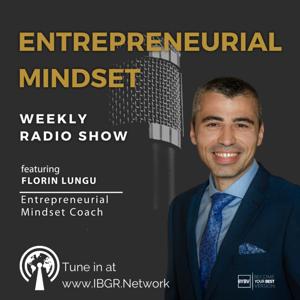


Episode recorded Live at IBGR.Network
Happy New Year! Make 2021 your best year yet!
Let’s recap what we’ve looked at over the last weeks in our season three.
We looked at the value of implementing SOP’s in your business and why it pays off to put the time into creating them.
Then we looked at assigning roles to your players and how clarity of responsibilities is key to any winning team. Every high-performing team has two things in place: each player knows exactly what their role is and everyone knows who’s in charge.
The next episode has been about the difference between leaders and managers: managers try to solve problems while leaders focus on building momentum.
We looked at how do we create a problem-solving culture in our organizations? And why do we have problems in the first place?
The purpose of a problem is to call us forward so that we may go before the very conditions, circumstances, and thinking that created it.
“We cannot solve our problems with the same level of thinking that created them.” – Albert Einstein
Problems are opportunities for us to become the solution, rather than seek a solution.
A question I love asking business leaders I work with is, how does your organization look like three years from now? What about five years? Or ten?
As you look at the things you want to achieve in your business over the next years, how big of a team you need around you to allow you to do that? Who in your current team is still with you five or ten years from now?
If 2020 was a difficult year for you, and I know it was for many of us, don’t put it behind you and move on to 2021 with the hope that things will get better, give some thought to what contributed to it being as it was and what you could do differently in the future to futureproof your business.
What You Need to Know - The What
Before you forget about 2020 and you start the New Year with hope for a new beginning and a different kind of year, make sure to take some time to reflect upon what did you learn in 2020 and what do you want to take with you in 2021.
Here are 5 Reflective Questions to start your year with:
Shows
· Previous: Episode 25-28 - Reflection & Mindset - Making 2021 Your Best Year Yet
· Next: Season 4
Episode recorded Live on IBGR.Network
I can’t believe it is Christmas Day and we’re closing in 2020. The year most people would want to forget but one that will remain in history as the year that weak many people up to reality.
Before you close your year and you go celebrate the New Year with hope for a new beginning and a different kind of year in 2021, make sure to take some time to reflect upon what did you learn in 2020 and what do you want to take with you in 2021.
Show Objectives - The Why
Most people react to failure or difficulties is that they want to put it behind as fast as possible so they don’t need to think about it. While that might give some sort of short-term relief, until we take the time to reflect upon how did we end up in that situation in the first place and change the cause of those results, we are not really protecting ourselves from ending up in the same situation again.
If 2020 was a difficult year for you, and I know it was for many of us, don’t put it behind you and move on to 2021 with the hope that things will get better, give some thought to what contributed to it being as it was and what you could do differently in the future to futureproof your business.
Key Issues - Owner Perspective:
What You Need to Know - The What
Reflection time:
Mindset Building – 5 Mindsets for 2021 and beyond
What You Need to Do - The How
The FIVE Questions:
Shows
Recorded LIVE at IBGR.Network - Your Business Growth Radio
A question I love asking business leaders I work with is, how does your organization look like three years from now? What about five years? Or ten?
As you look at the things you want to achieve in your business over the next years, how big of a team you need around you to allow you to do that? Who in your current team is still with you five or ten years from now?
That’s some really thought-provoking set of questions I’ll love to explore with you today.
Show Objectives - The Why
These questions are universal regardless of the growth stage. During Stage I, this is simple. You’re a hand full of people and no processes or organizational charts to think about. During Stage II this is an academic issue because you are so focused on generating sales that the answer to the question is "whatever” and “whomever.” Now you are in a different spot, there is time to give this thought and make it a priority because what happens at Stage III is your future.
From this point forward your goal for organizing the company is simple - focus all of the employees to pull together in one general direction to maximize impact - "getting the herd headed roughly west.”
Key Issues - Owner Perspective:
What You Need to Know - The What
· Not all people on your team need to be with you three years from now.
· Not everyone has a seat on your bus.
· Your top talent always has options
· Some need to step up and some need to go.
· Don’t send your ducks to the eagles school.
What You Need to Do - The How
Shows
● Previous: Episode 16-20 - Creating A Problem-Solving Culture In Your Organization
● Next: Episode 25-28 - Making 2021 Your Best Year Ever
From the publisher's feed
Catch this show live by downloading the IBGR Business Growth Radio App for Android and iOS and gain access to even more great resources. Find the IBGR Business Growth Radio App on Google Play and in the Apple App Store.
Florin Lungu is an Organizational Development Expert & Business Mindset Coach.
With 12+ years of international experience in leading and training people in international corporations, 6+ years in the personal and corporate development industry, and 5+ years of entrepreneurship, Florin has learned a bit (often the hard way) about embracing change, leading people, and business mindset.
Born and raised in Romania he worked in France and relocated to Sweden where he now provides organizational development services to the international business community. He holds an MSc in Automotive Engineering, he is a Certified Behavioural Analyst and part of the biggest professional coaching & training organization in the world and provides business growth solutions to SME’s.
Subscribe to Florin’s Daily Inspirational Emails at:
www.FlorinLungu.com
You can connect with Florin on any of her seriously social platforms
Connect on LinkedIn
Follow on Instagram
Like on Facebook
Subscribe on YouTube