
Sign up to save your podcasts
Or



Recorded Live at International Business Growth Radio (www.IBGR.Network)
Steven Sample, in his book The Contrarian’s Guide to Leadership, writes,
“The average person suffers from three delusions:
(1) That he is a good driver,
(2) That he had a good sense of humor, and
(3) That he is a good listener.”
I know to be guilty of all three.
I will never forget a conversation I had with my wife Florina when she confronted me about my poor listening skills. She said, “You’re not listening to me. You seem distracted when I talk to you. You keep your laptop in front of you and you’re not paying attention to me.”
That surprised me because as most people, and more importantly, as a professional coach, I thought I was a good listener. But I was wrong. The first thing I did was to apologize and I then started to try to change that and become a better listener.
Show Objectives - The Why
If you doubt we all need to improve our listening skills, consider this thought by show host Larry King who said, “I remind myself every morning: nothing I say this day will teach me anything. So, if I’m going to learn, I must do it by listening.”
I keep it close to me because I have to remind myself all the time to listen more than I speak.
Key Issues - Owner Perspective:
The biggest challenge business leaders face is they believe as leaders they have to have answers and they believe talking is more important than listening. This makes them poor listeners.
I always remind myself that when my lips are moving, I’m not selling, I’m telling. And that is true in business with our team, with clients, investors, as much as it is true with family and friends.
Listening is way underrated and most of us could probably get better at doing it.
What You Need to Know - The What
Why Listeners Are Better Entrepreneurs and Business Leaders
1. Understanding people precedes Leading (and Selling to) Them
2. Listening is the best way to learn and grow
3. Listening saves time and money
4. Listening establishes trust – by the questions I’ll ask you’ll know I listen
5. Listening improves relationships
What You Need to Do - The How
How do I know I need to become a better listener?
Here is an idea of how you can know that: give yourself a listening audit.
1. Record your next important meeting or sales conversation or have someone listen in for you on the call if you’re not able to record it
2. Listen back to the recording – if you feel uncomfortable hearing yourself speak, that’s the first sign you could improve your listening
3. If you’re not listening at least 80 percent of the time, you need to improve.
4. Find a way to remind yourself to listen – add a marker like writing the letter “L” in the corner of your notepad or as a post-it on your desktop
What else could you do?
- Do people around you feel listened to?
- What people have you neglected to reach out to?
I’ll close with this quote by Jim Rohn who said, “One of the greatest gifts you can give anyone is the gift of attention”
Shows:
● Previous: Episode 13-16 Season 4 - Put Your People First - Multiplying Your Success
● Next: Episode 20-24 Season 4 - Becoming the Employer of Choice – Why Company Culture Matter
Recorded Live at International Business Growth Radio (www.IBGR.Network)
When a first heard Simon Sinek say when you put your customers first it means that you put your people second. That really stuck with me. And isn’t that way so many businesses praise themselves on putting customers first?
In this episode, we will look at how can we multiply our success and reach by putting our people first.
Show Objectives - The Why
While putting customers high on the priority list is a must, seeing them more important than our people, we risk losing sight of who serves those customers. They are certainly the ones who bring oxygen into our companies by investing in our products and services, but the people on our teams are the heart that pumps the blood and distributes the oxygen inside the business. Without a healthy hearth and vascular system, there is no oxygen carried around in your organization.
Key Issues - Owner Perspective:
The challenge is that we get so busy with delivering the things we have on our agendas that we lose sight of taking time to slow down and walk slowly through the crowd.
What You Need to Know - The What
Putting other people first starts with being intentional and here are some things you could start doing.
1. Develop a greater appreciation for people
a. Who brings the best in you?
b. Who are you grateful for?
c. Make a list of people you appreciate and added value to you.
2. Ask to hear your people’s stories
3. Put yourself in your people’s shoes
4. Place your people’s interests at the top of your priority list
5. Make winning a group activity
What You Need to Do - The How
Valuing people start with putting people first and adding value to them from a servant-hood position.
Here are five keys to adding value to your team
1. To add value to my team I must first value myself
2. To add value to my team I must value others
3. To add value to my team I must value what others have done for me
4. To add value to my team I must know and relate to what my team value
5. To add value to my team I must make myself more valuable
I’ll close with this quote by Zig Ziglar who said, “If you help enough other people succeed you don't have to worry about your success.”
Putting your people first and taking good care of them allows them to take good care of your clients.
Shows:
● Previous: Episode 9-12 - The Only Guarantee of Continuous Business Growth - Intentional Growth
● Next: Episode 17-20 - Solve Problems Early and Build Trust with Your Team by Listening Before You Lead
Recorded Live at International Business Growth Radio (www.IBGR.Network)
As leaders in business, it is our responsibility to develop our teams and develop ourselves. When I help business owners taking the HR hat (or better said the HP – Human Potential hat) the first thing we have them do is creating the three-year plan for each of their team members. From where do they wanna be, what roles would they fill, would they even be on the team, what skills gaps they need to bridge to become the person they need to be to perform in that role, and who could replace them if they quit.
Show Objectives - The Why
The reason why everyone should consider this a priority is that everything is in constant change. What brought us up to where we are today is not what’s gonna take us where we need and want to be in three years.
Business scale-up starts with skill and mindset scale-up. Business development starts with people development. And that’s what we’ll cover in this show. 😉
Key Issues - Owner Perspective:
The biggest challenge to making individual and team development a priority is the illusion that we are automatically growing just by doing what we are doing in our daily activities. But the fact that we are doing things and that we are experiencing things is not enough if we are not taking the time to pause and reflect upon what we have been through. John Maxwell says we should pause so we allow the growth to catch up. When we are in the middle of the activity, we’re not thinking about what we’re doing, we are into the action mode, we are in it. And in order to grow, we need to allow that space so we think about what we have experienced, how has that impacted us, what did we learn, what could we have done differently and what will I do differently next time in a similar situation. That’s the thought process.
What You Need to Know - The What
Identify your growth needs and your team’s growth needs.
Where do you see yourself in three years? What role would you love to play in your business?
Looking at where you’re going to be in three years what areas do you need to grow in? What skills do you need to develop to be successful in that role?
Where do you see your team in three years? Who is still on your team? What roles do they play?
Five questions every leader should ask themselves about each of their team members:
1. Where do I see this person in three years?
2. What is the uniqueness they bring to the table?
3. Where in the organization could they use their gifts to make a greater impact?
4. What areas would they need to grow into to be where they have the potential to be in three years?
5. What is my plan to helping them bridge that gap?
What You Need to Do - The How
Business Scale-up starts with team scale-up. What organization do I need in place in three years to take my business where I need to be and it should be?
Creating your team’s growth plan.
- Skills they need to do their job well
- Attitude & Mindset
- Interpersonal skills
Involve your team into their growth plan by allowing them to include areas they’ll love to grow into and study like their hobbies and passion,
With involvement comes ownership and with ownership comes responsibility.
Shows:
● Previous: Episode 5-8 -Priorities - Maximizing Your Impact
● Next: Episode 13-15 - Put Your People First - Multiplying Your Success
From the publisher's feed
Catch this show live by downloading the IBGR Business Growth Radio App for Android and iOS and gain access to even more great resources. Find the IBGR Business Growth Radio App on Google Play and in the Apple App Store.
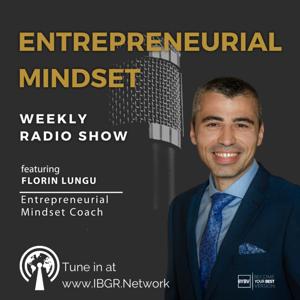
Florin Lungu is an Organizational Development Expert & Business Mindset Coach.
With 12+ years of international experience in leading and training people in international corporations, 6+ years in the personal and corporate development industry, and 5+ years of entrepreneurship, Florin has learned a bit (often the hard way) about embracing change, leading people, and business mindset.
Born and raised in Romania he worked in France and relocated to Sweden where he now provides organizational development services to the international business community. He holds an MSc in Automotive Engineering, he is a Certified Behavioural Analyst and part of the biggest professional coaching & training organization in the world and provides business growth solutions to SME’s.
Subscribe to Florin’s Daily Inspirational Emails at:
www.FlorinLungu.com
You can connect with Florin on any of her seriously social platforms
Connect on LinkedIn
Follow on Instagram
Like on Facebook
Subscribe on YouTube