
Sign up to save your podcasts
Or



Recorded Live at International Business Growth Radio (www.IBGR.Network)
A key component for a self-managing organization is autonomy. People have the authority to make decisions at their level and problems get solved at the lowest level possible without being escalated to the management.
How can we build a problem-solving mindset in our companies so we develop that self-managing company every entrepreneur dreams about?
That’s what we’re gonna try to answer on today’s show.
Show Objectives - The Why
Many entrepreneurs after a few years in business realize that they cannot do everything that is needed for their businesses to grow and thrive. That’s the moment they start to bring people in and build a team.
While their team starts to take things off their plates, as the organization grows, bigger problems land on their desk. They’re still the ones who make all decisions. They feel in control but they’re swapped.
This is the moment they realize they need to start delegating differently. Not only the responsibility for the task or project but also the authority to make decisions.
That’s the moment when things start to change.
Key Issues - Owner Perspective:
The biggest challenge we face in delegating authority is we feel we give up our power. We put ourselves in a situation where others will make decisions on our behalf and that’s a scary thought for many entrepreneurs.
So what can we do?
What You Need to Know - The What
What we’ll cover today is:
Change your problem-solving mindset:
Which one do you struggle with most?
What You Need to Do - The How
How can we create that problem-solving from the inside-out mentality?
Here is a Five Steps Thinking Process to Solution-Based Thinking
1. Write out the exact problem you have.
2. Draw from your past experiences, resourcefulness, and creativity.
3. Identify the resources you have learned from or adopted as you have dealt with previous problems.
4. Write down what the problem looks like solved.
5. Trust and have faith in yourself.
Recorded Live at International Business Growth Radio (www.IBGR.Network)
When we look at the world’s business scene and the companies that rank at the top of employer of choice ranks, there are two things all of them have in common.
1. A diverse and inclusive environment
2. A great company culture
But how can a small business build a culture if they’re not a big brand with deep pockets?
That’s what we’re gonna try to answer on today’s show.
The Why
Most entrepreneurs think that diversity & inclusion and company culture initiative are a costly business. They see it as a cost and that’s it. They cost a lot of money and they take a lot of time.
Interestingly enough, when you look at the D&I culture case, the cost is not in implementing it but in not implementing it, in not having D&I and culture-building initiative.
And the costs are getting higher and higher as time goes by. Study shows that in the next four years, 75% of the workforce will be made of Millenials. I am one of them and we want different things. We want to feel included, we want to feel we are part of a bigger purpose than ourselves, part of something bigger. And here is where the rubber meets the road and where a company culture makes the difference.
Key Issues - Owner Perspective:
The biggest challenge small business owners face is they believe they are too small of a business to need a company culture and that’s only for big brands.
However, when asked, most say they want the benefits of a diverse and inclusive company culture
So the culture-building case is pretty compelling, when done right it reduces cost, captures unrealized opportunity and of course, it is the right thing to do.
So what can we do?
What You Need to Know - The What
It is in your best interest as a leader to build an inclusive and engaging culture where people feel at best and they bring their best to the table. It is in your peoples’ best interest to contribute to and engage in building culture so you all grow together.
When you look at the data, an organization with a culture of diversity and inclusion is a healthier and more profitable organization.
How do your people feel? Do they feel attached to your company or is it just a rental?
What You Need to Do - The How
How do you create the I’m-all-in mentality?
What do employees want:
When they feel free to be the best they can be, everyone wins.
The 4 Pillars to Embedding cultural change.
When it comes to cultural change and any similar topic, we tend to fall into one of these categories:
What role do you play in this? Which one are you?
Shows:
● Previous: Episode 16-20 - Solve Problems Early and Build Trust by Listening Before You Speak
● Next: Episode 25-28 - Your Fast-Track to A Self-Managing Organization by Developing a Problem-Solving Culture
Recorded Live at International Business Growth Radio (www.IBGR.Network)
Steven Sample, in his book The Contrarian’s Guide to Leadership, writes,
“The average person suffers from three delusions:
(1) That he is a good driver,
(2) That he had a good sense of humor, and
(3) That he is a good listener.”
I know to be guilty of all three.
I will never forget a conversation I had with my wife Florina when she confronted me about my poor listening skills. She said, “You’re not listening to me. You seem distracted when I talk to you. You keep your laptop in front of you and you’re not paying attention to me.”
That surprised me because as most people, and more importantly, as a professional coach, I thought I was a good listener. But I was wrong. The first thing I did was to apologize and I then started to try to change that and become a better listener.
Show Objectives - The Why
If you doubt we all need to improve our listening skills, consider this thought by show host Larry King who said, “I remind myself every morning: nothing I say this day will teach me anything. So, if I’m going to learn, I must do it by listening.”
I keep it close to me because I have to remind myself all the time to listen more than I speak.
Key Issues - Owner Perspective:
The biggest challenge business leaders face is they believe as leaders they have to have answers and they believe talking is more important than listening. This makes them poor listeners.
I always remind myself that when my lips are moving, I’m not selling, I’m telling. And that is true in business with our team, with clients, investors, as much as it is true with family and friends.
Listening is way underrated and most of us could probably get better at doing it.
What You Need to Know - The What
Why Listeners Are Better Entrepreneurs and Business Leaders
1. Understanding people precedes Leading (and Selling to) Them
2. Listening is the best way to learn and grow
3. Listening saves time and money
4. Listening establishes trust – by the questions I’ll ask you’ll know I listen
5. Listening improves relationships
What You Need to Do - The How
How do I know I need to become a better listener?
Here is an idea of how you can know that: give yourself a listening audit.
1. Record your next important meeting or sales conversation or have someone listen in for you on the call if you’re not able to record it
2. Listen back to the recording – if you feel uncomfortable hearing yourself speak, that’s the first sign you could improve your listening
3. If you’re not listening at least 80 percent of the time, you need to improve.
4. Find a way to remind yourself to listen – add a marker like writing the letter “L” in the corner of your notepad or as a post-it on your desktop
What else could you do?
- Do people around you feel listened to?
- What people have you neglected to reach out to?
I’ll close with this quote by Jim Rohn who said, “One of the greatest gifts you can give anyone is the gift of attention”
Shows:
● Previous: Episode 13-16 Season 4 - Put Your People First - Multiplying Your Success
● Next: Episode 20-24 Season 4 - Becoming the Employer of Choice – Why Company Culture Matter
From the publisher's feed
Catch this show live by downloading the IBGR Business Growth Radio App for Android and iOS and gain access to even more great resources. Find the IBGR Business Growth Radio App on Google Play and in the Apple App Store.
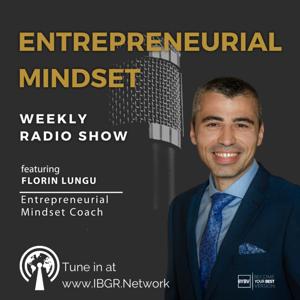
Florin Lungu is an Organizational Development Expert & Business Mindset Coach.
With 12+ years of international experience in leading and training people in international corporations, 6+ years in the personal and corporate development industry, and 5+ years of entrepreneurship, Florin has learned a bit (often the hard way) about embracing change, leading people, and business mindset.
Born and raised in Romania he worked in France and relocated to Sweden where he now provides organizational development services to the international business community. He holds an MSc in Automotive Engineering, he is a Certified Behavioural Analyst and part of the biggest professional coaching & training organization in the world and provides business growth solutions to SME’s.
Subscribe to Florin’s Daily Inspirational Emails at:
www.FlorinLungu.com
You can connect with Florin on any of her seriously social platforms
Connect on LinkedIn
Follow on Instagram
Like on Facebook
Subscribe on YouTube