
Sign up to save your podcasts
Or



Recorded Live at International Business Growth Radio (www.IBGR.Network)
One of the biggest differentiators between successful companies and less successful ones is their leadership development programs. While most companies see investment in training and people development programs as a cost, the few that get it, see this as one of the best investments they will ever make because they know that people are the only appreciating asset of their company.
Leadership expert, John Maxwell says,
“ Becoming a leader who develops leaders requires an entirely different focus and attitude from simply attracting and leading followers. It takes a different mindset. ”
Show Objectives - The Why
So often in scaling up an organization, the human factor is forgotten, or at least it doesn’t get the attention it deserves. What good does to have an ambitious scale-up strategy for your market expansion or production capacity expansion if you don’t have an organizational scale-up strategy to sustain it and make it happen.
Key Issues - Owner Perspective:
Here are some of the biggest challenges in attracting and developing leaders:
What You Need to Know - The What
Great leaders develop their bench.
Successful companies expect change and plan ahead
- Always plan three future positions for each of your key people
- They have a contingency plan in case someone quits or changes position,
- They build career development programs
Successful leaders expect problems. They see situations realistically and they plan ahead.
What You Need to Do - The How
The challenge with developing leaders.
Recorded Live at International Business Growth Radio (www.IBGR.Network)
Servant leadership has become a buzz word but it is not something new. John Maxwell taught it in his lectures and books for years and other thought leaders too as this quote by Zig Ziglar.
“If you help people get what they want, they will help you get what you want. ”
Show Objectives - The Why
As business leaders, we need to have the right mindset when it comes to serving people. We might feel is natural to serve our clients but what bout our people?
Key Issues - Owner Perspective:
Here are some of the misconceptions about servant leadership and servant entrepreneurship
What You Need to Know - The What
Simon Sinek said that when you take care of your people your people will take care of your employees.
What we’ll gonna cover today:
Develop your servant mindset:
- Do not rely on position or title
- Believe in people and their potential
- Put yourself in other people's shoes
- Create a supporting environment
- Measure your success by how much you helped others
What You Need to Do - The How
Making the shift from being served to serving.
The three questions every leader should ask their team:
1. How are you doing today?
2. What are you working on?
3. How can I help you?
Questions to help us serve your people better:
1. What can I do for them to help them succeed?
2. What do your people need from you daily that they may not want to ask for?
3. What can I work on that will help me serve my people better?
4. How would I know that I am serving my team well?
5. What is it like for people who work with me?
Recorded Live at International Business Growth Radio (www.IBGR.Network)
How do we create a problem-solving culture in our organizations? And why do we have problems in the first place?
The purpose of a problem is to call us forward so that we may go before the very conditions, circumstances, and thinking that created it.
“We cannot solve our problems with the same level of thinking that created them.” – Albert Einstein
Problems are opportunities for us to become the solution, rather than seek a solution.
Show Objectives - The Why
As business leaders, we rely on people from vendors to suppliers, from clients to employees and we’d expect them to follow through on their promises. To keep their word.
Even more importantly perhaps is that we have people who depend on us and in order to be dependable we have to be disciplined.
Key Issues - Owner Perspective:
What You Need to Know - The What
What we’ll cover today is:
What You Need to Do - The How
A Five Steps to Solution-Based Thinking
1. Write out the exact problem you have.
2. Draw from your past experiences, resourcefulness and creativity.
3. Identify the resources you have learned from or adopted as you have dealt with previous problems.
4. Write down what the problem looks like solved.
5. Trust and have faith in yourself.
Before you make a decision, you must first enter into problem-solving at a higher level of solution-based thinking where you begin to separate, breakdown, and distill the thinking that has created the conditions conducive for the problem to exist.
Then, after careful and thoughtful consideration, you make a decision, cutting and removing the parts of your past thinking that no longer serve you.
“Momentum is the leader’s best friend.” - John C. Maxwell
From the publisher's feed
Catch this show live by downloading the IBGR Business Growth Radio App for Android and iOS and gain access to even more great resources. Find the IBGR Business Growth Radio App on Google Play and in the Apple App Store.
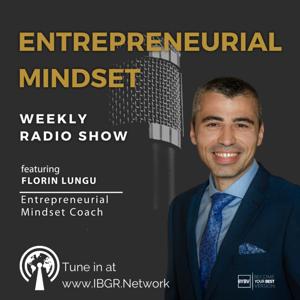
Florin Lungu is an Organizational Development Expert & Business Mindset Coach.
With 12+ years of international experience in leading and training people in international corporations, 6+ years in the personal and corporate development industry, and 5+ years of entrepreneurship, Florin has learned a bit (often the hard way) about embracing change, leading people, and business mindset.
Born and raised in Romania he worked in France and relocated to Sweden where he now provides organizational development services to the international business community. He holds an MSc in Automotive Engineering, he is a Certified Behavioural Analyst and part of the biggest professional coaching & training organization in the world and provides business growth solutions to SME’s.
Subscribe to Florin’s Daily Inspirational Emails at:
www.FlorinLungu.com
You can connect with Florin on any of her seriously social platforms
Connect on LinkedIn
Follow on Instagram
Like on Facebook
Subscribe on YouTube