
Sign up to save your podcasts
Or

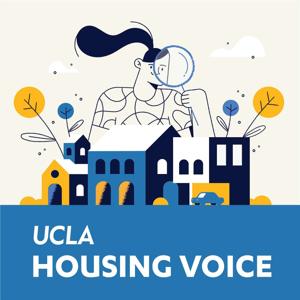

Institutions like the U.S. Census Bureau offer us a wealth of statistics about the places people live: household incomes; demographics like race, ethnicity, age, and gender; how many people own or rent their homes, how much they pay, and where they moved from. We know much less about how people perceive their neighborhoods — how they feel about the places they live, regardless of their objective conditions, and how that affects their ability or willingness to stay. What do we miss when we overlook these subjective feelings and impressions? Dr. Prentiss Dantzler of the University of Toronto joins us to discuss his work on this subject, and to share some of the surprising ways that neighborhood perceptions relate to residential mobility.
Show notes:
 View all episodes
 By UCLA Lewis Center for Regional Policy Studies

4.9
105105 ratings
Institutions like the U.S. Census Bureau offer us a wealth of statistics about the places people live: household incomes; demographics like race, ethnicity, age, and gender; how many people own or rent their homes, how much they pay, and where they moved from. We know much less about how people perceive their neighborhoods — how they feel about the places they live, regardless of their objective conditions, and how that affects their ability or willingness to stay. What do we miss when we overlook these subjective feelings and impressions? Dr. Prentiss Dantzler of the University of Toronto joins us to discuss his work on this subject, and to share some of the surprising ways that neighborhood perceptions relate to residential mobility.
Show notes:

91,297 Listeners

32,246 Listeners

43,687 Listeners

26,242 Listeners

7,890 Listeners
10,747 Listeners

3,091 Listeners

113,121 Listeners
10,331 Listeners

7,244 Listeners

927 Listeners

16,525 Listeners

638 Listeners

4,599 Listeners
632 Listeners