
Sign up to save your podcasts
Or

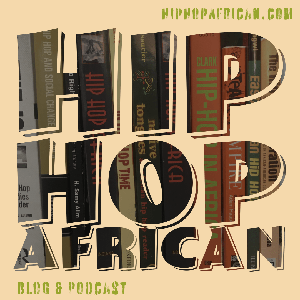

In this solo episode of The Hip Hop African Podcast, Msia explores the question: What is Hip Hop Studies?
The episode approaches Hip Hop Studies from an African Studies and cultural studies perspective. Msia explains that Hip Hop Studies is not simply the study of rap music. It is an interdisciplinary field that examines hip-hop culture as performance, politics, language, identity, pedagogy, social critique, and global knowledge production.
The episode traces the growth of Hip Hop Studies in the academy, including Howard University’s historic role in hosting one of the first university hip-hop courses and conferences in 1991. It also discusses the rise of Hip Hop Studies programs at institutions such as the University of Arizona, Bowie State University, North Carolina Central University, and Howard University.
Msia highlights the field’s foundational texts and scholars, including James Spady, Tricia Rose, Joan Morgan, Bakari Kitwana, Imani Perry, Gwendolyn Pough, Jeff Chang, Samy Alim, Murray Forman, and Mark Anthony Neal.
A major focus of the episode is the place of Africa and the African diaspora within Hip Hop Studies. Msia argues that Africa should not be treated as peripheral to the field or only as a source of influence. Instead, African hip-hop scenes and scholarship must be understood as central to how Hip Hop Studies is being redefined globally.
Link to our list of Hip Hop journals
Hip Hop Studies is not only about where hip-hop began. It is also about where hip-hop travels, how communities use it to narrate their realities, and how Africa and the Global South are reshaping the field itself.
 View all episodes
 By Msia Kibona Clark
5
77 ratings
In this solo episode of The Hip Hop African Podcast, Msia explores the question: What is Hip Hop Studies?
The episode approaches Hip Hop Studies from an African Studies and cultural studies perspective. Msia explains that Hip Hop Studies is not simply the study of rap music. It is an interdisciplinary field that examines hip-hop culture as performance, politics, language, identity, pedagogy, social critique, and global knowledge production.
The episode traces the growth of Hip Hop Studies in the academy, including Howard University’s historic role in hosting one of the first university hip-hop courses and conferences in 1991. It also discusses the rise of Hip Hop Studies programs at institutions such as the University of Arizona, Bowie State University, North Carolina Central University, and Howard University.
Msia highlights the field’s foundational texts and scholars, including James Spady, Tricia Rose, Joan Morgan, Bakari Kitwana, Imani Perry, Gwendolyn Pough, Jeff Chang, Samy Alim, Murray Forman, and Mark Anthony Neal.
A major focus of the episode is the place of Africa and the African diaspora within Hip Hop Studies. Msia argues that Africa should not be treated as peripheral to the field or only as a source of influence. Instead, African hip-hop scenes and scholarship must be understood as central to how Hip Hop Studies is being redefined globally.
Link to our list of Hip Hop journals
Hip Hop Studies is not only about where hip-hop began. It is also about where hip-hop travels, how communities use it to narrate their realities, and how Africa and the Global South are reshaping the field itself.

106 Listeners

79 Listeners

236 Listeners
15 Listeners

13 Listeners

70 Listeners

1,078 Listeners
312 Listeners

70 Listeners
417 Listeners

26 Listeners

16 Listeners

5 Listeners

12 Listeners
![VYBZ KARTEL - BOOM Medley [Jreall Remix] by DJ Jreall](https://podcast-api-images.s3.amazonaws.com/corona/show/7051762/logo_300x300.jpeg)
0 Listeners