
Sign up to save your podcasts
Or

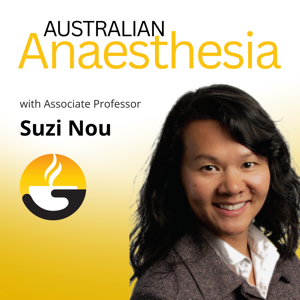

In this episode I chat with Dr Yasmin Endlich, Medical Director at webAIRS, web based Anaesthesia Incident Reporting System. We currently have over 13,000 reports in webAIRS, making it one of the world's largest incident reporting systems.
We chat about the various analyses (currently over 30 underway!), what's happening behind the scenes and how we will be discussing de-identified incident reports at the up and coming Australian Society of Anaesthetists M&M meeting. I also couldn't help discussing safety-II principles - examining what went right to prevent harm rather than only analysing failures.
Three action items to consider:
Three more podcasts on webAIRS:
Ep54. webAIRS with Prof Martin Culwick
Ep57. webAIRS: Lingual Nerve Injury
Ep79. webAIRS: Jaw Dislocation
Some AI generated notes:
Key Takeaways
webAIRS is the world's largest anesthetic incident reporting system with over 13,000 reports, enabling rare event analysis and evidence-based safety improvements across Australia and New Zealand.
Safety-II methodology—analysing what went right in near misses and no-harm events—offers a complementary approach to traditional incident analysis and may drive more effective safety interventions
Implementation science remains underdeveloped in anaesthesia. Most institutions adapt to safety recommendations but rarely publish their implementation processes, limiting knowledge sharing and replication
webAIRS supports institutional M&M programs through anonymous, de-identified case access with categorization tools. ASA is launching exclusive member M&M events using webAIRS data
Registration with webAIRS offers dual benefits: self-reflection and learning for individual reporters, plus contribution to community-wide safety analysis. Reporting is legally privileged, anonymous, and eligible for CPD credit
Quotable Moments
"We understand that the health system is a complex beast, which we as humans are constantly adapting and adjusting or creating workarounds to keep things safe for our patients and usually efficient as well."
"We report a lot. So the numbers of our reports are there. Then they get assessed. But the reporting back and then looking at systems and then looking how to improve things and going up the pyramid to reduce adverse events, that's basically where it stops in most healthcare areas."
"It's not only important for oneself when you report as it's a part of self-reflection. It is a part of working through an incident yourself as well. But it also benefits the wider community."
"We don't want is anybody who has reported an incident feel like, oh, we are not treating the data safely. We 100% are. And it will stay anonymous and it will stay completely de-identifiable as well."
 View all episodes
 By Australian Society of Anaesthetists
In this episode I chat with Dr Yasmin Endlich, Medical Director at webAIRS, web based Anaesthesia Incident Reporting System. We currently have over 13,000 reports in webAIRS, making it one of the world's largest incident reporting systems.
We chat about the various analyses (currently over 30 underway!), what's happening behind the scenes and how we will be discussing de-identified incident reports at the up and coming Australian Society of Anaesthetists M&M meeting. I also couldn't help discussing safety-II principles - examining what went right to prevent harm rather than only analysing failures.
Three action items to consider:
Three more podcasts on webAIRS:
Ep54. webAIRS with Prof Martin Culwick
Ep57. webAIRS: Lingual Nerve Injury
Ep79. webAIRS: Jaw Dislocation
Some AI generated notes:
Key Takeaways
webAIRS is the world's largest anesthetic incident reporting system with over 13,000 reports, enabling rare event analysis and evidence-based safety improvements across Australia and New Zealand.
Safety-II methodology—analysing what went right in near misses and no-harm events—offers a complementary approach to traditional incident analysis and may drive more effective safety interventions
Implementation science remains underdeveloped in anaesthesia. Most institutions adapt to safety recommendations but rarely publish their implementation processes, limiting knowledge sharing and replication
webAIRS supports institutional M&M programs through anonymous, de-identified case access with categorization tools. ASA is launching exclusive member M&M events using webAIRS data
Registration with webAIRS offers dual benefits: self-reflection and learning for individual reporters, plus contribution to community-wide safety analysis. Reporting is legally privileged, anonymous, and eligible for CPD credit
Quotable Moments
"We understand that the health system is a complex beast, which we as humans are constantly adapting and adjusting or creating workarounds to keep things safe for our patients and usually efficient as well."
"We report a lot. So the numbers of our reports are there. Then they get assessed. But the reporting back and then looking at systems and then looking how to improve things and going up the pyramid to reduce adverse events, that's basically where it stops in most healthcare areas."
"It's not only important for oneself when you report as it's a part of self-reflection. It is a part of working through an incident yourself as well. But it also benefits the wider community."
"We don't want is anybody who has reported an incident feel like, oh, we are not treating the data safely. We 100% are. And it will stay anonymous and it will stay completely de-identifiable as well."
545 Listeners

787 Listeners

753 Listeners

112,064 Listeners

17 Listeners

305 Listeners

5 Listeners

6 Listeners

23 Listeners