
Sign up to save your podcasts
Or

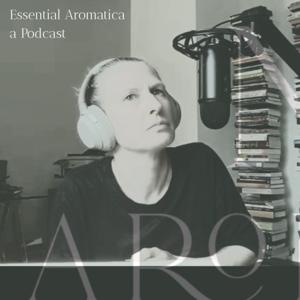


This episode explores aromatherapy, myth, seasonality, and ritual through the lens of Demeter, the archaic goddess of grain, humus, nourishment, and the threshold between life and death. Essential Aromatica blends the art and science of aromatherapy, olfaction, and plant‑based wisdom for listeners seeking an expanded aromatic education.
Before Demeter was framed primarily as Persephone’s mother, she was a sovereign, earth‑bound goddess whose realm encompassed agriculture, ripening, decay, humus, and the cyclical return that defines human life. In this episode, I explore her earlier identity, the meaning of Thesmophoros, the rites of the Thesmophoria, and the Eleusinian Mysteries — experiential rituals of fasting, procession, darkness, illumination, and symbolic rebirth. These rites reveal Demeter’s function: life becomes nourishment, becomes death, becomes life again.
This episode is personal. I reflect on the importance of ritual and how modern life lacks meaningful initiatory rites that shape character and psyche. I share how Demeter’s teachings — descent, dissolution, humus, and return — offer a framework for working with the ego, the shadow, and transformation. I also introduce an essential‑oil synergy for early autumn featuring carrot seed, cardamom, and other wonderful aromatic allies aligned with Demeter’s season of nourishment, grounding, and descent. The episode closes with an original poem, The Rotting Return, composed to honor Demeter’s chthonic wisdom.
Keywords: aromatherapy, essential oils, Demeter, Eleusinian Mysteries, Thesmophoria, ritual, archetypes, mythology, autumn, psyche, transformation.
Sources of note:
Vinciane Pirenne-Delforge. Demeter as Thesmophoros: What Does She Bring Forth?. Alaya Palamidis; Corine Bonnet. What’s in a Divine Name?, De Gruyter, pp.185-204, 2024, 978-3-11-132651-1. ⟨10.1515/9783111326511-011⟩. ⟨hal-04799047⟩
Investigating the psychedelic hypothesis of kykeon, the sacred elixir of the Eleusinian Mysteries; https://doi.org/10.1038/s41598-026-39568-3
This episode explores aromatherapy, myth, and aromatic extracts through the lens of Medusa: the ancient Gorgoneion, a boundary keeping feminine force that guarded thresholds and petrified danger. Essential Aromatica blends the art and science of aromatherapy, olfaction, and plant-based wisdom for listeners seeking an expanded aromatic education.
Before Medusa was recast as a monster and beheaded by Perseus, she was a Gorgoneion: a fierce symbol placed at sacred thresholds, food stores, ovens, and ritual spaces to stop wrongdoing and turn harmful forces away. In this episode, I trace how the Gorgoneion became the Gorgon and then Medusa, and why reclaiming the original function matters psychologically today.
This episode is personal. I’ve been holding Medusa’s aegis metaphorically at my heart while working with psychosocial-energetic boundaries. I share an original poem, titled “Destructive Distillation: Creation of an Aromatic Aegis” and introduce fire born aromatic extracts, including Choya Luban, and Alligator Juniper struck by lightning as aromatic allies to support boundary keeping.
Keywords: aromatherapy, essential oils, medusa, gorgon, archetypes, plant medicine, boundary keeping, feminist mythology, feminism.
Sources of note:
The cover art contains Franz von Stuck’s Medusa II.
Finlayson C, Gutierrez Lopez JM, Reinoso delRio MC, Saez Romero AM, Giles Guzman F, et al. (2021) Wheremyth and archaeology meet: Discovering the Gorgon Medusa’s Lair. PLOS ONE16(4): 0249606. https://doi.org/10.1371/journal.pone.0249606
Feldman, Thalia. “Gorgo and the Origins of Fear.” Arion:A Journal of Humanities and the Classics, vol. 4, no. 3, 1965, pp. 484–94. JSTOR, http://www.jstor.org/stable/20162978.Accessed 24 Aug. 2026.
Lazarou, Anna. “Prehistoric Gorgoneia: a CriticalReassessment.” Studia Antiqua Et Archaeologica, vol. 25, no. 2, 2019, pp.353–385.
This episode continues season five’s exploration of aromatherapy, essential oils, archetypes, and seasonality, with Episode 8 featuring Carrot Seed (Daucus carota) essential oil and the Hera goddess archetype. Essential Aromatica blends the art and science of aromatherapy, seasonal and lunar themes, and plant-based wisdom for listeners seeking an expanded aromatic education.
In this episode, I explore Hera’s original civic sovereignty—governance, continuity, and civility—in real-world moments when social order falters. We are in mid-summer, when heat amplifies Zeus and Ares, and the need for Hera’s stabilizing container becomes apparent, but only when she removes herself and things fall apart.
I then turn to Carrot Seed essential oil as a mature, mid-to-late summer aromatic ally: dry, earthy, unadorned, and structurally supportive. This plant and its essential oil are utterly Hera. I share its grounding and continuity-focused qualities, share my poem written for Queen Anne’s Lace, and offer essential oil guidance and safety notes. [1, 2, 3]
Find the full plant profile here: https://nycaromatica.com/carrot-seed-essential-oil/
Find the poem here: https://nycaromatica.com/a-poem-for-queen-annes-lace/
Keywords: aromatherapy, essential oils, plant medicine, olfaction, herbalism, archetypes, goddess Hera, carrot seed essential oil, civics, Greek gods, Greek goddesses, botanical intelligence, seasonal wellness, depth psychology
Aphrodite, Zeus, Eros, Myrtle, and Laurel come together in this early summer audio essay exploring archetypes, seasonality, and the embodied intelligence of aromatic plants and aromatherapy.
Season 5, Episode 7 traces Aphrodite’s primordial origins, her solar yin brilliance, and her dark, warrior lineage long overshadowed by patriarchal retellings. We look at how Aphrodite embodies Eros — the spark of creation, aliveness, and valuation — and why she requires a Healthy Zeus: the steady sky container capable of holding her transformative force without collapsing into domination.
Through mythology, seasonality, and embodied aromatherapy, we explore:
• Aphrodite as solar yin — radiance, relationality, alchemy, and the Sublime
• Zeus as mature yang — structure that serves life, not ego
• Eros as the primordial lifeforce that demands presence and awakens the soul
• Myrtle (Myrtus communis) as Aphrodite’s refined, relational yin
• Laurel (Laurus nobilis) as Zeus’s bold clarity and soul igniting fire
Together, these archetypes and plants illuminate the polarity of early summer: aliveness needing a container, and structure needing soul.
Aromatherapy, mythology, and seasonal intelligence converge here — an invitation to meet the world with presence, courage, and the spark of Eros.
Cover Art Artwork by Marco Luccio, from the series "Reverse Archaeology: Metamorphosis of Aphrodite". Used with permission. Explore the full series: marcoluccio.com.au
Plant Allies Full articles + garden plant talk videos for Myrtle and Laurel at nycaromatica.com
Referenced in this Episode This Jungian Life podcast episode APHRODITE’S SHADOW: Drowning in Beauty
This episode explores Apollo, the Muses, Memory, and Helichrysum—where mythology, culture, and aromatherapy meet.
As the season turns from Artemis to Apollo, I look at what happens when the young yang aspects of the psyche mature into clarity, direction, and mastery — and what collapses when that masculine principle forgets its lineage. We explore the Muses as channels of collective memory, Mnemosyne as the river that keeps hubris in check, and Apollo Musagetes as the conductor who can only function when he’s in right relationship with them.
I talk about the Duchamp exhibit at MoMA and the cultural drift into “look culture,” drawing on Sophie Gilbert’s Girl on Girl and the long shadow of the AIDS crisis — how desire moved into the visual realm and left us with a disembodied gaze. We trace how this shift severed Apollo from the Muses, leaving us with spectacle instead of depth, performance instead of relationship.
And then we return to the body — to aromatherapy as an embodied antidote. To the intelligence of aromatic molecules and their direct line to memory, emotion, and meaning. This leads us to Helichrysum — Immortelle — a plant of memory and deep healing. A plant that cools swollen yang, steadies drifting yin, and reminds us that creation is never ours alone.
If you’re drawn to myth, memory, culture, and the living intelligence of aromatic plants, this episode will meet you where you are.
Access the companion article here.
In this Flower Full Moon episode, Amy Anthony (NYC aromatherapist) explores how instinct rises in May — not as chaos, but as young yang emerging. Through a mythic ecological lens, she turns to Artemis and Pan to understand this seasonal polarity shift: mature yin creating the boundary that protects new vitality.
Amy begins with a reading of Carol Tufts’ “Hades and Persephone,” then traces how winter’s containment gives way to spring’s full-on blossoming of play, appetite, and instinct. She explores Jung’s instinctual map, the ecology of protection, and shares a new myth she wrote for this season — a tale of Artemis and Pan that reveals what happens when instinct ignores the boundary that holds it.
The episode closes with Violet Leaf, the Artemis of plants: cool, shaded, and uninterested in anyone’s nonsense. A plant ally for Flower Moon time, Violet moderates rising yang with cool clarity rather than control.
This episode weaves aromatherapy, myth, seasonal ecology, and psyche into one seasonal teaching: young-yang vitality stays whole only when a clear, unsentimental boundary holds it — not coddling, not controlling, simply holding the field so instinct doesn’t collapse into chaos.
Read the companion article — with two poems for Artemis and more information on Violet Leaf.
Access: Amy's Free Online Library of classes and articles.
“Life returns because death has done its work.” In this episode of Essential Aromatica, NYC-based aromatherapist Amy Anthony explores the seasonal shift of spring emergence through the Persephone archetype.
We meet Persephone not as a victim, but as the living axis between the Great Below and the Great Above. Through mythic ecology, seasonal intelligence, and sensory awareness, we follow her movement from winter’s watery unconscious into the first stirrings of spring and new consciousness.
The pomegranate appears as both symbol and botanical teacher. Its fixed oil, resilient and desert-adapted, offers nourishment for the skin and mirrors the regenerative truths of the season.
Episode Highlights:
Image credit: Pomegranate photograph by Mark Kirsch. Used with permission. @_markkirsch | Web: MARK|KIRSCH
Resources Mentioned:
Explore the free aromatherapy library
Fou Gallery: Sensing the Space
Mother Earth Living Article: Carrier Oils
Sources:
Parker, S. (2014). Power of the Seed. Port Townsend: Process Media.
Ramadan, M. (2020). Cold Pressed Oils: Green Technology, Bioactive Compounds, Functionality, and Applications. London: Academic Press.
Ronnberg, A. (. (2010). The Book of Symbols: Reflections on Archetypal images. Taschen.
Thunder Beneath the Water’s Edge moves through late‑winter’s deep Yin — the dragon coil, the Worm Moon stirring, and Lilith’s refusal to remain unconscious — and grounds it all through the lens of aromatherapy. This episode traces the first subtle movement before emergence: the soil softening, sap rising, worms shifting underground, and the psyche waking from within. It’s a moment of instinct, intuition, and inner truth, and the aromatic plants we explore are chosen not for activation, but for holding space for dream‑life, rest, and the slow gathering of healthy yang.
You’ll hear how archetypes like Lilith, the dragon, and the ouroboros map onto this seasonal threshold, why sleep and dreams matter so profoundly right now, and how forcing outwardness too soon disrupts our ecology. Then we turn to the botanicals that support this moment — Lavender, Roman Chamomile, Vetiver, Valerian, Spikenard, Mugwort, and Sweet Gale — each offering grounding, clarity, or dream‑support in their own way. This is aromatherapy as a companion to emergence: spacious, protective, and attuned to the subconscious.
The episode closes with a new poem written during this Worm Moon season — a reflection on pressure building beneath the surface and the quiet truth that stirs inside.
Links:
Free Online Library: Articles & Courses
Essential Oils for Enhancing Sleep eBook
In this deep‑winter episode of Essential Aromatica, we encounter Atlas Cedar essential oil through aromatherapy, story, poetry and sound — meeting Cedar as a grounding, protective ally for the season and inner‑work. Soul work.
Through Yuliana Kireyeva’s olfactory‑sonic composition, a winter fairy tale, poetry, and aromatherapy insights, we meet Cedar as both archetype and holistic aromatherapeutic ally. We explore Cedar’s ecology, its aromatic analogues, and its therapeutic applications — from the physical body to the nervous system and the archetypal realm.
Cedar embodies the elder yang: warm, spacious, quietly watchful, and deeply supportive in times of transition. If you’re navigating your own inner winter, this episode offers a grounded, steady place to rest.
A companion article with deeper ecology, aromatherapy insights, and a gentle winter practice is available here:
nycaromatica.com/atlas-cedar-essential-oil
You’re also welcome to explore my free learning library — a collection of practical aromatherapy and herbalism classes to support your wellbeing:
nycaromatica.com/online-learning
Essential Aromatica is an aromatherapy podcast exploring aromatic plants, essential oils, seasonal rhythms, and the intelligence of the natural world. I’m Amy Anthony of NYC Aromatica — aromatherapy practitioner, educator, and lifelong observer of the subtle — inviting you into a space where plants, cycles, and our inner and outer worlds meet.
This podcast isn’t about “an oil for that.” It’s about perceiving. Attuning. Remembering that our nervous system and emotions are the meeting point between mind‑body‑spirit and the wider world — and that aromatherapy can support that relationship.
Episodes explore aromatic plants, story, ecology, and lunar and seasonal themes. We sit with plants like Myrrh, Juniper, Lavender, and Scots Pine not as tools, but as allies and teachers. We tap into folklore, archetypes, and the liminal places where transformation becomes possible.
You’ll also hear from practitioners, distillers, and aromatic thinkers who share their lived relationships with plants and practice.
Whether you’re an aromatherapy practitioner, a curious seeker, or someone drawn to deepening your relationship with the natural world, Essential Aromatica offers a place to slow down, breathe, and connect — with me and the essential oils as your guides.
Learn more at nycaromatica.com.
From the publisher's feed

892 Listeners
517 Listeners
631 Listeners