
Sign up to save your podcasts
Or

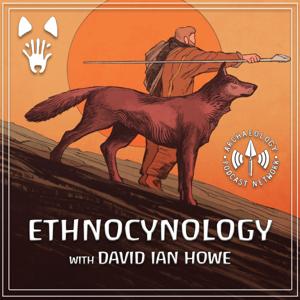


In this episode of Ethnocynology, David Ian Howe sits down with legendary Yellowstone wolf observer and author Rick McIntyre to discuss what decades of watching wild wolves have taught him about their complex social lives. Rick shares stories of some of Yellowstone’s most famous wolves, including Wolf 8 and Wolf 21, exploring leadership, adoption, family bonds, personality, cooperation, conflict, and even mercy.
The conversation also travels back into the Ice Age to ask what the first human hunter-gatherers may have seen in wolves and how that relationship could have eventually produced the domestic dog. Rick discusses how wolves may have entered human communities, why their family-oriented social structure made them uniquely compatible with people, and how wolves and early humans may have learned to hunt, cooperate, and live alongside one another.
TranscriptsHosted by Simplecast, an AdsWizz company. See pcm.adswizz.com for information about our collection and use of personal data for advertising.
Christopher Nolan’s The Odyssey has been out for a few weeks, but how does it hold up to a panel of archaeologists and classicists?
In this episode, I’m joined by archaeologist, author, and YouTuber Raven Todd DaSilva, classicist, researcher, and PhD student Cosima Carnegie, and classicist and ancient dog expert Dr. Alyce Cannon to break down Nolan’s The Odyssey from the perspectives of archaeology, ancient history, and the original Homeric epic.
So how accurate is Christopher Nolan’s The Odyssey? And more importantly: does it actually matter? Let us know!
Links:Hosted by Simplecast, an AdsWizz company. See pcm.adswizz.com for information about our collection and use of personal data for advertising.
Ethnocynology with David Ian Howe is taking a break this week, so please enjoy this episode of the Rock Art Podcast! In this episode, Alan speaks with Stephen Alvarez about his new book, Rock Art: An American Story, exploring the enduring significance of rock art across North America. They discuss Indigenous perspectives, the sacredness of rock art sites, and how ancient imagery continues to connect people with place, culture, and history. The conversation also considers the challenges of interpreting and dating rock art, and the importance of respecting and protecting these remarkable records of the past.
Hosted by Simplecast, an AdsWizz company. See pcm.adswizz.com for information about our collection and use of personal data for advertising.
In this episode of Ethnocynology, I sit down with dog science communicator Alexandra the Average for a wide-ranging conversation about dogs, science, identity, and the ways our own cultural biases shape how we understand dogs themselves.
Alexandra discusses her approach to navigating misinformation in the dog and animal-welfare world, including why she relies on multiple studies rather than individual papers. But also the importance of reading beyond the abstract, and how scientific findings can become messy once they reach social media.
The conversation dives into some of the most persistent debates surrounding dogs, including pit bull stereotypes, breed and temperament, dog-bite statistics, veterinary bias, and how race and socioeconomic inequality can affect people's experiences with animal welfare and adoption.
We also explore the deeper history behind our relationships with dogs, like the use of dogs as status symbols to the effects of colonialism on Indigenous dog populations. We discuss how dogs can become wrapped up in human identity, prejudice, politics, and even colonial violence, illustrating why the history of dogs can never really be separated from the history of people.
Alexandra also discusses her upcoming podcast, Pod Reviewed Research, which explores the human-animal connection, animal welfare, legislation, history, and culture through detailed, research-heavy conversations.
For a rough transcript head over to: https://www.archaeologypodcastnetwork.com/ethnocynology/43
Hosted by Simplecast, an AdsWizz company. See pcm.adswizz.com for information about our collection and use of personal data for advertising.
In this episode of the Ethnocynology, David talks with long time friend, Dr. Devin Pettigrew, the leading expert in the history and ballistics of the atlatl.
After a recent paper came out by Eren et al, claiming that Clovis hunters were only scavengers, Devin and David dive into the paper and discuss the role of hunting in human history as well as the history of the Atllatl, and how the Clovis people would’ve hunted across the North American landscape.
They also then discuss Devin’s future research and what this means for the field.
For a rough transcript head over to: https://www.archaeologypodcastnetwork.com/ethnocynology/42
Hosted by Simplecast, an AdsWizz company. See pcm.adswizz.com for information about our collection and use of personal data for advertising.
In this solo episode, David shares stories from two unforgettable weeks in Wyoming—from excavating an ancient Bison antiquus at the Willow Springs archaeological site to spending a day tracking wolves in Yellowstone National Park with wildlife guide Evan Stout.
Along the way, he reflects on field archaeology, the challenges of living with permanent neuropathy after Guillain-Barré syndrome, the history of Yellowstone, wolf conservation, and why observing wild wolves offers a unique window into understanding the dogs that have shared our lives for thousands of years.
Whether you're interested in archaeology, wildlife, human evolution, or America's national parks, this episode is a behind-the-scenes look at two worlds that are more connected than they might seem.
For a rough transcript head over to: https://www.archaeologypodcastnetwork.com/ethnocynology/41
Hosted by Simplecast, an AdsWizz company. See pcm.adswizz.com for information about our collection and use of personal data for advertising.
In this episode of Ethnocynology, David continues his conversation with Bradley Rydholm of Nature Is Not Metal to discuss animal cognition, ecology, and humanity’s relationship with the natural world. Bradley shares the story behind his popular Instagram page, his work as an outdoor educator, and why he believes wild animals possess rich social lives and individual personalities that are often overlooked.
The conversation explores everything from wolves to topics like anthropomorphism, cooperation in nature, and the emotional lives of animals. David and Bradley also discuss how experiences in the wilderness can change the way people view themselves, other species, and the world around them.
Finally, they examine environmental philosophy, the challenges of communicating science online, and why both dogs and wild animals can help reconnect us to a deeper understanding of nature and our place within it.
Books Mentioned:
For a rough transcript head over to: https://www.archaeologypodcastnetwork.com/ethnocynology/40
Hosted by Simplecast, an AdsWizz company. See pcm.adswizz.com for information about our collection and use of personal data for advertising.
In this episode of Ethnocynology, David sits down with Bradley Rydholm of Nature Is Not Metal to discuss animal cognition, ecology, and humanity’s relationship with the natural world. Bradley shares the story behind his popular Instagram page, his work as an outdoor educator, and why he believes wild animals possess rich social lives and individual personalities that are often overlooked.
The conversation explores everything from wolves to topics like anthropomorphism, cooperation in nature, and the emotional lives of animals. David and Bradley also discuss how experiences in the wilderness can change the way people view themselves, other species, and the world around them.
Finally they examine environmental philosophy, the challenges of communicating science online, and why both dogs and wild animals can help reconnect us to a deeper understanding of nature and our place within it.
Books Mentioned:
For a rough transcript head over to: https://www.archaeologypodcastnetwork.com/ethnocynology/39
Hosted by Simplecast, an AdsWizz company. See pcm.adswizz.com for information about our collection and use of personal data for advertising.
In this episode of Ethnocynology, David chats with friend of the show Dr. Alyce Cannon, who is an expert in classics and dogs in the classical world.
The discussion begins with an overview of Alyce’s research an ancient Greece and how dogs appear in pottery after the great Athenian plague.
Then they begin to discuss Odysseus’s dog Argos in Home’s Odyssey: his roles, significance, and sad story. And discussed as well as whether or not he will be in the new Christopher Nolan version of the epic poem.
Towards the end of the episode, the two discuss dogs and popular media and why the dog always has to die in films, and what this means for the human mind and it’s connection to the ancient Classics.
For a rough transcript head over to: https://www.archaeologypodcastnetwork.com/ethnocynology/38
Hosted by Simplecast, an AdsWizz company. See pcm.adswizz.com for information about our collection and use of personal data for advertising.
In this Q&A episode of Ethnocynology, David answers listener questions about dogs, archaeology, human evolution, and the ancient past. From whether Neanderthals had dogs, to why humans mourn dogs so deeply, to what ancient people may have named their dogs, this episode explores the relationship between humans and dogs across history. David also discusses archaeological misconceptions, Ice Age societies, ancient dog breeds, civilization, language, and what life may have actually looked like 20,000 years ago.
Hosted by Simplecast, an AdsWizz company. See pcm.adswizz.com for information about our collection and use of personal data for advertising.
From the publisher's feed

91,018 Listeners

43,827 Listeners

32,017 Listeners
4,839 Listeners

6,224 Listeners
24,539 Listeners
3,613 Listeners
5,862 Listeners