
Sign up to save your podcasts
Or

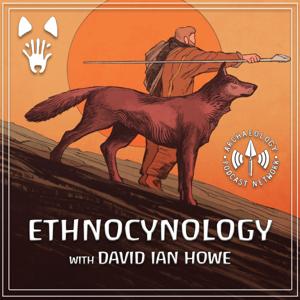
By The Archaeology Podcast Network


4.7
1919 ratings


The podcast currently has 53 episodes available.
The most played episodes among Podcast App listeners.
In this episode of the Ethnocynology, David talks with long time friend, Dr. Devin Pettigrew, the leading expert in the history and ballistics of the atlatl. After a recent paper came out by Eren et al, claiming that Clovis hunters were only scavengers, Devin and David dive into the paper and discuss the role of hunting in human history as well as the history of the Atllatl, and how the Clovis people would’ve hunted across the North American landscape. They also then discuss Devin’s future research and what this means for the field. Transcripts For a rough transcript head over to: https://www.archaeologypodcastnetwork.com/ethnocynology/42 Links: The History of Dogs davidianhowe.com Davidianhowe.com/store ArchPodNet APN Website: https://www.archpodnet.com APN on Facebook: https://www.facebook.com/archpodnet APN on Twitter: https://www.twitter.com/archpodnet APN on Instagram: https://www.instagram.com/archpodnet APN Shop Affiliates Motion Hosted by Simplecast, an AdsWizz company. See pcm.adswizz.com for information about our collection and use of personal data for advertising.

In this episode of ethnocynology David sits down with Dr Alyce Cannon for part two of their episode on dogs in ancient Greece. In the previous episode, Dr. Cannon brought up some fascinating topics about dogs in the classical world, specifically Athens, after catching up on life for a bit. At the end of the episode, he left it up to the audience to submit some questions for Dr. Cannon for part two. In this episode, David asks Dr. Cannon about dogs and ancient Greek warfare, life at home, and whether or not dogs were kept as pets. They then dive into the questions post by the audience in the previous episodes YouTube comments, one specifically regarding dogs, helping the disabled in the ancient world.Transcripts For rough transcripts of this episode go to https://www.archpodnet.com/ethnocynology/06Links: davidianhowe.com Davidianhowe.com/store Https://www.instagram.com/historydoggos/ArchPodNet APN Website: https://www.archpodnet.com APN on Facebook: https://www.facebook.com/archpodnet APN on Twitter: https://www.twitter.com/archpodnet APN on Instagram: https://www.instagram.com/archpodnet Tee Public Store: https://www.teepublic.com/stores/archaeology-podcast-network?ref_id=5724Affiliates Motion Hosted by Simplecast, an AdsWizz company. See pcm.adswizz.com for information about our collection and use of personal data for advertising.
In this episode of ethnocynology David sits down with recently minted PhD, Dr Alyce Cannon. David and Elise have known each other for the past 5 years through their work talking about dogs on social media. Alyce is a Sydney Australia based classicist and archaeologist who did her research on the ancient world and human animal interactions in ancient Greece specifically. David and Alyce begin by catching up on life and David congratulates her on recently achieving her status as a phd. They then catch up about the state of the world and American versus Australian culture. The meat of the episode then begins where Elise starts talking about her dissertation (or thesis) regarding human and animal interactions in ancient Greece and how dogs appear in pottery, zooarchaeology, and in oral tradition. and specifically, the oral tradition is quite interesting as a lot of stories refer to dogs derogatorily, and how that changes to a more positive light over time. They then end the episode on the subject of a future episode where dogs in Warfare and their roles in everyday life can be discussed. Https://ww.instagram.com/historydoggos/Transcripts For rough transcripts of this episode go to https://www.archpodnet.com/ethnocynology/05Links: davidianhowe.com Davidianhowe.com/storeArchPodNet APN Website: https://www.archpodnet.com APN on Facebook: https://www.facebook.com/archpodnet APN on Twitter: https://www.twitter.com/archpodnet APN on Instagram: https://www.instagram.com/archpodnet Tee Public Store: https://www.teepublic.com/stores/archaeology-podcast-network?ref_id=5724Affiliates Motion Hosted by Simplecast, an AdsWizz company. See pcm.adswizz.com for information about our collection and use of personal data for advertising.
In this episode of Ethnocynology with David Ian Howe, David gives an introduction to an idea he’s had for a while to discuss and explore the anthropological themes of apocalyptic fiction. Apocalypse stories are often set in a bleak world, telling bleak stories. Yet they are fundamentally always HUMAN stories, using a bleak world to explore questions regarding philosophy, morality, and above all…what it means to be human. But in these stories, the philosophical aspects of what it means to be human are often explored. Yet I think a reason we are so addicted to these stories is that we have a yearning to explore the lives of our past, zoological selves. It’s hard to write a story about the Paleolithic…the set design, the languages, the limited world restricted by the fear of shitty animation (mammoths, ice age fauna). Yet in [post apocalypse stories, we explore the world before civilization, by exploring the world after it. It’s far easier to portray English speaking humans behaving zoologically in the ruins outside of Boston, than it is a period piece set in Paleolithic France with proto-dene-Caucasian subtitles. We yearn to live in a world without our modern complexities and burdens (last march of the Ents). If you don’t believe me, think of how much money we spend on hiking, camping, and traveling to areas to spend a day, let alone a week a year outside? Then we must ask for PTO. We must pay for gas, or a plane ticket, or even a campsite – we literally pay to sleep in nature (albeit I don’t mind bc the money goes to keeping the area natural). So in stories like the Last of US, I Am Legend, and Station Eleven, we explore stories In what I would call the Organic Apocalypse. A world reclaimed by nature, where the earth very much alive, green, and returned to it’s natural state, rid of the disease of humans.Transcripts For rough transcripts of this episode go to https://www.archpodnet.com/ethnocynology/04Links: davidianhowe.com Davidianhowe.com/storeArchPodNet APN Website: https://www.archpodnet.com APN on Facebook: https://www.facebook.com/archpodnet APN on Twitter: https://www.twitter.com/archpodnet APN on Instagram: https://www.instagram.com/archpodnet Tee Public Store: https://www.teepublic.com/stores/archaeology-podcast-network?ref_id=5724Affiliates Motion Hosted by Simplecast, an AdsWizz company. See pcm.adswizz.com for information about our collection and use of personal data for advertising.
In this episode of Ethnocynology with David Ian Howe. David takes his listeners through a POV descriptions of what it’s like to scientifically excavate a large animal at an archaeological site.Transcriptshttps://www.archpodnet.com/ethnocynology/3Links: davidianhowe.com Davidianhowe.com/storeArchPodNet APN Website: https://www.archpodnet.com APN on Facebook: https://www.facebook.com/archpodnet APN on Twitter: https://www.twitter.com/archpodnet APN on Instagram: https://www.instagram.com/archpodnet Tee Public Store: https://www.teepublic.com/stores/archaeology-podcast-network?ref_id=5724Affiliates Motion: https://www.archpodnet.com/motion Hosted by Simplecast, an AdsWizz company. See pcm.adswizz.com for information about our collection and use of personal data for advertising.
The podcast currently has 53 episodes available.

90,920 Listeners

43,917 Listeners

32,085 Listeners
4,860 Listeners

6,227 Listeners
24,577 Listeners
3,624 Listeners
5,874 Listeners