
Sign up to save your podcasts
Or

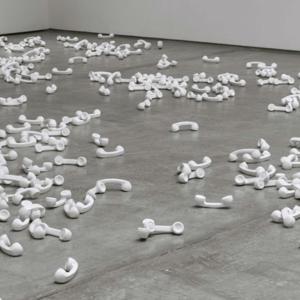


Image via: Andy Adams instagram.
In this episode of Explain Me we talk to Andy Adams (FlakPhoto on instagram), a culture producer and long time digital director. Andy is the founder of FlakPhoto Projects, an international community of photographers that operates in a parallel path to the one Powhida and Johnson come from—the New York based studio and museum world. Andy, William, and Paddy began working online around the same time—2003-2005, so we start our conversation there. We track through the exuberance and possibility we saw online in the early aughts, the economic collapse of the late aughts, and fraught political environment we’re now navigating. Subjects include: The signature Flak Photo style, the ethics of documentary photography, and the the postponed Guston show at the Tate.
References and reading:
Instagram: @photographersvote #photographersvote
Two Museums Tried to Sell Art. Only One Caught Grief About it. New York Times
Guston Can Wait. Nikki Columbus, N+1
Contra-Internet, Zach Blas, e-flux Journal
In this episode of Explain Me, critic and curator Antwaun Sargent joins us to discuss the effects of the pandemic and Alex Greenberger's Zombie Figuration, a confusing essay that appeared earlier this month in ARTnews. In the first half hour we discuss the disparate effects of the pandemic and general politics. Then we move on to art, zombies, race, and why art has limits.
BIOGRAPHY
Antwaun Sargent is an art critic and a writer who has contributed to The New York Times, The New Yorker, Vice and more, as well as essays to multiple museum publications. His first book, “The New Black Vanguard: Photography between Art and Fashion” (Aperture) is out now. In April he announced a new partnership with Gagosian that will include working on four exhibitions and contributing features to their magazine. Follow him on Twitter and Instagram.
LISTENER ADVISORY: In this episode, Paddy Johnson occasionally repeats Antwaun Sargent's words when his audio cuts out. This leads to periodic moments when Johnson and Sargent speak at the same time.
LINKS
EARLY WHITNEY BIENNIAL REVIEWS
Find us on Spotify, Stitcher, and Apple Podcasts
Artist Nayland Blake joins the podcast to discuss the murder of George Floyd at the hands of a white police officer, mass protests, and the resurgence of COVID as the backdrop for public art and how museums are addressing diversity. Spearheaded in large part by Blake, we discuss all of these issues through the lens of what people need and how art makers, art workers and arts institutions answer that need.
We started the conversation with Blake's recent twitter thread on art criticism.
"Art criticism is the activity of thinking with and through art objects," they wrote. "If you constantly reach for the same few objects to think with, you stagnate as a critic and simply reinforce your own bias."
Other relevant links mentioned in the show:
Support Explain Me by becoming a member on Patreon.
This week on Explain Me, co-hosts William Powhida and Paddy Johnson talk to arts organizers and activists Heather Bhandari and Nikki Columbus about the challenges for mothers during the pandemic, and the challenges for arts workers seeking to make changes to a system that no longer works for them.
Of the family-focused topics discussed we take on pandemic screen time for kids (Bhandari describes DinoTrux as terrible for kids, but a necessary evil), what to do if your toddler licks a bodega door, and disrupted schedules that make it impossible to find or look for work and require long and often unusual hours.
On the subject of organizing we discuss several projects spearheaded by Bhandari and Columbus respectively designed to pave actionable paths for artists.
Finally we discuss Frieze New York, and contrast their dubious charity efforts during the fair to the more collective NADA art fair model that works towards a sustainable model for everyone. Show links below.
The Art World Conference
Forward Union
Art/Work, Heather Bhandari and Jonathan Melber
N+1, Free Your Mind, by Claire Bishop and Nikki Columbus
Art+Work+Place, Emergency Session I, Veralist Center
Art+Work+Place, Emergency Session II, Veralist Center
Museum transparency Newsletter (Read about all the layoffs and other bad news that’s happening in the museum world right now—of which there is a ton.)
The Model Model: Ethical Actions by Arts Organizations in the time of COVID-19 (Read about the good news and exemplary work by arts organizations.)
Obama Commencement Speech
#graduatetogether2020 (twitter hashtag)
Frieze Art Fair (May 8-15th)
NADA Fair (May 20-June 21)
Serkan Özkaya's Proletarier Aller Länder (Workers of the World) 1999, Image via Postmaster's Gallery.
In this episode of Explain Me, hosts Paddy Johnson and William Powhida talk to Magda Sawon of Postmasters Gallery in New York, and Jonathan Schwartz, the CEO and founder of Atelier4, an arts logistics company based out of New York. The discussion includes stories and conversations you won’t find anywhere else.
Schwartz reports that at least one logistics company is currently breaking the law to ship art, and that Fedex trucks are in short supply because they’re being used to transport the dead.
Magda describes the challenges for galleries which range from financial burdens to the need to better consider the online art environment.
William and Paddy discuss the financial precarity of artists, writers, and educators.
As a group we talk about what needs to be done to respond to the crisis and what is being done. We also make the mini announcement that we will be launching a Patreon for Explain Me in the next week or two. More details on that soon!
We’re looking at a radical shift in opportunity, so this conversation includes a fair amount of debate. We’re also doing it over zoom, with William on the phone due to an internet connectivity issue. This isn’t the best recording quality we’ve ever produced, but it might be the most important episode. Please tune in.
Welcome back to Explain Me! In an effort to produce content a little more regularly we're trying something new: no editing. This means a little more baseless speculation, and off the cuff commentary, in return for actual podcasts! Yes! In this episode we discuss news, art, and trends seen at The Armory, Spring Break and The Independent. Highlights include: The Armory
Spring Break
The Independent
We cover a lot of ground in this episode of Explain Me. That ground looks something like this:
Donna DeSalvo assembles some of Andy Warhol's greatest work for his retrospective at the Whitney Museum, while revelations that Whitney Vice Chair Warren B. Kanders owns a company that sells tear gas used at the border shake museum staff. Soul of a Nation at the Brooklyn Museum looks at the history of political activism, while Jack Waters offers a mix of bag of awe inspiring abject art paired with groan inspiring sculptures and paintings. Jack Whitten at the Metropolitan Museum dazzles, Art and Conspiracy flops, and Amazon is going to drive us all out of our homes. Relevant links below.
Andy Warhol at The Whitney Museum
Whitney Museum Vice Chairman Owns a Manufacturer Supplying Tear Gas at the Border, Hyperallergic
Whitney Museum Staffers Demand Answers, Hyperallergic
Soul of a Nation, Art in the Age of Black Power at the Brooklyn Museum
John Waters: Indecent Exposure at the Baltimore Museum of Art
Jack Whitten at the Metropolitan Museum of Art (Closed Dec 2)
Everything is Connected: Art and Conspiracy at the Metropolitan Museum of Art
Amazon Headquarters Will Come to Long Island City: Curbed Explainer
ASAP Pledge Not to Take Crumbs from Amazon
It's been a rough news week. Between Thursday's testimonies of Dr. Christine Blasey Ford and Judge Brett Kavanaugh before the Senate Judiciary Committee, and Kavanaugh's near appointment to the Supreme Court Friday, many of us are exhausted. We would like a win for women.
Sometimes the quickest way to achieve that is to do it yourself. As such, this episode of Explain Me celebrates women who have made waves in the world of art and activism, through a series of interviews with four major figures—Mia Pearlman, Jenny Dubnau, Nancy Kleaver, and Mira Schor.
In the first half of the show, Mia Pearlman and Jenny Dubnau talk about their work pushing for changes at the city and state level and how being an artist makes that job easier. In the second half, Paddy Johnson and Nancy Kleaver talk about their new public art organization, PARADE, and Mira Schor talks about the history of feminism in art from the 1970's through to today, and her contributions. Stream it. Download it. Listen to it. This one's important.
From the publisher's feed