
Sign up to save your podcasts
Or

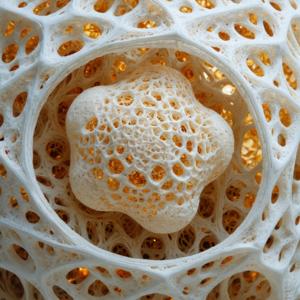


'The Reef' visualizes a decentralized, localized resource exchange network built on a tactile ‘Value Token’ system, reflecting the emergent behavior of trust and mutual aid in a post-collapse world.
Project Link: design-frontier.com
Economic systems are complex. 'The Reef' visualizes a decentralized resource exchange in 2026, following the collapse of centralized finance. Inspired by coral reef ecosystems, this speculative model explores a 'Value Token' system reflecting trust and mutual aid within resource-scarce communities, probing alternative currencies rooted in local ecology and human connection.
2026: Following the collapse of centralized finance and unsustainable global supply chains, communities retreated inwards. The Seychelles, shielded by its relative isolation, fosters localized resource exchange networks. 'The Reef', inspired by its namesake’s interconnectedness, emerged as a model for mutual aid. Trust, localized ecological knowledge, and tactile 'Value Tokens' form the foundation of this new economy.
Consider 'The Reef' as a provocation. Are our current economic trajectories sustainable? Reflect on the fragility of centralized systems. Ask yourself: what alternative models could foster resilience and interdependence in a resource-scarce future?
We hope this episode sparked your imagination and offered new perspectives on the fascinating intersection of design, technology, and culture. If you enjoyed this journey into speculative design, don’t forget to subscribe, leave a review, and share it with others who might love exploring the possibilities of tomorrow. Until tomorrow, keep dreaming, imagining, and pushing the boundaries of what’s possible. See you in the future!
Keywords: decentralized finance, resource exchange, value token, emergent behavior, ecological economics, mutual aid, geometric abstraction, surrealism, Seychelles, post-collapse
A quantum-encrypted obsidian tablet records citizen contributions to sustainability, reflecting the delicate balance of a planned economy in 2026 El Salvador.
Project Link: design-frontier.com
Imagine a world where economic stability hinges on ecological balance. In 2026 El Salvador, "The Obsidian Ledger" embodies this delicate tension. This quantum-encrypted obsidian tablet, etched with blockchain transactions, records citizens' contributions to sustainability, determining their access to limited resources. Explore how ancient mythology intersects with cutting-edge quantum computing, prompting reflection on collective good versus individual freedom.
El Salvador, 2026. Volcanic peaks dominate a landscape meticulously managed for ecological balance. Citizens, accustomed to a centralized economy, navigate a social credit system linked to sustainability goals. The Cipitio, once a mischievous spirit of folklore, is now revered as a guardian of this delicate ecosystem, its image adorning public murals celebrating the collective good.
The Obsidian Ledger invites viewers to question the future of economic and ecological balance. Consider the implications of prioritizing collective good over individual freedoms. Are current sustainability efforts sufficient? What role will technology play in shaping our future relationship with resources?
We hope this episode sparked your imagination and offered new perspectives on the fascinating intersection of design, technology, and culture. If you enjoyed this journey into speculative design, don’t forget to subscribe, leave a review, and share it with others who might love exploring the possibilities of tomorrow. Until tomorrow, keep dreaming, imagining, and pushing the boundaries of what’s possible. See you in the future!
Keywords: quantum computing, blockchain, obsidian, El Salvador, sustainability, planned economy, folklore, Cipitio, ethics, resource allocation
An AI-generated tapestry exploring the interconnectedness of human consciousness and ecological harmony in a quantum-enhanced future.
Project Link: design-frontier.com
Quantum computing has changed our world. 'The Whispers of the Qanat' presents an AI-generated tapestry, exploring how quantum simulations have illuminated the intricate relationship between human consciousness and ecological harmony in 2032. Its design, inspired by Afghan qanat systems, invites reflection on the delicate balance between technological advancement and the wisdom of interconnected ecosystems. This fusion of art, science, and ancestral knowledge prompts a thoughtful interplay between cautious optimism and mindful stewardship.
In 2032, quantum simulations have unveiled the interconnectedness of all living systems. This discovery profoundly shapes human values, leading to a renewed focus on ecological harmony and collective well-being. Traditional knowledge systems, like Afghanistan's ancient qanats, are re-evaluated for their inherent wisdom regarding sustainable resource management. This era, characterized by cautious optimism, sees humanity grappling with the ethical dimensions of newfound quantum understanding.
Consider 'The Whispers of the Qanat' as a mirror reflecting our potential future. Are we heading towards a harmonious integration of technology and nature, or are we neglecting the wisdom of interconnected ecosystems? This project invites you to question the current trajectory of technological advancement and its implications for individual consciousness and collective well-being.
We hope this episode sparked your imagination and offered new perspectives on the fascinating intersection of design, technology, and culture. If you enjoyed this journey into speculative design, don’t forget to subscribe, leave a review, and share it with others who might love exploring the possibilities of tomorrow. Until tomorrow, keep dreaming, imagining, and pushing the boundaries of what’s possible. See you in the future!
Keywords: quantum computing, AI-generated art, tapestry, consciousness, ecology, interconnectedness, qanat, Afghanistan, future scenarios, speculative design
Mwana wa Ardhi: bio-robotic farming units blending ancient Comorian wisdom and futuristic technology, offer a fragile hope for food security in a world ravaged by climate change.
Project Link: design-frontier.com
Climate change has reshaped our world. Witness Mwana wa Ardhi, a testament to human ingenuity born from the ashes of ecological collapse. These bio-robotic farming units, infused with ancient Comorian agricultural wisdom and futuristic technology, whisper tales of resilience and adaptation within their intricate robotic forms. They offer a poignant reflection on our relationship with nature and the delicate balance between hope and despair in a changed world.
2027: Desertification has ravaged once-fertile lands, triggering widespread famine and societal upheaval. The remnants of Comorian culture cling to ancestral wisdom, seeking solutions in the echoes of the past. Mwana wa Ardhi, embodying a fusion of ancient agricultural techniques and advanced robotics, represents a glimmer of hope in this desolate landscape. Communities huddle around these bio-domes, reliant on the robotic farmers for sustenance, their world a stark contrast of technological innovation and ecological devastation.
Mwana wa Ardhi compels us to confront the looming threat of desertification and its impact on food security. Consider the current trajectory of climate change and resource depletion. Ask yourself: what role can technology, informed by ancestral wisdom, play in building a resilient future? Can we embrace innovation while maintaining harmony with nature?
We hope this episode sparked your imagination and offered new perspectives on the fascinating intersection of design, technology, and culture. If you enjoyed this journey into speculative design, don’t forget to subscribe, leave a review, and share it with others who might love exploring the possibilities of tomorrow. Until tomorrow, keep dreaming, imagining, and pushing the boundaries of what’s possible. See you in the future!
Keywords: climate change, robotics, Comoros, food security, desertification, bio-robotics, Shikomori mythology, speculative design, sustainability, resilience
Coral Memory explores the ethical implications of processing grief through a quantum-mediated emotional archive in a strictly regulated future.
Project Link: design-frontier.com
Quantum computing is transforming the world. In a future governed by strict quantum ethics, 'Coral Memory' explores the intricate relationship between technology and grief. Witness a speculative artifact that embodies the potential of quantum algorithms to process and archive emotional memories, questioning the boundaries of human experience in a world where technology intertwines with our deepest emotions.
In 2032, Barbados thrives as a hub for ethically regulated quantum computing research. The island's oral traditions are preserved and celebrated, influencing the cautious development of new technologies. The Quantum Ethics Council ensures responsible application of quantum power, fostering a culture of contemplative progress, while the lush environment is preserved through careful ecological practices. Citizens are digitally literate yet retain strong community bonds, creating a vibrant culture that balances tradition with cutting-edge innovation.
Consider 'Coral Memory' a reflection of our current trajectory towards powerful, potentially invasive technologies. Question how evolving ethical frameworks might shape access and application of quantum computing. Reflect on the potential impact on individual emotional experiences, prompting you to ask: How much are we willing to alter ourselves in the pursuit of solace?
We hope this episode sparked your imagination and offered new perspectives on the fascinating intersection of design, technology, and culture. If you enjoyed this journey into speculative design, don’t forget to subscribe, leave a review, and share it with others who might love exploring the possibilities of tomorrow. Until tomorrow, keep dreaming, imagining, and pushing the boundaries of what’s possible. See you in the future!
Keywords: quantum computing, grief, memory, ethics, Barbados, oral tradition, emotional archive, speculative design, future scenarios, quantum regulation
'The Ripple' visualizes a decentralized resource mapping system in a post-collapse world (2032), exploring community resilience through a bioluminescent tapestry.
Project Link: design-frontier.com
Supply chain transparency led to unforeseen consequences—now, communities rebuild. 'The Ripple' envisions a post-collapse world (2032) where localized economies thrive. This intricate tapestry, woven with conductive threads and bioluminescent dyes, visualizes a decentralized resource mapping system. Its shifting patterns reflect real-time resource availability, prompting reflection on community resilience and interdependence.
2032: Following the collapse of global supply chains and financial systems, communities retreated inwards. The Seychelles, initially vulnerable, became a haven. 'The Ripple' reflects this transformation. Bartering and local resource networks replaced global trade. Knowledge sharing and community became paramount. The tapestry embodies this regained stability, symbolizing a future built on interdependence and localized resilience, echoing the natural world's intricate balance.
Consider 'The Ripple' as a reflection of our potential future. Should we be concerned about our reliance on complex, vulnerable global systems? Reflect on the fragility of interconnectedness in a volatile world and ask yourself: how can we build more resilient communities?
We hope this episode sparked your imagination and offered new perspectives on the fascinating intersection of design, technology, and culture. If you enjoyed this journey into speculative design, don’t forget to subscribe, leave a review, and share it with others who might love exploring the possibilities of tomorrow. Until tomorrow, keep dreaming, imagining, and pushing the boundaries of what’s possible. See you in the future!
Keywords: decentralized economy, resource mapping, tapestry, bioluminescence, supply chain collapse, resilience, community, geometric patterns, surrealism, 2032
A digitally woven tapestry visualizes personalized hibernation programs and climate contributions in a future shaped by a globally unified government managing climate change.
Project Link: design-frontier.com
Humanity faces unprecedented climate challenges. 'The Somnium Tapestry' visualizes a future where personalized hibernation programs intertwine with a global climate credit system. Wolski's intricate digital textile translates individual genetic data and climate contributions into a complex geometric narrative, exploring the delicate balance between individual agency and collective survival in a world reshaped by environmental necessity.
2028: Earth's climate has stabilized, thanks to the unified global government's strict population management through strategic hibernation. Society is structured around Climate Credits, earned through contributions to ecological recovery. Personalized Hibernation Programs, determined by genetic analysis and credit scores, dictate the length and timing of each individual's slumber, promising a carefully orchestrated reawakening into a restored world. Cultural expression is subdued, focused on collective well-being and the delicate balance of the planet.
Consider 'The Somnium Tapestry' a window into a potential future shaped by climate change. Are we heading towards a world where individual agency is sacrificed for collective survival? By visualizing a future intertwined with advanced technology and stringent controls, Wolski compels us to examine our current trajectory and question the long-term implications of our choices. How much are we willing to sacrifice for the future?
We hope this episode sparked your imagination and offered new perspectives on the fascinating intersection of design, technology, and culture. If you enjoyed this journey into speculative design, don’t forget to subscribe, leave a review, and share it with others who might love exploring the possibilities of tomorrow. Until tomorrow, keep dreaming, imagining, and pushing the boundaries of what’s possible. See you in the future!
Keywords: climate change, hibernation, digital textile, genetic data, climate credits, global governance, speculative design, bioethics, geometric patterns, future scenarios
Mlima Mwamba, a bio-robotic coral reef restoration system, blends ancient Comorian mythology with futuristic technology in a world shaped by climate change and global resource management.
Project Link: design-frontier.com
Humanity’s relationship with the ocean has changed. Witness Mlima Mwamba, a bio-robotic system inspired by Comorian mythology, designed to restore coral reefs in a world grappling with climate change. This intricate network of robotic forms, powered by renewable energy, cultivates corals while monitoring the ocean’s delicate ecosystem. Mlima Mwamba invites reflection on the convergence of ancient wisdom and modern technology in a future shaped by both ecological fragility and human ingenuity.
In 2028, following decades of escalating climate change and resource scarcity, the GRA meticulously controls all global resources, prioritizing sustainability and stability. Coastal communities, once ravaged by rising sea levels, now rely on the GRA’s technological interventions. Coral reefs, devastated by ocean acidification, are painstakingly restored through bio-robotic systems like Mlima Mwamba. A sense of cautious optimism prevails, marked by both the GRA’s success in stabilizing the climate and a lingering unease regarding centralized authority.
Mlima Mwamba invites you to consider the implications of centralized control in a future shaped by climate change. Reflect on the increasing scarcity of vital resources and the potential for both technological solutions and restrictive governance. Ask yourself, what role will individual freedom play in a sustainable future, and what are the ethical implications of utilizing robotic systems for environmental stewardship?
We hope this episode sparked your imagination and offered new perspectives on the fascinating intersection of design, technology, and culture. If you enjoyed this journey into speculative design, don’t forget to subscribe, leave a review, and share it with others who might love exploring the possibilities of tomorrow. Until tomorrow, keep dreaming, imagining, and pushing the boundaries of what’s possible. See you in the future!
Keywords: coral reef restoration, bio-robotics, climate change, GRA, renewable energy, Comorian mythology, Mpingo carving, oceanic health, resource management, sustainable future
Immuno-Geometries visualizes the complex interplay of personalized vaccines and individual immune systems in 2028, exploring the biological and ecological impacts through intricate geometric patterns.
Project Link: design-frontier.com
Personalized vaccines are now a reality. This work explores the intricate biological dance between individual immune systems and tailored vaccines in 2028 through a series of geometric patterns. These fractal-like visuals, inspired by Polish folk art, translate immunological data into an aesthetic meditation on the body's response, and the burgeoning biotechnological impact on our planet.
In 2028, personalized vaccine boosters are standard. Respiratory illnesses are rare, boosting productivity and global interconnectedness. Vaccine production has ramped up, leaving a larger ecological footprint. While healthier, society grapples with balancing individual and planetary well-being. This tension shapes the era's cultural discussions.
Immuno-Geometries invites reflection on the trajectory of personalized medicine. Consider the interwoven impacts of disease eradication and resource consumption. Are we adequately addressing the environmental costs of health advancements? This project prompts a crucial question: how can we ensure future well-being for both ourselves and the planet?
We hope this episode sparked your imagination and offered new perspectives on the fascinating intersection of design, technology, and culture. If you enjoyed this journey into speculative design, don’t forget to subscribe, leave a review, and share it with others who might love exploring the possibilities of tomorrow. Until tomorrow, keep dreaming, imagining, and pushing the boundaries of what’s possible. See you in the future!
Keywords: vaccine, immunity, biology, geometry, data visualization, Poland, folk art, future, speculative design, ecology
Rīgas Kustība 2026 unveils a Riga paralyzed by the collapse of its smart transportation infrastructure, exposing a dystopian future shaped by technological fragility and social inequality.
Project Link: design-frontier.com
Urban mobility in the 21st century promised efficiency and interconnectedness. Rīgas Kustība 2026 presents a starkly different reality from 2026 Riga. This collection of artifacts and design speculations reveals a city grappling with the aftermath of a 5G infrastructure collapse, forcing citizens to navigate a fractured transportation landscape. Observe how societal divisions deepen as access to mobility becomes a privilege, exposing the fragility of our technologically dependent systems.
Riga, 2026. The shimmering promise of smart mobility has faded. The once-ubiquitous hum of automated vehicles is replaced by the rumble of makeshift transport. The 5G collapse splintered the city, dividing it between those with access to decentralized, resilient networks and those left stranded. The air, once thick with the optimism of technological progress, now carries the dust of broken infrastructure and the anxieties of a fragile future. The ghosts of smart mobility haunt the streets, a stark reminder of misplaced faith.
Rīgas Kustība 2026 confronts viewers with a potential future shaped by our increasing reliance on fragile technological systems. Consider the current trajectory of smart city development and ask: how resilient are our infrastructures? What are the potential social consequences of technological failure, and how can we mitigate them? This project prompts reflection on our collective dependence on technology and its potential to exacerbate existing inequalities.
We hope this episode sparked your imagination and offered new perspectives on the fascinating intersection of design, technology, and culture. If you enjoyed this journey into speculative design, don’t forget to subscribe, leave a review, and share it with others who might love exploring the possibilities of tomorrow. Until tomorrow, keep dreaming, imagining, and pushing the boundaries of what’s possible. See you in the future!
Keywords: Riga, Latvia, 5G, smart city, transportation, collapse, dystopia, inequality, mobility, resilience
From the publisher's feed