Why do anxious and avoidant people seem to find each other over and over again?
It is easy to reduce the anxious-avoidant dynamic to one person chasing and the other person running. But underneath that cycle is something much deeper: two nervous systems trying to protect themselves from different versions of the same thing: intimacy that does not feel completely safe.
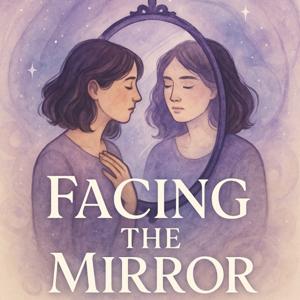
In this episode of Facing the Mirror, Christina Stuller looks beyond attachment labels and into the shadow underneath the anxious-avoidant relationship.
We explore the anxious shadow of over-functioning, people-pleasing, reassurance-seeking, and trying to control connection through closeness. We also look at the avoidant shadow of emotional distancing, hyper-independence, shutting down, and controlling vulnerability through withdrawal.
And here is where the conversation gets uncomfortable.
Knowing your attachment style does not excuse what you do with it.
"I have anxious attachment" does not give you permission to violate boundaries, demand constant reassurance, monitor someone, or make another person responsible for regulating you.
"I am avoidant" does not give you permission to disappear, stonewall, withhold communication, or punish someone with emotional distance.
Your attachment wounds may explain the survival strategy.
They do not remove your responsibility for healing it.
The real work begins when we stop asking, "Why are they doing this to me?" long enough to ask:
What happens inside of me when intimacy activates the parts of myself I have not learned how to face?
Because sometimes the relationship is not only showing you who the other person is.
It is showing you where you still abandon yourself.
🎙️ Facing the Mirror with Christina Stuller
Tranquil Balance Life Coaching
🌐 https://healingmyfeelings.com
📝 https://stulleram.blog
Topics discussed: attachment styles, anxious attachment, avoidant attachment, anxious-avoidant relationships, shadow work, intimacy, abandonment wounds, emotional regulation, relationship patterns, people-pleasing, hyper-independence, self-awareness, boundaries, radical acceptance, and personal accountability.
Disclaimer: This podcast is intended for educational and personal-development purposes and is not a substitute for medical, psychiatric, psychological, or other licensed professional care.