
Sign up to save your podcasts
Or



In “The New Idolatry” (Chalcedon Report No. 222), Rushdoony argues that modern theology has reproduced idolatry in subtler forms by relocating sovereignty, meaning, and truth from God to man. He identifies two dominant errors: first, the view of history as myth, which denies objective meaning and treats all truth as human interpretation—thereby demoting God to a symbolic construct and making man the true creator of meaning; second, the rejection of propositional truth, which falsely pits “heart knowledge” against reasoned, verbal revelation and thus undermines Scripture’s clarity and authority. Rushdoony contends that both positions arise from the same root sin of Genesis 3: man’s desire to define reality, law, and morality for himself. By denying that God has spoken clearly and authoritatively in words, these theologies elevate private insight, experience, or elite interpretation above Scripture—creating a new idolatry that cloaks human autonomy in religious language. The result is theological confusion that inevitably spreads into politics, economics, and science, because once God’s Word is limited, man’s word becomes absolute.
This passage warns that excessive regulation even over seemingly minor matters like lawn maintenance can erode personal freedom and lead society toward tyranny. Using the example of a proposed 16-page building code in University Park, Texas, the author highlights how fines for weeds, cracks, or unsound chimneys, combined with inspectors’ authority to enter homes at will, could pave the way for ever-expanding governmental control. The critique emphasizes that overregulation shifts citizens’ focus from their own responsibilities to policing each other, creating a culture of compliance rather than liberty. While regulations may produce orderly neighborhoods, the author argues that the cost to freedom is far too high, warning that small, innocuous rules can become a slippery slope toward a dictator-like state.
#Overregulation #FreedomVsOrder #SlipperySlope #TyrannyByRules #CivilLiberty #PersonalResponsibility #GovernmentOverreach
In “Locale of Meaning” (Chalcedon Report No. 172), Rushdoony argues that the decisive shift of the modern age was the relocation of meaning from God to events themselves. Whereas biblical faith locates all meaning in the sovereign Creator—whose eternal decree gives purpose to every atom, moment, and event—modern thought claims that meaning arises from the relationships of events, human experience, or social processes. This shift necessarily transfers authority from God to man: if meaning is not given by God, then man must create it, and with it, law. Hence law becomes logic, experience, class power, or social consensus rather than divine revelation. Rushdoony contends that this is the essence of humanism and that many Christians unwittingly adopt it by seeking salvation from Scripture, meaning from sociology, and law from the state—thereby hollowing out the gospel itself. Against this, he insists that God alone determines meaning, law, and history; obedience to His law-word defines the meaning of events, while rebellion brings judgment. Meaning does not emerge from history—it governs history because it proceeds from God.
In “Providence” (Chalcedon Report No. 131), Rushdoony argues that Christianity is founded on God-ordained distinctions between good and evil, righteousness and sin, holy and profane while humanism destroys these distinctions by making autonomous man the sole standard. When man becomes god, all absolutes collapse, progress ceases, and meaning evaporates, because a self-deified humanity has no reason to grow, judge, or reform itself. Rushdoony traces this levelling impulse through Asian philosophies, Greek and Roman decline, medieval decay, and modern relativism, showing how the denial of providence leads inevitably to nihilism, stagnation, and despair. In contrast, biblical faith affirms God’s sovereign providence and holiness, calling for separation according to His law and the active exercise of dominion. Holiness, he concludes, requires both divine grace and cultural obedience; without providence, all values flatten into nothingness, and “equality” finds its truest symbol not in democracy, but in death.
In Disposable Man, Rushdoony argues that modern humanistic statism, by denying transcendent meaning and moral absolutes, inevitably treats human beings as expendable tools of the state. Drawing on testimonies from the Gulag, he shows how a worldview grounded in pragmatism, utility, and evolutionary meaninglessness produces a society where injustice is never a “mistake” because there is no higher law by which the state can be judged. When meaning is declared dead, man himself becomes disposable used, discarded, and destroyed as circumstances require while art, culture, and life collapse into nihilism and violence. Against this death-driven order, Rushdoony affirms the biblical truth that all things are created in Christ and therefore possess God-given meaning, purpose, and value, concluding that only a civilization built on Christ and His law can endure, while the doctrine of disposable man can lead only to judgment and the graveyard of history. #DisposableMan #Rushdoony #ChristianWorldview #BiblicalMeaning #Statism #Humanism #FaithAndCulture #ChristIsLord
In Post-Christian Era, Rushdoony rejects the claim that the modern world has moved beyond Christianity, arguing instead that it is humanism not Christianity that is collapsing under its own contradictions. Tracing the Enlightenment’s militant rejection of biblical faith and its eventual descent through Darwin, Freud, and existential despair, he shows how humanism has stripped life of meaning, dignity, and hope, producing a culture marked by nihilism, occultism, and a longing for destruction. Far from facing a post-Christian age, Rushdoony contends that we are witnessing the death of a long post-Christian, humanistic order and the opening of a historic opportunity for biblical faith. The task before Christians is not waiting for political magic or instant solutions, but patient reconstruction planting, building, and working in faith confident that God brings growth in His time and that history belongs not to despairing majorities but to faithful men who act under God’s Word. #PostChristianEra #Rushdoony #ChristianWorldview #FaithAndCulture #Humanism #BiblicalReconstruction #Hope #KingdomOfGod
This position paper argues that the modern idea of “genius” is a revived pagan concept rooted in animism and hero-worship, in which certain individuals are treated as semi-divine figures standing above law, morality, and ordinary humanity. Tracing the idea from ancient Rome through the Renaissance and Enlightenment to modern revolutionary movements, the paper shows how the “genius” shifted from a protecting spirit to the artist, intellectual, or political leader who claims superior insight and authority over society. This myth justified the rise of heroic leaders and totalitarian figures whether artists, philosophers, or revolutionaries who viewed themselves as entitled to destroy existing culture, morality, and social order in the name of progress. In contrast, biblical faith rejects genius and hero-worship in favor of the callings of prophet, priest, and king under God, where authority rests not in personal brilliance or intuition but in obedience to God’s law-word, joyful service, and faithful dominion. The paper concludes that true culture and reconstruction will never come from the state or the self-appointed genius elite, but from Christians who labor steadily under God’s authority, knowing their work is not in vain.
#Genius #HeroWorship #ChristianWorldview #BiblicalAuthority #CultureAndFaith #ProphetPriestKing #AntiStatism #Reconstruction
In Nihilism, Rushdoony traces the destructive power of nihilism as both a philosophy and a pervasive mood that rejects all authority, meaning, and hope, replacing faith with cynicism and a lust for destruction. From pre-revolutionary Russia to the modern West, he shows how nihilism fuels violence, despair, and social collapse, whether directed against church, family, or state, and how even statist regimes ultimately breed the very nihilism that undermines their authority. By denying God, humanism reduces life to meaninglessness, driving people toward fantasy, occultism, and suicidal impulses, while offering destruction as a false path to renewal. Against this culture of death, Rushdoony affirms that only biblical faith restores meaning, grounding life in eternity rather than emptiness, and calls Christians to patient reconstruction through faithful work, confident that truth, not nihilism, will ultimately prevail. #Nihilism #Rushdoony #ChristianWorldview #FaithAndCulture #BiblicalFaith #Humanism #MeaningAndHope #ChristianReconstruction
In Psychopaths, Rushdoony argues that modern society’s replacement of accountability to God with accountability only to man has produced a culture stripped of conscience, absolutes, and moral restraint. By excluding biblical faith and God’s law from public life while legalizing pornography, abortion, and sexual perversion the state has fostered the very conditions that give rise to psychopaths who act without guilt or responsibility. Educated in value-free schools that teach self-law and moral autonomy, such individuals are not anomalies but logical products of a culture that denies divine authority. Rushdoony warns that a state which rejects God’s law inevitably governs by fiat power alone, multiplying lawlessness and destruction, and insists that only a return from autonomy to theonomy God’s law can restrain evil and restore sanity to men and nations. #Psychopaths #Rushdoony #ChristianWorldview #BiblicalLaw #Theonomy #Humanism #MoralAbsolutes #FaithAndCulture
In “Covenant Wealth,” Rushdoony reframes wealth not as income level or social class, but as covenantal faithfulness measured by service to God’s Kingdom rather than material display. From a biblical perspective, rich, middle-class, and poor alike can be righteous or corrupt depending on their obedience to God’s law and purpose, because true wealth begins with man’s original calling to exercise dominion under God. Covenant wealth is therefore Kingdom gain building institutions, knowledge, culture, arts, and faithful labor that advance God’s reign in history whether or not it results in visible affluence. Such wealth may prosper the believer, but its primary purpose is always to prosper God’s Kingdom, redirecting resources away from vanity, status, and monuments to man, and toward lasting fruit under Christ’s lordship. The pressing question is not how much we possess, but what kingdom our labor, resources, and lives are building.
#CovenantWealth #KingdomEconomics #BiblicalStewardship #ChristianDominion #FaithAndWork #GodsKingdom #BiblicalWorldview #Rushdoony
From the publisher's feed
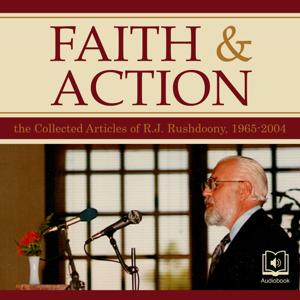
Faith and Action is the complete collection of the essays of R. J. Rushdoony written for the Chalcedon Report between 1965 and 2001 along with several transcripts of his recorded talks. The large…